
Animal · Bird
Kite
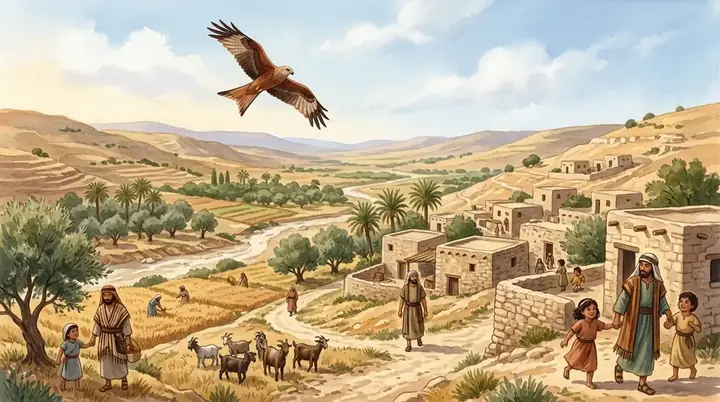
A sharp-eyed bird of prey with a forked tail, common over Palestine. It was on the list of unclean birds Israel might not eat, and Job says even its eye has never seen the path to wisdom.
- Hebrew
- Ayyah, probably from its cry; also da'ah in some lists
- In the Bible
- Leviticus 11:14; Deuteronomy 14:13; Job 28:7 ("vulture" in the KJV)
- Today
- Black kites and red kites still soar over Israel; the black kite comes in great flocks in spring
What it is
Kites are hawks of the open country, with long wings and a forked tail, that float for hours on the wind and swoop on mice, lizards and carrion. The red kite and the black kite are both found in the Holy Land, and the black kite gathers in hundreds on migration. Their sight is famous.
In the Bible
The law of clean and unclean food named the kite among the birds of prey that Israel must not eat, with the eagle, the vulture and the raven (Leviticus 11:13–19; Deuteronomy 14:12–18). Birds that live on dead flesh were unclean, a lesson in keeping apart from death and corruption.
The one other mention is in Job's poem about wisdom. Men dig mines deep into the earth for silver and gold, but wisdom is on a path "which no fowl knoweth, and which the vulture's eye hath not seen" (Job 28:7); the Hebrew word is the kite's. Even the keenest eye in creation cannot find wisdom; it is found only in fearing the Lord (Job 28:28).
Key verses
- Leviticus 11:14
And the vulture, and the kite after his kind;
- Deuteronomy 14:13
And the glede, and the kite, and the vulture after his kind,
- Job 28:7
There is a path which no fowl knoweth, and which the vulture’s eye hath not seen:
Written for this app in its own words, from the Bible, with the facts checked against Bible dictionaries and encyclopedias: Easton's, Smith's, Fausset's, ISBE, Holman, the New Bible Dictionary, Vine's and the Thompson Chain topics.
