
Person
Hananiah
han-a-NY-aMeaning "the LORD has been gracious" · a name borne by fourteen men in the Bible
The Hebrew name of Shadrach, Daniel's friend who was thrown into the fiery furnace. Another Hananiah was the false prophet who broke Jeremiah's yoke and died within the year.
- Meaning
- The LORD has been gracious
- Best known
- Shadrach, one of the three in the furnace; the false prophet of Gibeon
- Where
- Daniel 1–3; Jeremiah 28; 1 Chronicles 25:4; Nehemiah 7:2
Daniel's friend
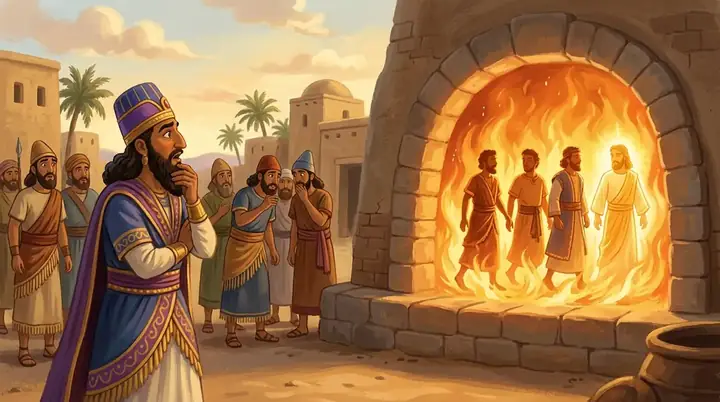
Hananiah was one of the young nobles of Judah carried to Babylon with Daniel in the days of Jehoiakim. The Babylonians renamed him Shadrach and trained him for the king's service (Daniel 1:6–7). With Daniel, Mishael and Azariah he refused the king's rich food, and God gave the four of them wisdom beyond all the king's wise men (Daniel 1:8–20). When Daniel was asked to tell Nebuchadnezzar's dream, Hananiah and the others joined him in prayer for mercy (Daniel 2:17–18). Later, as Shadrach, he refused to bow to the king's golden image and was thrown into the furnace with Meshach and Abednego, and the Son of God walked with them in the fire (Daniel 3). See Shadrach.
The false prophet
Hananiah son of Azzur, from Gibeon, stood up in the temple in the fourth year of Zedekiah and announced in the LORD's name that within two years the king of Babylon's yoke would be broken and the exiles and the temple vessels would come home. Jeremiah, who had been wearing a wooden yoke as a sign that Judah must serve Babylon, answered that he wished it were true, but that a prophet of peace is proved only when his word comes to pass. Hananiah took the yoke off Jeremiah's neck and broke it. God sent Jeremiah back: the wooden yoke would be replaced with iron, and Hananiah, who had taught the people to trust a lie, would die that year. He died two months later (Jeremiah 28).
Others with this name
A son of Heman led one of the courses of temple singers (1 Chronicles 25:4, 23). An officer of that name helped command Uzziah's army (2 Chronicles 26:11). A son of Zerubbabel carried on David's line after the exile (1 Chronicles 3:19–21). The grandfather of Irijah, the officer who seized Jeremiah at the gate (Jeremiah 37:13), and the father of a prince at Jehoiakim's court (Jeremiah 36:12) bore the name, as did a Benjamite (1 Chronicles 8:24) and a man who had married a foreign wife (Ezra 10:28). In Nehemiah's day a perfumer and a son of Shelemiah helped rebuild the wall (Nehemiah 3:8, 30); Hananiah the governor of the fortress, "a faithful man" who "feared God above many", was put in charge of Jerusalem (Nehemiah 7:2); and others signed the covenant, served as priests, and blew trumpets at the wall's dedication (Nehemiah 10:23; Nehemiah 12:12, 41).
Key verses
- Daniel 1:6–7
Now among these were of the children of Judah, Daniel, Hananiah, Mishael, and Azariah: Unto whom the prince of the eunuchs gave names: for he gave unto Daniel the name of Belteshazzar; and to Hananiah, of Shadrach; and to Mishael, of Meshach; and to Azariah, of Abed–nego.
- Daniel 3:16–18
Shadrach, Meshach, and Abed–nego, answered and said to the king, O Nebuchadnezzar, we are not careful to answer thee in this matter. If it be so, our God whom we serve is able to deliver us from the burning fiery furnace, and he will deliver us out of thine hand, O king. But if not, be it known unto thee, O king, that we will not serve thy gods, nor worship the golden image which thou hast set up.
- Jeremiah 28:15–17
Then said the prophet Jeremiah unto Hananiah the prophet, Hear now, Hananiah; The Lord hath not sent thee; but thou makest this people to trust in a lie. Therefore thus saith the Lord; Behold, I will cast thee from off the face of the earth: this year thou shalt die, because thou hast taught rebellion against the Lord. So Hananiah the prophet died the same year in the seventh month.
- Nehemiah 7:2
That I gave my brother Hanani, and Hananiah the ruler of the palace, charge over Jerusalem: for he was a faithful man, and feared God above many.
Mentioned in 18 verses
- Daniel 18
Read next
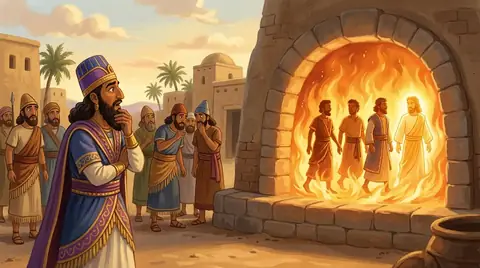 PersonShadrachOne of Daniel's three friends taken to Babylon. With Meshach and Abednego he refused to bow to Nebuchadnezzar's golden…
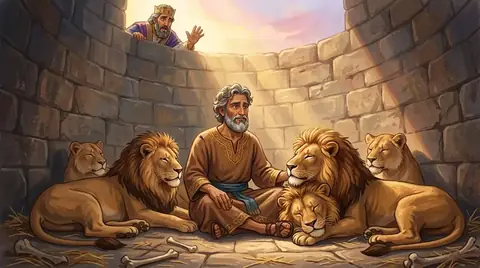 Person · ProphetDanielA young noble of Judah carried off to Babylon, who served four kings with wisdom and never bent his faith. God gave him…PersonJehoiakimThe king of Judah who cut up Jeremiah's scroll and burned it in his fire. Put on the throne by Pharaoh, he rebelled…
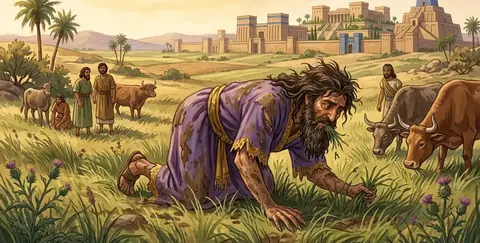 Person · KingNebuchadnezzarThe great king of Babylon who destroyed Jerusalem and its temple and carried Judah into exile. In Daniel he dreams of a…PersonMeshachOne of Daniel's three friends in Babylon. With Shadrach and Abednego he refused to bow to Nebuchadnezzar's golden…PersonAbednegoOne of Daniel's three friends taken to Babylon. With Shadrach and Meshach he refused to bow to King Nebuchadnezzar's…
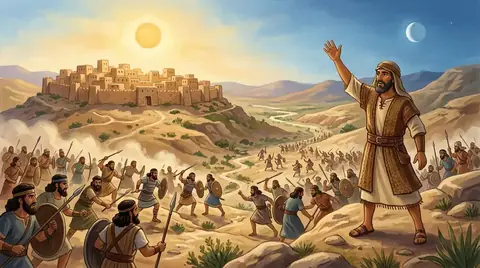 Place · CityGibeonThe Hivite city whose people fooled Joshua into a treaty, and where the sun stood still over the battle that followed.…
 PersonZedekiahThe last king of Judah, put on the throne by Nebuchadnezzar and then rebelling against him. He would not heed Jeremiah…
Written for this app in its own words, from the Bible, with the facts checked against Bible dictionaries and encyclopedias: Easton's, Smith's, Fausset's, ISBE, Holman, the New Bible Dictionary, Vine's and the Thompson Chain topics. People and places: STEPBible.org (TIPNR), CC BY 4.0; where a place is today and its photo: OpenBible.info, CC BY 4.0.
