
Nation
Greeks
Also: Grecians, Hellenists
The people of Greece, whose language and ways spread across the whole eastern world after Alexander. In the New Testament "Greek" often simply means a non-Jew.
- Greek language
- The common speech of the Roman east, and the language of the New Testament
- Three senses
- A Greek by birth (Acts 16:1); any Gentile (Romans 1:16); a Greek-speaking Jew, "Grecian" (Acts 6:1)
- Old Testament
- Called Javan (Genesis 10:2; Daniel 8:21; Joel 3:6)
Who they were
In the Old Testament the Greeks are Javan, a distant people who bought Jewish slaves from Tyre (Joel 3:6). Daniel saw them as the swift he-goat that would crush Persia, its great horn being Alexander the Great (Daniel 8:21). After Alexander, Greek became the language of trade and government from Egypt to the border of India, and the Jewish scriptures were translated into it, the Septuagint. Under the Greek king Antiochus the temple was defiled, and the Maccabees rose against him.
In the New Testament
Jesus healed the daughter of a Greek woman in the region of Tyre (Mark 7:26), and some Greeks who had come to the Passover asked to see him, a sign that his hour had come (John 12:20–23). The early church included Grecians, Jews who spoke Greek, whose widows were being overlooked (Acts 6:1). Timothy's father was a Greek (Acts 16:1). Paul preached to the Greeks of Athens and Corinth, and found that "the Greeks seek after wisdom" while Jews demanded signs; to both he preached Christ crucified (1 Corinthians 1:22–24).
For us
Because Greek was everyone's second language, the gospel could travel fast, and the whole New Testament came to be written in Greek. Paul owed the gospel "both to the Greeks, and to the Barbarians" (Romans 1:14), and it is for "the Jew first, and also to the Greek" (Romans 1:16). In Christ the old line is gone: "there is neither Jew nor Greek" (Galatians 3:28).
Key verses
- Daniel 8:21
And the rough goat is the king of Grecia: and the great horn that is between his eyes is the first king.
- John 12:20–21
And there were certain Greeks among them that came up to worship at the feast: The same came therefore to Philip, which was of Bethsaida of Galilee, and desired him, saying, Sir, we would see Jesus.
- Acts 6:1
And in those days, when the number of the disciples was multiplied, there arose a murmuring of the Grecians against the Hebrews, because their widows were neglected in the daily ministration.
- Romans 1:16
For I am not ashamed of the gospel of Christ: for it is the power of God unto salvation to every one that believeth; to the Jew first, and also to the Greek.
- 1 Corinthians 1:22–24
For the Jews require a sign, and the Greeks seek after wisdom: But we preach Christ crucified, unto the Jews a stumblingblock, and unto the Greeks foolishness; But unto them which are called, both Jews and Greeks, Christ the power of God, and the wisdom of God.
- Galatians 3:28
There is neither Jew nor Greek, there is neither bond nor free, there is neither male nor female: for ye are all one in Christ Jesus.
On the map
Read next
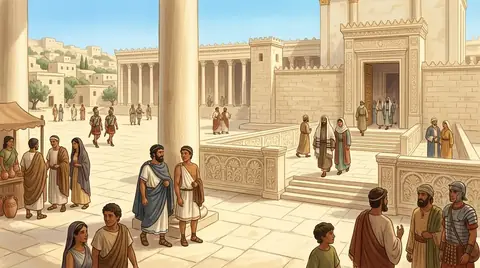 GroupGentilesEveryone who was not a Jew. Israel was kept apart from the nations, yet God had promised to bless them all through…Person · NationJavanA son of Japheth and grandson of Noah, whose descendants settled Greece and the islands. In the Old Testament his name…
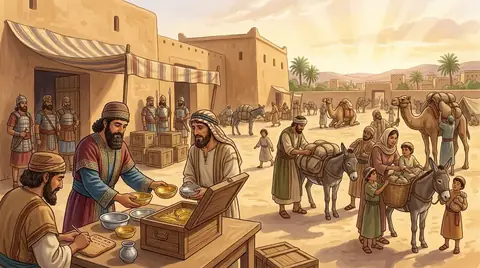 Place · EmpirePersiaThe great empire that conquered Babylon and ruled the Jews for two centuries. Its king Cyrus let the exiles go home…PersonAlexander the GreatThe young king of Macedonia who conquered the Persian Empire and spread Greek rule from Egypt to India. Daniel foresaw…BookSeptuagintThe Greek translation of the Old Testament, made at Alexandria in Egypt for Jews who spoke Greek. It became the Bible…PersonAntiochusThe name of many Greek kings of Syria after Alexander. The best known, Antiochus Epiphanes, tried to stamp out the…Group · HistoryMaccabeesA Jewish priestly family who led a revolt against the Greek king Antiochus Epiphanes when he tried to wipe out the…
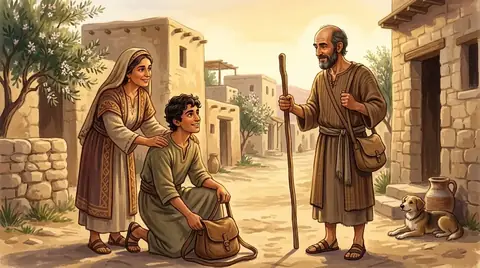 PersonTimothyPaul's young helper and closest co-worker. He came from Lystra, travelled with Paul on his journeys, carried his…
Written for this app in its own words, from the Bible, with the facts checked against Bible dictionaries and encyclopedias: Easton's, Smith's, Fausset's, ISBE, Holman, the New Bible Dictionary, Vine's and the Thompson Chain topics.
