
Teaching
God
Hebrew El, Elohim; Greek theos
The one who made everything and holds it in being: eternal, holy, all-powerful and good. The Bible never argues that he exists; it shows him speaking, acting and seeking his people.
- Hebrew
- El (the strong one), Elohim; and his own name, the LORD
- Greek
- theos
- His character
- "Merciful and gracious, longsuffering, and abundant in goodness and truth" (Exodus 34:6)
- One God
- "Hear, O Israel: The LORD our God is one LORD" (Deuteronomy 6:4)
Who he is
The Bible opens with him already there: "In the beginning God created the heaven and the earth" (Genesis 1:1). It never sets out to prove him. Creation shows his power and wisdom (Psalms 19:1; Romans 1:20), and only "the fool hath said in his heart, There is no God" (Psalms 14:1). He is one, not many (Deuteronomy 6:4; Isaiah 44:6). He is spirit, not a body (John 4:24); he has no beginning or end (Psalms 90:2); he knows all things and is everywhere (Psalms 139:1–12); and nothing is too hard for him (Jeremiah 32:17). He is holy, utterly apart from sin (Isaiah 6:3), and he is love (1 John 4:8).
What he is like
When Moses asked to see God's glory, God passed by and told him his own character: merciful, gracious, slow to anger, full of steadfast love, forgiving sin, yet never treating guilt as if it were nothing (Exodus 34:6–7). The rest of the Bible keeps returning to those words. He is a father to the fatherless (Psalms 68:5), a shepherd (Psalms 23:1), a rock (Deuteronomy 32:4), a refuge (Psalms 46:1). He hears prayer, keeps his promises, and judges justly.
How he makes himself known
God walked with Adam, spoke with Abraham, met Moses at the burning bush and at Mount Sinai, and spoke through the prophets (Hebrews 1:1). He gave his name, the LORD, "I AM THAT I AM" (Exodus 3:14), and other names that tell what he is (see Names of God). Then "the Word was made flesh": whoever has seen Jesus has seen the Father (John 1:14; John 14:9). Father, Son and Holy Spirit are the one God (Matthew 28:19; see Trinity).
For us
God made us for himself. The first and greatest commandment is to love him with all we are (Deuteronomy 6:5; Matthew 22:37–38). He is not far from any of us (Acts 17:27), and he "so loved the world" that he gave his Son so that whoever believes should have everlasting life (John 3:16). To know him is life itself (John 17:3).
Key verses
- Genesis 1:1
In the beginning God created the heaven and the earth.
- Deuteronomy 6:4
Hear, O Israel: The Lord our God is one Lord:
- Exodus 34:6–7
And the Lord passed by before him, and proclaimed, The Lord, The Lord God, merciful and gracious, longsuffering, and abundant in goodness and truth, Keeping mercy for thousands, forgiving iniquity and transgression and sin, and that will by no means clear the guilty; visiting the iniquity of the fathers upon the children, and upon the children’s children, unto the third and to the fourth generation.
- John 4:24
God is a Spirit: and they that worship him must worship him in spirit and in truth.
- John 14:9
Jesus saith unto him, Have I been so long time with you, and yet hast thou not known me, Philip? he that hath seen me hath seen the Father; and how sayest thou then, Shew us the Father?
- 1 John 4:8
He that loveth not knoweth not God; for God is love.
Read next
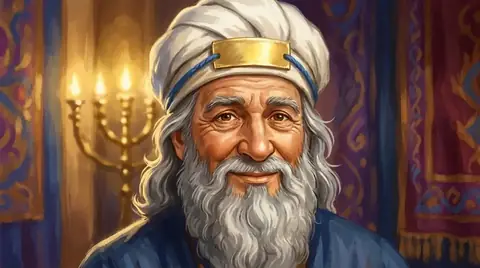 Name of GodThe LORD (God's own name)The personal name of God, YHWH, which English Bibles print as LORD in capital letters. God told it to Moses at the…
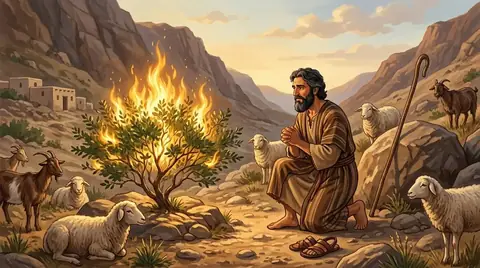 PersonMosesThe man God used to bring Israel out of Egypt, give them his Law at Sinai, and lead them for forty years in the…
 PersonAdamThe first man, made by God from the dust and given life by his breath. His disobedience in Eden brought sin and death…
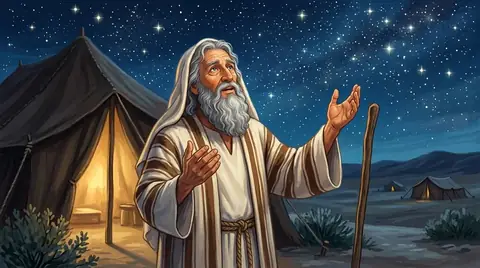 PersonAbrahamThe man God called out of Ur to a land he had never seen, promising him a people and a blessing for the whole world. He…
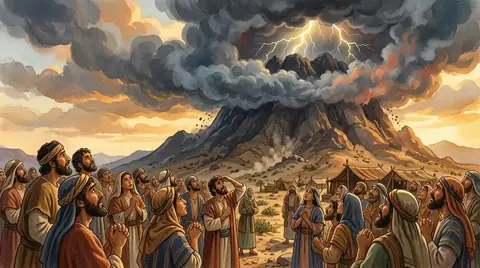 Place · MountainSinaiThe mountain where God came down in fire and smoke, spoke the Ten Commandments, and made his covenant with Israel. The…Teaching · Name of GodNames of GodGod makes himself known by his names. He is God (Elohim), the Most High, the Almighty, the Lord, and above all the LORD…TeachingTrinityThe Christian teaching that there is one God who exists for ever as three Persons: the Father, the Son and the Holy…
Written for this app in its own words, from the Bible, with the facts checked against Bible dictionaries and encyclopedias: Easton's, Smith's, Fausset's, ISBE, Holman, the New Bible Dictionary, Vine's and the Thompson Chain topics.
