
Book
Genesis
JEN-e-sisOld Testament · Law, the first of the five books of Moses · written by Moses, about 1445–1405 BC
The first book of the Bible, the book of beginnings: the creation of the world, the fall, the flood, and God's call of Abraham and his family, ending with Joseph in Egypt.
- Author
- Moses
- Written
- About 1445–1405 BC, in the wilderness years
- Chapters
- 50
- Key verse
- "In thee shall all families of the earth be blessed" (Genesis 12:3)
What it's about
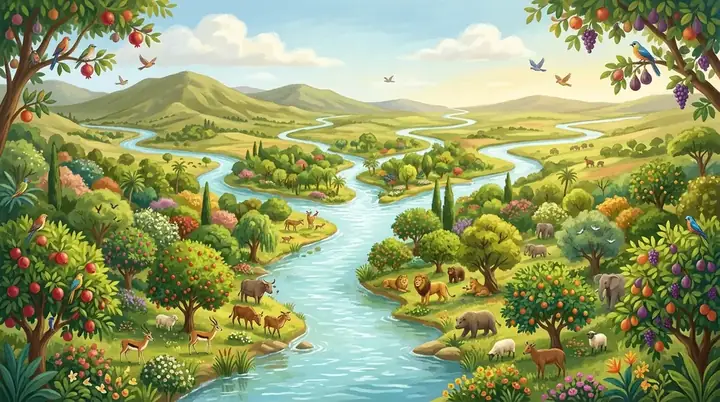
Genesis means "origin" or "beginning". Its first eleven chapters cover the whole early story of the human race: God making the heavens and the earth, Adam and Eve in the garden, their disobedience, Cain and Abel, Noah and the flood, and the tower of Babel.
From chapter 12 the story narrows to one family. God called Abraham out of Ur and promised him a land, a great nation and a blessing for the whole world (Genesis 12:1–3). The book follows that promise through Isaac, Jacob and Jacob's twelve sons, and closes with Joseph, sold as a slave, raised to rule Egypt and saving his family from famine.
Its message
There is one God, who made all things good and made people in his own image (Genesis 1:27). Sin spoiled that world, yet God did not give it up. He chose one man and made a covenant with him, and Abraham "believed in the LORD; and he counted it to him for righteousness" (Genesis 15:6). Even the wrongs done to Joseph were turned to good: "God meant it unto good" (Genesis 50:20).
Points to Christ
Straight after the fall God promised that the woman's offspring would crush the serpent's head (Genesis 3:15). Paul says the "seed" promised to Abraham is Christ (Galatians 3:16). When Isaac asked where the lamb was, Abraham answered, "God will provide himself a lamb" (Genesis 22:8), words fulfilled at the cross.
Key verses
- Genesis 1:1
In the beginning God created the heaven and the earth.
- Genesis 1:27
So God created man in his own image, in the image of God created he him; male and female created he them.
- Genesis 3:15
And I will put enmity between thee and the woman, and between thy seed and her seed; it shall bruise thy head, and thou shalt bruise his heel.
- Genesis 12:1–3
Now the Lord had said unto Abram, Get thee out of thy country, and from thy kindred, and from thy father’s house, unto a land that I will shew thee: And I will make of thee a great nation, and I will bless thee, and make thy name great; and thou shalt be a blessing: And I will bless them that bless thee, and curse him that curseth thee: and in thee shall all families of the earth be blessed.
- Genesis 15:6
And he believed in the Lord; and he counted it to him for righteousness.
- Genesis 50:20
But as for you, ye thought evil against me; but God meant it unto good, to bring to pass, as it is this day, to save much people alive.
On the map
Read next
 PersonMosesThe man God used to bring Israel out of Egypt, give them his Law at Sinai, and lead them for forty years in the…
 PersonAdamThe first man, made by God from the dust and given life by his breath. His disobedience in Eden brought sin and death…
 PersonEveThe first woman, made by God from Adam's side to be his wife and partner. Deceived by the serpent, she ate the…PersonCainThe first child born into the world, and the first murderer. Jealous because God accepted his brother Abel's offering…
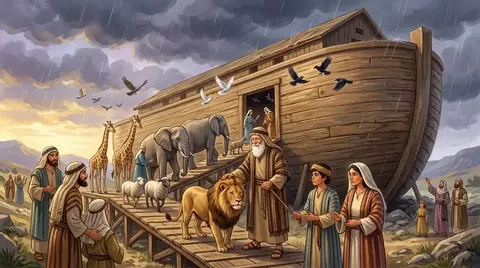 PersonNoahThe one righteous man of his age. God told him to build an ark, and through it saved him, his family and the animals…EventFloodThe great flood of Noah's day, when God drowned a world full of violence and saved eight people and the animals in the…
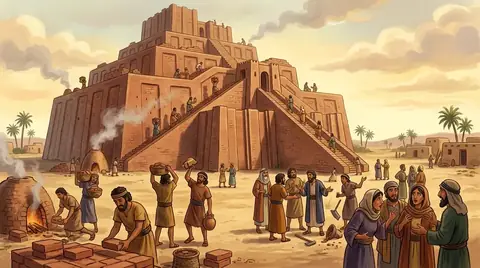 Place · CityBabelThe city in the plain of Shinar where, after the Flood, people built a tower to reach heaven and make a name for…
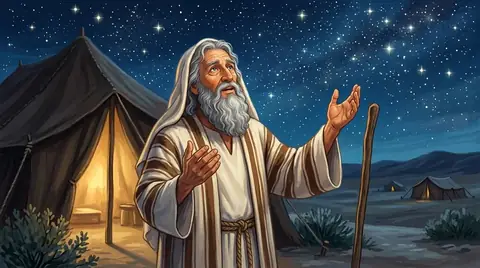 PersonAbrahamThe man God called out of Ur to a land he had never seen, promising him a people and a blessing for the whole world. He…
Written for this app in its own words, from the Bible, with the facts checked against Bible dictionaries and encyclopedias: Easton's, Smith's, Fausset's, ISBE, Holman, the New Bible Dictionary, Vine's and the Thompson Chain topics.
