
Place · City
Babel
BAY-belOld Testament · after the Flood · in the land of Shinar · the tower of Babel
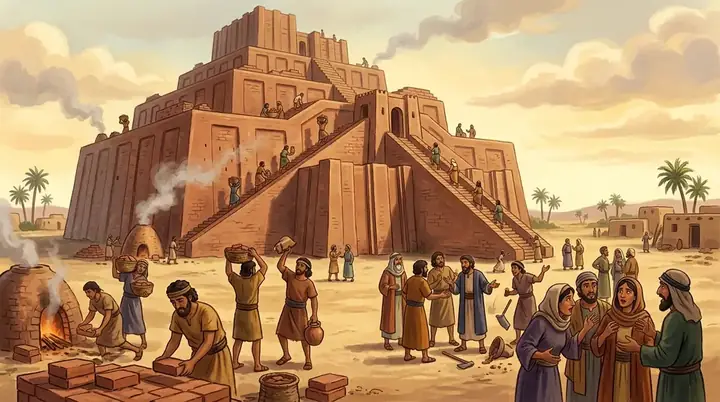
The city in the plain of Shinar where, after the Flood, people built a tower to reach heaven and make a name for themselves. God confused their language and scattered them over the earth. Babel is the Hebrew name of Babylon.
- Where
- The plain of Shinar, in today's Iraq, by the Euphrates
- Known for
- The tower; the confusion of languages (Genesis 11:1–9)
- Meaning
- Confusion, from the Hebrew for "to mix up"
- Later
- The city of Babylon; first named among Nimrod's cities (Genesis 10:10)
What happened
After the Flood, "the whole earth was of one language, and of one speech". Moving east, people found a plain in the land of Shinar and settled there. They made bricks, burned them hard and used slime, that is bitumen, for mortar (Genesis 11:1–3). Then they said, "let us build us a city and a tower, whose top may reach unto heaven; and let us make us a name, lest we be scattered abroad upon the face of the whole earth" (Genesis 11:4).
Why it went wrong
God had told Noah's family to fill the earth (Genesis 9:1). These builders wanted the opposite: to stay together and make a name for themselves, as if they needed no God. "The Lord came down to see the city and the tower". He confused their language so that they could not understand one another, and scattered them abroad. "They left off to build the city", and it was called Babel, "because the Lord did there confound the language of all the earth" (Genesis 11:5–9). The scattering of the nations, listed in Genesis 10, followed.
In the rest of the Bible
Babel grew into Babylon, the great city that later destroyed Jerusalem. In Revelation, "Babylon the great" stands for the proud world set against God (Revelation 18:2). The ruins of huge temple towers on the plain, like the great mound at Borsippa near Babylon, show the kind of building Genesis describes.
What it means for us
Right after Babel, God called one man, Abraham, and promised, "I will make thy name great... and in thee shall all families of the earth be blessed" (Genesis 12:2–3). What people could not grab for themselves, God gave as a gift. At Pentecost the Holy Spirit came, and people "out of every nation under heaven" heard the gospel in their own languages (Acts 2:5–11). Babel divided; the gospel unites.
Key verses
- Genesis 11:1–9
And the whole earth was of one language, and of one speech. And it came to pass, as they journeyed from the east, that they found a plain in the land of Shinar; and they dwelt there. And they said one to another, Go to, let us make brick, and burn them throughly. And they had brick for stone, and slime had they for morter. …
- Genesis 10:10
And the beginning of his kingdom was Babel, and Erech, and Accad, and Calneh, in the land of Shinar.
- Genesis 12:2–3
And I will make of thee a great nation, and I will bless thee, and make thy name great; and thou shalt be a blessing: And I will bless them that bless thee, and curse him that curseth thee: and in thee shall all families of the earth be blessed.
- Acts 2:5–11
And there were dwelling at Jerusalem Jews, devout men, out of every nation under heaven. Now when this was noised abroad, the multitude came together, and were confounded, because that every man heard them speak in his own language. And they were all amazed and marvelled, saying one to another, Behold, are not all these which speak Galileans? …
Read next
 PlaceShinarThe Bible's old name for the broad plain of Babylonia between the Tigris and Euphrates. The Tower of Babel was built…
 Place · RiverEuphratesThe greatest river of western Asia, one of the four rivers of Eden and the north-eastern limit of the land God promised…
 Place · CityBabylonThe great city on the Euphrates where the tower of Babel was built. Under Nebuchadnezzar it ruled the world, destroyed…
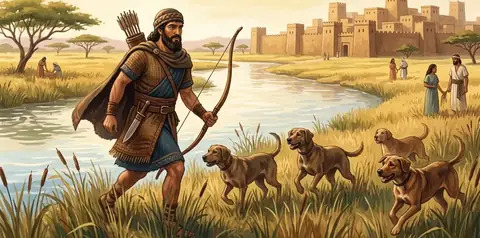 PersonNimrodA great-grandson of Noah, "a mighty hunter before the LORD", who became the first great ruler on earth and founded…MaterialSlimeNatural tar that oozed from the ground near the Dead Sea and in Mesopotamia. It was used as mortar for the bricks of…
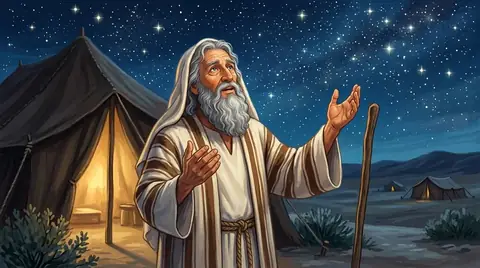 PersonAbrahamThe man God called out of Ur to a land he had never seen, promising him a people and a blessing for the whole world. He…
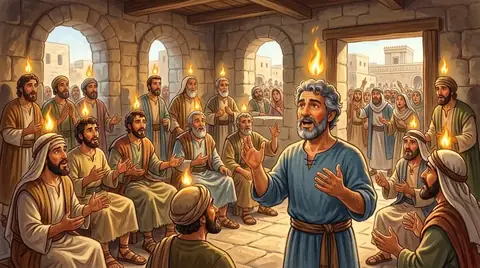 FeastPentecost (the Feast of Weeks)The harvest feast kept fifty days after Passover, when two loaves baked from the new wheat were offered to God. On the…
Written for this app in its own words, from the Bible, with the facts checked against Bible dictionaries and encyclopedias: Easton's, Smith's, Fausset's, ISBE, Holman, the New Bible Dictionary, Vine's and the Thompson Chain topics.
