
Plant · Tree
Elm
The KJV's name, in one verse of Hosea, for the terebinth, a long-lived, spreading tree of Palestine under whose shade people worshipped idols. Elsewhere the same tree is translated "oak" or "teil tree".
- Where
- Hosea 4:13; also Genesis 35:4; Judges 6:11; Isaiah 6:13 as oak and teil tree
- Really
- The terebinth, Pistacia terebinthus, a relative of the pistachio
The elm we know does not grow in the Holy Land, and the tree Hosea means is the terebinth. It is a broad, deep-rooted tree that lives for centuries and stands alone on hillsides, so it made a natural landmark and meeting place. Jacob buried his family's idols under one at Shechem (Genesis 35:4), and the angel sat under one at Ophrah when he called Gideon (Judges 6:11). Because its shade was so good, it was also a favourite spot for the worship of other gods. Hosea complains that Israel burned incense "under oaks and poplars and elms, because the shadow thereof is good" (Hosea 4:13). Isaiah uses the same tree for a picture of hope: cut down, it still has a living stump, and so will the "holy seed" of Israel (Isaiah 6:13).
Key verses
- Hosea 4:13
They sacrifice upon the tops of the mountains, and burn incense upon the hills, under oaks and poplars and elms, because the shadow thereof is good: therefore your daughters shall commit whoredom, and your spouses shall commit adultery.
- Genesis 35:4
And they gave unto Jacob all the strange gods which were in their hand, and all their earrings which were in their ears; and Jacob hid them under the oak which was by Shechem.
- Isaiah 6:13
But yet in it shall be a tenth, and it shall return, and shall be eaten: as a teil tree, and as an oak, whose substance is in them, when they cast their leaves: so the holy seed shall be the substance thereof.
Read next
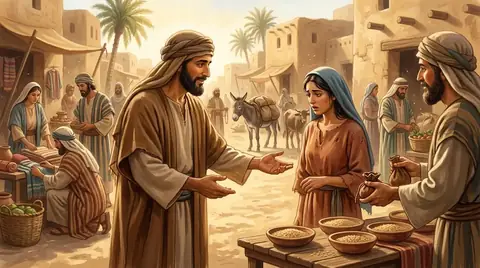 Person · ProphetHoseaThe prophet God sent to Israel, the northern kingdom, in its last years. God told him to marry Gomer, who was…
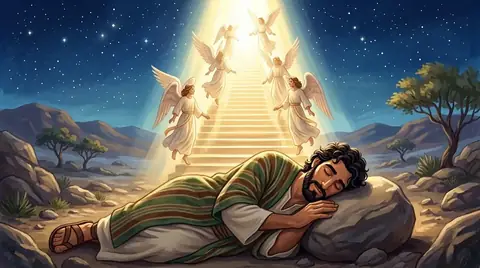 PersonJacobIsaac's younger twin son, who won his brother's birthright and blessing by cunning, was changed by God, and was renamed…
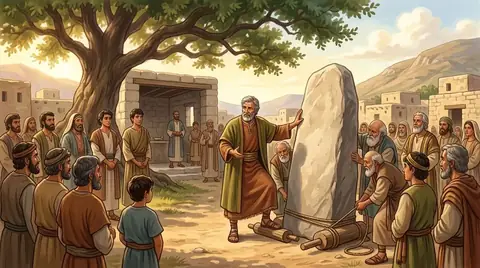 PlaceShechemAn ancient city in the heart of Canaan, between Mount Ebal and Mount Gerizim. Abraham built his first altar there…
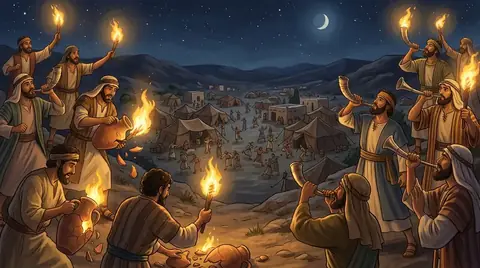 Person · JudgeGideonThe farmer God called to free Israel from the Midianites. Timid and full of questions, he obeyed, and with three…
 Person · ProphetIsaiahThe prophet of Jerusalem who served four kings, saw the LORD on his throne, and foretold the virgin's son, the…
Written for this app in its own words, from the Bible, with the facts checked against Bible dictionaries and encyclopedias: Easton's, Smith's, Fausset's, ISBE, Holman, the New Bible Dictionary, Vine's and the Thompson Chain topics.
