
Thing · Nature
Earthquake
Also earthquakes
The land of Israel lies on a great fault and has often shaken. The Bible records earthquakes at Sinai, in Uzziah's day, at the crucifixion and resurrection of Jesus, and at Philippi, and uses them as signs that God is near.
- Recorded
- Sinai (Exodus 19:18); Korah's rebellion (Numbers 16:31–32); Jonathan's attack (1 Samuel 14:15); Elijah at Horeb (1 Kings 19:11); Uzziah's reign (Amos 1:1; Zechariah 14:5); the cross and the tomb (Matthew 27:51; Matthew 28:2); Philippi (Acts 16:26)
- Foretold
- Matthew 24:7; Revelation 6:12; Revelation 11:13; Revelation 16:18
- Why so many
- The Jordan valley is part of the Great Rift, a crack in the earth's crust running from Syria into Africa
In the Old Testament
When God came down on Mount Sinai the whole mountain shook (Exodus 19:18; Psalms 68:8). The ground opened and swallowed Korah, Dathan and Abiram (Numbers 16:31–32). When Jonathan attacked the Philistine outpost the earth quaked and the enemy panicked (1 Samuel 14:15). At Horeb a great wind, an earthquake and a fire passed before Elijah, but the LORD was in none of them; he spoke in a still small voice (1 Kings 19:11–12). The most remembered quake came in the reign of Uzziah: Amos dates his prophecy "two years before the earthquake" (Amos 1:1), and two centuries later Zechariah could still say "ye fled from before the earthquake" (Zechariah 14:5). Psalms and prophets see the shaking earth as the footprint of God: "the earth shook and trembled ... because he was wroth" (Psalms 18:7; Nahum 1:5; Habakkuk 3:6).
In the New Testament
When Jesus died the earth quaked, rocks split and tombs opened, and the centurion said, "Truly this was the Son of God" (Matthew 27:51–54). On Easter morning a great earthquake came as the angel rolled the stone away (Matthew 28:2). At Philippi an earthquake at midnight shook the prison open for Paul and Silas, and the jailer believed (Acts 16:26–34). Jesus said that earthquakes in many places would come before the end, "the beginning of sorrows" (Matthew 24:7–8), and Revelation has the earth shaken at the sixth seal, at the death of the two witnesses, and at the last bowl, the greatest quake since men were on the earth (Revelation 6:12; Revelation 11:13; Revelation 16:18).
What it means
An earthquake shows how little is solid. Hebrews says God will shake earth and heaven once more, so that only what cannot be shaken remains, "a kingdom which cannot be moved" (Hebrews 12:26–28). That is where the believer stands.
Key verses
- Exodus 19:18
And mount Sinai was altogether on a smoke, because the Lord descended upon it in fire: and the smoke thereof ascended as the smoke of a furnace, and the whole mount quaked greatly.
- 1 Kings 19:11–12
And he said, Go forth, and stand upon the mount before the Lord. And, behold, the Lord passed by, and a great and strong wind rent the mountains, and brake in pieces the rocks before the Lord; but the Lord was not in the wind: and after the wind an earthquake; but the Lord was not in the earthquake: And after the earthquake a fire; but the Lord was not in the fire: and after the fire a still small voice.
- Amos 1:1
The words of Amos, who was among the herdmen of Tekoa, which he saw concerning Israel in the days of Uzziah king of Judah, and in the days of Jeroboam the son of Joash king of Israel, two years before the earthquake.
- Matthew 27:51
And, behold, the veil of the temple was rent in twain from the top to the bottom; and the earth did quake, and the rocks rent;
- Acts 16:26
And suddenly there was a great earthquake, so that the foundations of the prison were shaken: and immediately all the doors were opened, and every one’s bands were loosed.
- Hebrews 12:26–27
Whose voice then shook the earth: but now he hath promised, saying, Yet once more I shake not the earth only, but also heaven. And this word, Yet once more, signifieth the removing of those things that are shaken, as of things that are made, that those things which cannot be shaken may remain.
Read next
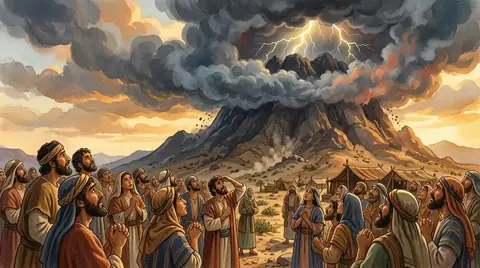 Place · MountainSinaiThe mountain where God came down in fire and smoke, spoke the Ten Commandments, and made his covenant with Israel. The…
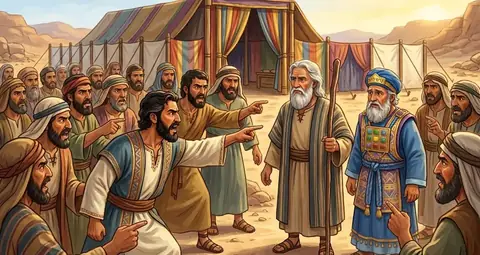 PersonKorahA Levite, Moses' cousin, who led a revolt in the wilderness against Moses and Aaron, demanding the priesthood. The…
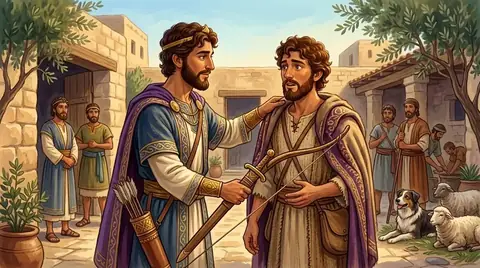 PersonJonathanSaul's eldest son and David's closest friend. A brave soldier who climbed a cliff to rout the Philistines, he gave up…
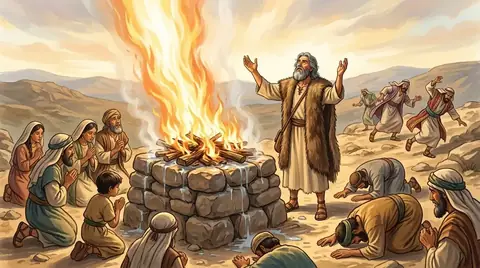 PersonElijahThe fiery prophet who stood alone against King Ahab and the prophets of Baal, called down fire on Mount Carmel, and was…
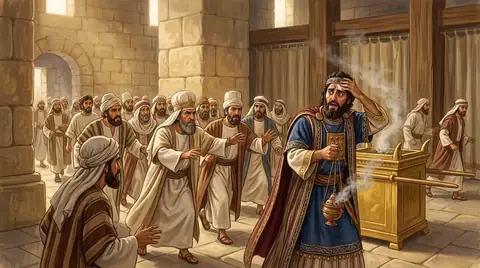 PersonUzziahKing of Judah for fifty-two years, a strong and godly ruler until pride led him into the temple to burn incense. God…
Written for this app in its own words, from the Bible, with the facts checked against Bible dictionaries and encyclopedias: Easton's, Smith's, Fausset's, ISBE, Holman, the New Bible Dictionary, Vine's and the Thompson Chain topics.
