
Measure · Money
Dram
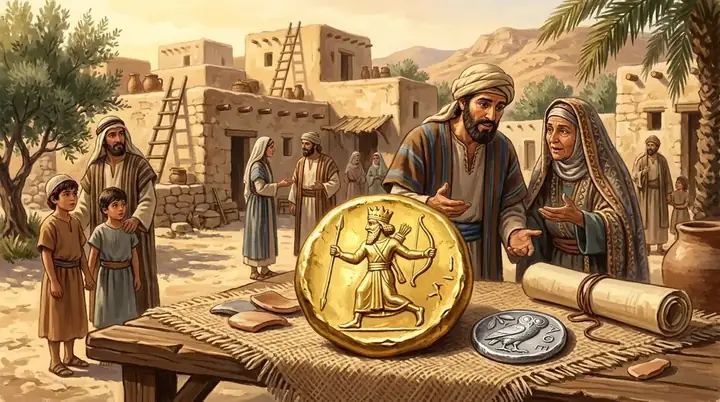
In the King James Bible, a gold coin given for the temple in the days of David, Ezra and Nehemiah. The Hebrew word most likely means the Persian daric, the first gold coin the Jews knew.
- Where
- 1 Chronicles 29:7; Ezra 2:69; Ezra 8:27; Nehemiah 7:70–72
- Hebrew
- Adarkon and darkemon, the Persian daric
- Worth
- About 0.3 oz (8.4 g) of nearly pure gold, a month's wages or more
"Dram" sounds like the Greek drachma, and the translators of 1611 took it so. But the gold pieces in these passages were almost certainly darics, the famous coin of the Persian kings, stamped with the figure of the king holding a bow. The daric was struck under Darius and was good money across the East for centuries. When the chronicler says that David's leaders gave ten thousand drams of gold for the temple (1 Chronicles 29:7), he is using the coin of his own day to tell readers how much it was worth.
The others are gifts from the exiles. Those who went home with Zerubbabel gave sixty-one thousand drams for the house of God (Ezra 2:69; Nehemiah 7:70–72), and Ezra carried a thousand drams' worth of gold bowls, weighed out and counted, on the road from Babylon (Ezra 8:27). Returning refugees, far from rich, gave freely to rebuild the place where God's name was.
Key verses
- 1 Chronicles 29:7
And gave for the service of the house of God of gold five thousand talents and ten thousand drams, and of silver ten thousand talents, and of brass eighteen thousand talents, and one hundred thousand talents of iron.
- Ezra 2:69
They gave after their ability unto the treasure of the work threescore and one thousand drams of gold, and five thousand pound of silver, and one hundred priests’ garments.
- Nehemiah 7:70
And some of the chief of the fathers gave unto the work. The Tirshatha gave to the treasure a thousand drams of gold, fifty basons, five hundred and thirty priests’ garments.
Read next
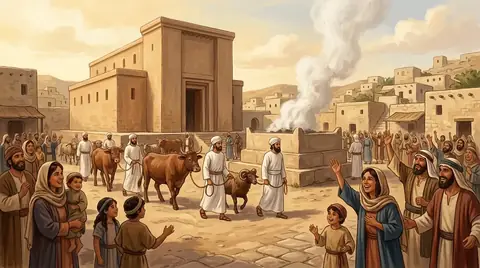 Person · KingDariusThe name of three kings in the Bible. Darius the Mede ruled Babylon when Daniel was thrown to the lions; Darius I of…
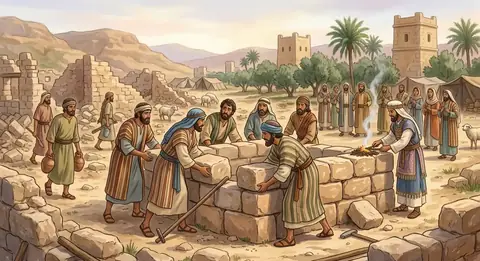 PersonZerubbabelThe prince of David's line who led the first exiles home from Babylon and rebuilt the temple in Jerusalem, finishing it…
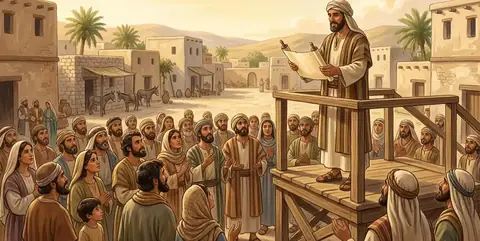 PersonEzraA priest and scribe who led a second group of exiles back from Babylon, taught the people God's law and read it to them…
Written for this app in its own words, from the Bible, with the facts checked against Bible dictionaries and encyclopedias: Easton's, Smith's, Fausset's, ISBE, Holman, the New Bible Dictionary, Vine's and the Thompson Chain topics.
