
Custom
Curious arts
Magic: spells, charms and fortune-telling. At Ephesus, after the gospel came with power, many who had practised curious arts brought their books and burned them publicly, books worth fifty thousand pieces of silver.
Ephesus was famous for magic. People wore little written charms to protect themselves, and books of spells sold for high prices. When God did unusual miracles through Paul there, and seven sons of Sceva who tried to use Jesus' name as a spell were beaten by the evil spirit, fear fell on the whole city (Acts 19:11–17). "Many of them also which used curious arts brought their books together, and burned them before all men: and they counted the price of them, and found it fifty thousand pieces of silver" (Acts 19:19). It was a costly break with the past. "So mightily grew the word of God and prevailed" (Acts 19:20). See Magic.
Key verses
- Acts 19:11–17
And God wrought special miracles by the hands of Paul: So that from his body were brought unto the sick handkerchiefs or aprons, and the diseases departed from them, and the evil spirits went out of them. Then certain of the vagabond Jews, exorcists, took upon them to call over them which had evil spirits the name of the Lord Jesus, saying, We adjure you by Jesus whom Paul preacheth. …
- Acts 19:19–20
Many of them also which used curious arts brought their books together, and burned them before all men: and they counted the price of them, and found it fifty thousand pieces of silver. So mightily grew the word of God and prevailed.
Read next
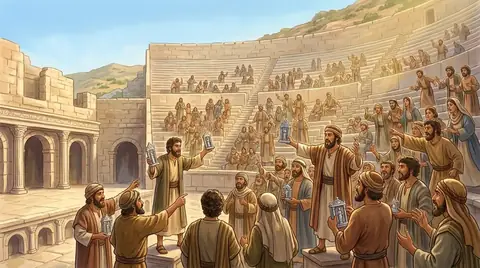 Place · CityEphesusThe great port and temple city of western Asia Minor where Paul preached for three years, a riot broke out over the…
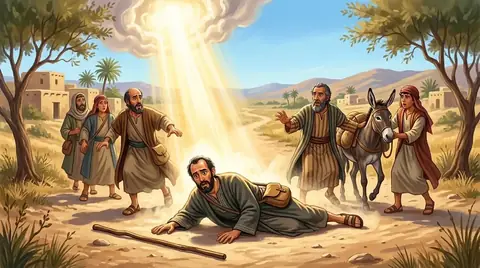 PersonPaulA Pharisee who hated the church until the risen Jesus met him on the road to Damascus. He became the apostle to the…
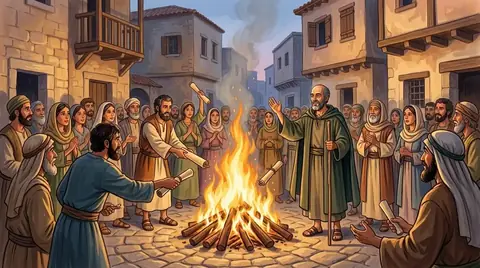 Custom · ForbiddenMagicSpells, charms, fortune-telling and calling up the dead, common among Israel's neighbours and strictly forbidden to…
Written for this app in its own words, from the Bible, with the facts checked against Bible dictionaries and encyclopedias: Easton's, Smith's, Fausset's, ISBE, Holman, the New Bible Dictionary, Vine's and the Thompson Chain topics.
