
Place · Worship
The court of the priests
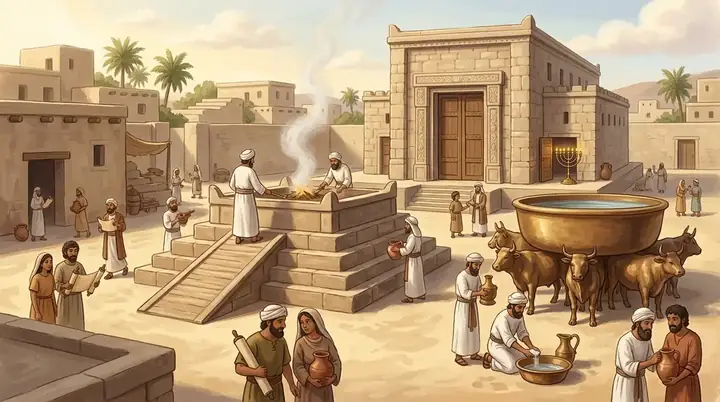
The inner court of the temple, where the great altar stood and the priests did their work. Ordinary Israelites looked on from the court outside it.
- Held
- The altar of burnt offering, the bronze Sea and the lavers (2 Chronicles 4:1–10)
- In Solomon's temple
- Walled with three courses of dressed stone topped by cedar beams (1 Kings 6:36)
- In Herod's temple
- Reached through the Court of the Women and the narrow Court of Israel
In Solomon's temple
Solomon laid out his temple with two courts. The inner one, which the Bible calls the court of the priests or the upper court (2 Chronicles 4:9; Jeremiah 36:10), lay in front of the sanctuary and was enclosed by a wall of three rows of dressed stone topped with cedar beams (1 Kings 6:36). In it stood the bronze altar, 30 ft (9 m) square, the great basin called the Sea resting on twelve bronze oxen, and ten smaller lavers for washing the offerings (2 Chronicles 4:1–6). Round it lay the "great court" where the people gathered. Jehoshaphat stood there before the new court to pray when enemies invaded (2 Chronicles 20:5), and Baruch read Jeremiah's scroll to the crowd from a chamber in the upper court (Jeremiah 36:10). Priests served here daily, offering the morning and evening sacrifices, and the people watched from outside the wall.
In Herod's temple
By the time of Jesus the arrangement was more elaborate. Inside the Court of the Gentiles came the Court of the Women, open to all Israelites, then a narrow strip called the Court of Israel for Jewish men, and beyond it, a step higher, the Court of the Priests with the altar and the laver and the sanctuary itself. Here Zechariah was burning incense when the angel appeared to him (Luke 1:9–11), and here the priests slaughtered the Passover lambs by the thousand. The temple was burnt by the Romans in AD 70 and nothing of these courts remains above ground.
What it meant
The courts were steps of nearness: nations, women, men, priests, and at last the high priest alone in the Most Holy Place. Hebrews says that Christ has opened a new and living way, so that all who trust him may draw near (Hebrews 10:19–22).
Key verses
- 1 Kings 6:36
And he built the inner court with three rows of hewed stone, and a row of cedar beams.
- 2 Chronicles 4:9
Furthermore he made the court of the priests, and the great court, and doors for the court, and overlaid the doors of them with brass.
- 2 Chronicles 20:5
And Jehoshaphat stood in the congregation of Judah and Jerusalem, in the house of the Lord, before the new court,
- Jeremiah 36:10
Then read Baruch in the book the words of Jeremiah in the house of the Lord, in the chamber of Gemariah the son of Shaphan the scribe, in the higher court, at the entry of the new gate of the Lord’s house, in the ears of all the people.
- Hebrews 10:19
Having therefore, brethren, boldness to enter into the holiest by the blood of Jesus,
Read next
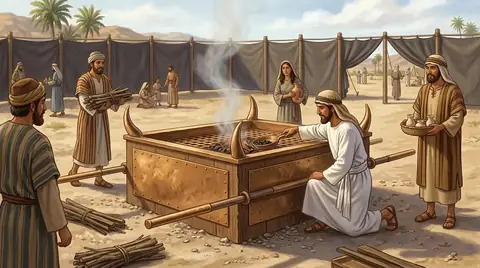 Thing · WorshipThe altarA raised structure of earth, stone or bronze on which sacrifices were offered to God. The big bronze altar stood in the…
 Person · KingSolomonDavid's son and Israel's third king, who asked God for wisdom and received riches and fame as well. He built the temple…
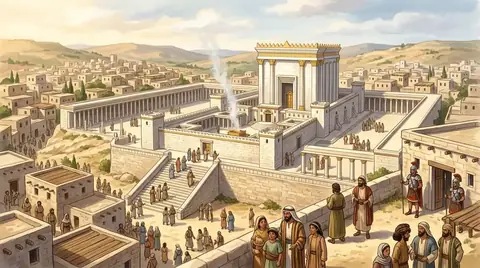 Thing · WorshipThe TempleGod's house in Jerusalem, where he was worshipped and the sacrifices offered. Solomon built it, Babylon burned it, the…
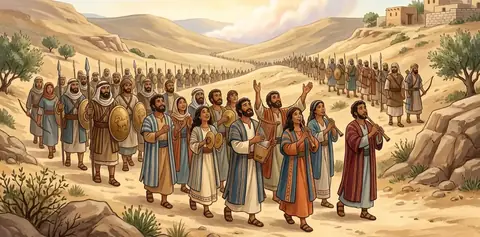 PersonJehoshaphatOne of Judah's best kings, who sent teachers of God's law through the land and won a battle by sending singers ahead of…
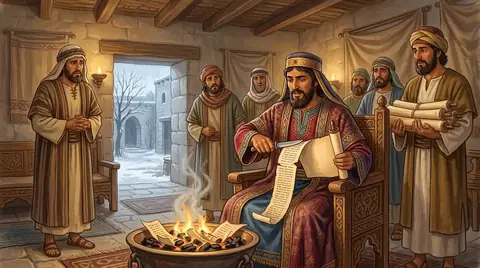 PersonBaruchJeremiah's faithful secretary. He wrote the prophet's words on a scroll, read them in the temple, and wrote them all…
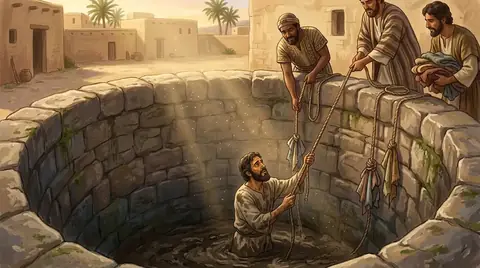 PersonJeremiahThe prophet who warned Judah for forty years that Babylon was coming, and wept as it came. He was beaten, put in the…
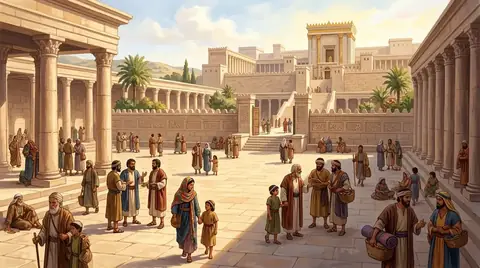 Place · WorshipThe Court of the GentilesThe huge outer court of Herod's temple, open to anyone. Jesus drove the traders out of it, and a wall with warning…
 PersonZechariahThe prophet who, with Haggai, urged the returned exiles to rebuild the temple, and whose book foretells the humble King…
Written for this app in its own words, from the Bible, with the facts checked against Bible dictionaries and encyclopedias: Easton's, Smith's, Fausset's, ISBE, Holman, the New Bible Dictionary, Vine's and the Thompson Chain topics. Also: Josephus, Jewish War 5.5; Edersheim, The Temple: Its Ministry and Services.
