
Plant · Food
Corn
In the King James Bible "corn" means grain of any kind, chiefly wheat and barley, never maize. It was Israel's staple food, and the Bible is full of its sowing, reaping and threshing.
- Means
- Grain: wheat, barley, spelt and the like (not maize, which was unknown)
- Eaten as
- Bread, parched (roasted) grain, raw ears rubbed in the hands
- Where
- Genesis 41:49; Deuteronomy 33:28; Ruth 2:14; Matthew 12:1; John 12:24
What it was
In 1611 "corn" was the English word for grain, and the King James Bible uses it that way. The corn of the Bible is wheat and barley, sown after the autumn rains and reaped in spring: barley around Passover, wheat around Pentecost. Grain was ground for bread, roasted in the ear as "parched corn" (Ruth 2:14; 1 Samuel 17:17), or eaten straight from the field, as the disciples did when they rubbed ears of corn in their hands on a Sabbath (Matthew 12:1; Luke 6:1). The law allowed a traveller to pick ears by hand but not to put a sickle to a neighbour's field (Deuteronomy 23:25). Plenty of corn was part of the blessing Isaac gave Jacob (Genesis 27:28), and corn with wine and oil was the sign of a good year (Deuteronomy 7:13).
In the Bible
Joseph stored up Egypt's grain "as the sand of the sea" in the seven good years, and his brothers came down to buy corn in the famine (Genesis 41:49; Genesis 42:1–3). Samson burnt the Philistines' standing corn and the sheaves already cut (Judges 15:5). Ruth gleaned in the barley fields of Boaz. The Israelites ate the corn of Canaan the day after the Passover, and the manna stopped (Joshua 5:11–12).
What it meant
Grain stands for God's daily provision: he "filleth thee with the finest of the wheat" (Psalms 147:14). Jesus drew on it for his deepest sayings. A grain of corn must fall into the ground and die, or it stays alone; if it dies it bears much fruit (John 12:24), spoken of his own death. The wheat is gathered into the barn and the chaff burnt (Matthew 3:12), and the kingdom grows like seed, "first the blade, then the ear, after that the full corn in the ear" (Mark 4:28).
Key verses
- Genesis 41:49
And Joseph gathered corn as the sand of the sea, very much, until he left numbering; for it was without number.
- Deuteronomy 23:25
When thou comest into the standing corn of thy neighbour, then thou mayest pluck the ears with thine hand; but thou shalt not move a sickle unto thy neighbour’s standing corn.
- Ruth 2:14
And Boaz said unto her, At mealtime come thou hither, and eat of the bread, and dip thy morsel in the vinegar. And she sat beside the reapers: and he reached her parched corn, and she did eat, and was sufficed, and left.
- Matthew 12:1
At that time Jesus went on the sabbath day through the corn; and his disciples were an hungred, and began to pluck the ears of corn, and to eat.
- John 12:24
Verily, verily, I say unto you, Except a corn of wheat fall into the ground and die, it abideth alone: but if it die, it bringeth forth much fruit.
Read next
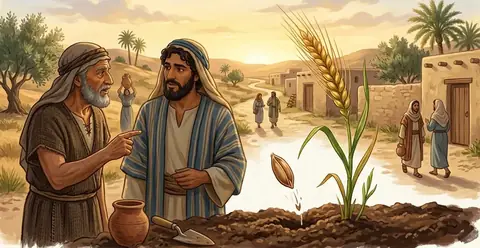 Plant · FoodWheatThe main bread grain of Bible lands, sown in autumn and reaped in early summer. Its harvest, its threshing and its…
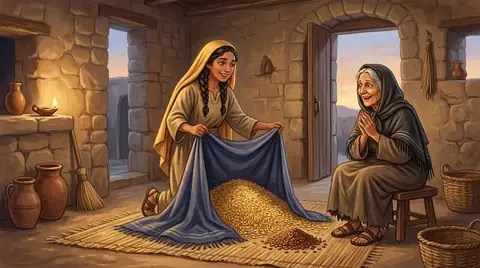 Plant · FoodBarleyThe grain of the poor, cheaper than wheat and the first to ripen, at Passover. Ruth gleaned it, Gideon's enemy dreamed…
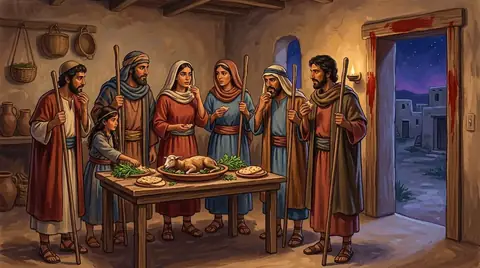 FeastPassoverThe yearly feast remembering the night God rescued Israel from Egypt, when death passed over every house marked with a…
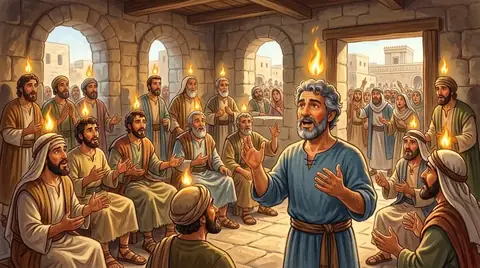 FeastPentecost (the Feast of Weeks)The harvest feast kept fifty days after Passover, when two loaves baked from the new wheat were offered to God. On the…
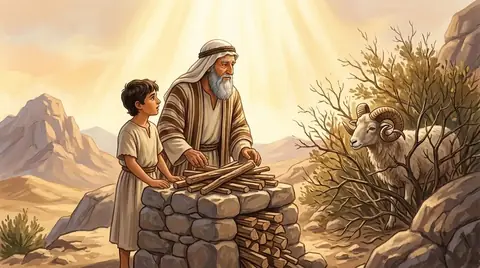 PersonIsaacThe son God promised to Abraham and Sarah when they were far too old for children, offered on Mount Moriah and spared.…
 PersonJacobIsaac's younger twin son, who won his brother's birthright and blessing by cunning, was changed by God, and was renamed…
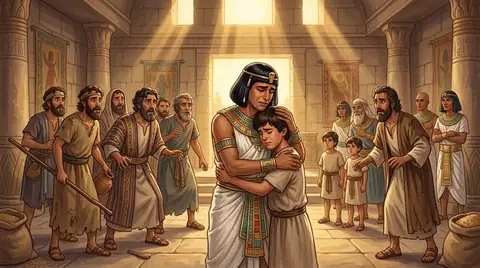 PersonJosephJacob's favourite son, sold by his brothers into Egypt, where he rose from prison to rule the land and saved his family…
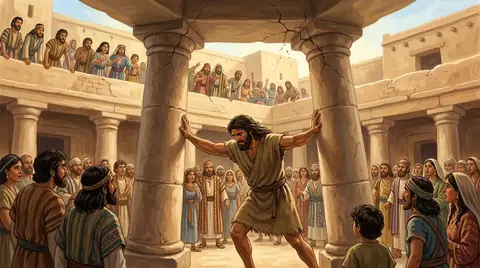 Person · JudgeSamsonThe judge of Israel with superhuman strength from God, a Nazirite from birth. He fought the Philistines single-handed…
Written for this app in its own words, from the Bible, with the facts checked against Bible dictionaries and encyclopedias: Easton's, Smith's, Fausset's, ISBE, Holman, the New Bible Dictionary, Vine's and the Thompson Chain topics.
