
Thing · Clothing
Cloak
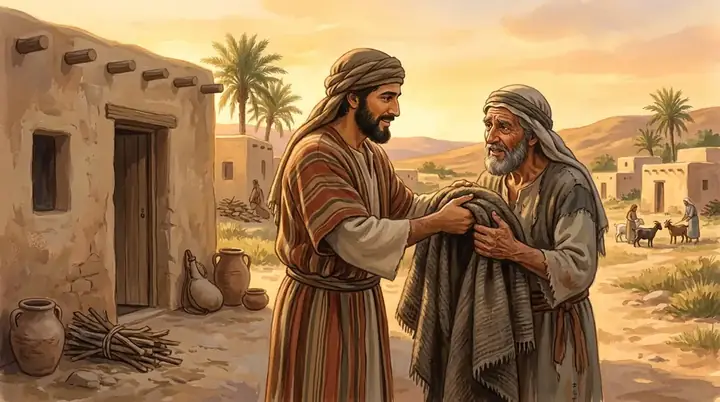
The large outer garment worn over the tunic, a square of wool thrown round the shoulders. It was a coat by day and a blanket by night, which is why the Law said a poor man's cloak must be given back by sunset.
- Worn by
- Everyone; the high priest's robe under the ephod and a king's robe used the same Hebrew word
- Law
- A cloak taken as a pledge was returned before nightfall (Exodus 22:26–27; Deuteronomy 24:13)
- Known for
- Jesus' "let him have thy cloke also" (Matthew 5:40); the cloak Paul left at Troas (2 Timothy 4:13)
What it was
A man wore two main garments: a long shirt-like tunic next to the skin, and over it a cloak, a big rectangle of woollen cloth wrapped round the body or thrown over the shoulders, with the edges hanging loose. He laid it aside to work, spread it on the ground to sit on, and wrapped himself in it to sleep. The Old Testament uses one word for the ordinary robe, for the blue robe the high priest wore under the ephod (Exodus 28:31), and for the robe of a king or a man of standing; Job tore his when the news came (Job 1:20), and Saul caught hold of Samuel's and tore it (1 Samuel 15:27).
In the Bible
Because a poor man had only the one cloak, the Law forbade a lender to keep it overnight as security: "for that is his covering only... wherein shall he sleep?" (Exodus 22:26–27). Jesus went further and told his followers that if someone sued them for their tunic they should let him take the cloak too (Matthew 5:40), giving up even the thing the Law protected rather than fight for it. A sick woman reached through the crowd to touch the edge of his cloak and was healed (Mark 5:27–29). Paul, in prison and cold, asked Timothy to bring the cloak he had left with Carpus at Troas (2 Timothy 4:13): a thick travelling coat against the weather, and a touching glimpse of an old man's needs. Isaiah pictures the LORD armed for battle "clad with zeal as a cloke" (Isaiah 59:17).
What it means
A cloak covers, so it becomes a word for an excuse. Jesus said that those who had heard him had "no cloke for their sin" (John 15:22), and Peter warned believers not to use their freedom "for a cloke of maliciousness" (1 Peter 2:16).
Key verses
- Exodus 22:26–27
If thou at all take thy neighbour’s raiment to pledge, thou shalt deliver it unto him by that the sun goeth down: For that is his covering only, it is his raiment for his skin: wherein shall he sleep? and it shall come to pass, when he crieth unto me, that I will hear; for I am gracious.
- Matthew 5:40
And if any man will sue thee at the law, and take away thy coat, let him have thy cloke also.
- 2 Timothy 4:13
The cloke that I left at Troas with Carpus, when thou comest, bring with thee, and the books, but especially the parchments.
- 1 Peter 2:16
As free, and not using your liberty for a cloke of maliciousness, but as the servants of God.
Read next
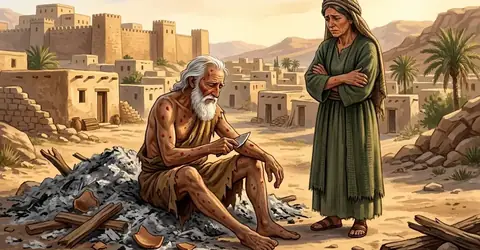 PersonJobA rich and godly man who lost his children, his wealth and his health in a single stroke, and would not curse God. His…
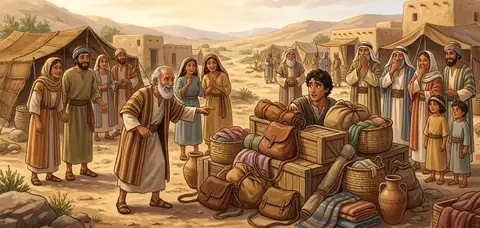 Person · KingSaulIsrael's first king, a tall Benjamite chosen when the people demanded a king like the nations. He began humbly and won…
 Person · Prophet and judgeSamuelThe prophet who led Israel from the time of the judges into the time of the kings. Given to God by his mother Hannah…
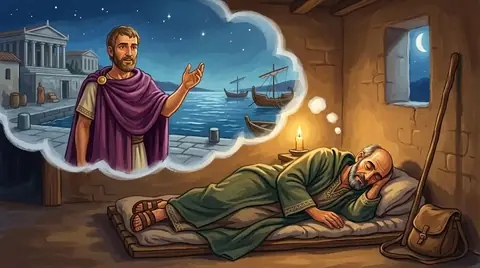 PlaceTroasA busy seaport on the north-west coast of Asia Minor. There Paul saw the vision of the man of Macedonia, and later…
Written for this app in its own words, from the Bible, with the facts checked against Bible dictionaries and encyclopedias: Easton's, Smith's, Fausset's, ISBE, Holman, the New Bible Dictionary, Vine's and the Thompson Chain topics.
