
Thing · Disease
Leprosy
Hebrew tsara'ath, a word wider than modern leprosy
A group of skin diseases that made a person unclean and cut them off from home, worship and company. The priests judged it by the rules of Leviticus 13–14, and only God could heal it. Jesus touched lepers and made them clean.
- The law
- Leviticus 13–14; Numbers 5:1–4; Deuteronomy 24:8
- Lepers in the Bible
- Miriam (Numbers 12), Naaman (2 Kings 5), Gehazi (2 Kings 5:27), Uzziah (2 Chronicles 26:19–21), the four at Samaria (2 Kings 7:3), the ten healed by Jesus (Luke 17:12–19)
- Healed by Jesus
- Matthew 8:2–4; Mark 1:40–45; Luke 17:12–19
What it was
The Bible's "leprosy" covers more than the disease we call by that name today. It took in a range of skin conditions, as well as mould in clothes and in the walls of houses (Leviticus 13:47; Leviticus 14:34). The priest, not a doctor, examined the sufferer: a swelling, a scab, a bright spot, hair turned white, raw flesh. If it was leprosy, the person was unclean. If a doubtful case cleared up in a week or two, they were declared clean again (Leviticus 13:1–46).
What it meant
A leper had to live outside the camp, wear torn clothes, leave the hair uncombed, cover the upper lip, and call out "Unclean, unclean" so that no one would touch them (Leviticus 13:45–46). It was a living death: no family, no worship, no touch. Several times leprosy came as God's judgment, on Miriam for speaking against Moses, on Gehazi for greed, on King Uzziah for pushing into the temple to burn incense. Only God could heal it; when the king of Syria sent Naaman to Israel's king to be cured, the king tore his clothes and asked, "Am I God?" (2 Kings 5:7). Naaman was healed by washing seven times in the Jordan as Elisha said. A healed leper brought two birds, one killed and one set free, then offerings on the eighth day, before coming back into the community (Leviticus 14:1–32).
Jesus and the lepers
A leper knelt before Jesus and said, "If thou wilt, thou canst make me clean." Jesus did what no one did: he put out his hand and touched him, and said, "I will; be thou clean" (Mark 1:40–42). Instead of the uncleanness passing to Jesus, cleanness passed to the man. Jesus then sent him to the priest with the offering Moses commanded. Ten lepers were healed on the road to Jerusalem, and only one, a Samaritan, came back to thank him (Luke 17:12–19). Jesus even ate in the house of "Simon the leper" at Bethany (Matthew 26:6). Healing lepers was one of the signs that he was the one to come (Matthew 11:5).
For us
The Bible treats leprosy as a picture of sin: it starts small, spreads, shuts a person out from God and others, and cannot be cured from inside. Jesus reaches out to the unclean and makes them whole.
Key verses
- Leviticus 13:45–46
And the leper in whom the plague is, his clothes shall be rent, and his head bare, and he shall put a covering upon his upper lip, and shall cry, Unclean, unclean. All the days wherein the plague shall be in him he shall be defiled; he is unclean: he shall dwell alone; without the camp shall his habitation be.
- 2 Kings 5:1–14
Now Naaman, captain of the host of the king of Syria, was a great man with his master, and honourable, because by him the Lord had given deliverance unto Syria: he was also a mighty man in valour, but he was a leper. And the Syrians had gone out by companies, and had brought away captive out of the land of Israel a little maid; and she waited on Naaman’s wife. And she said unto her mistress, Would God my lord were with the prophet that is in Samaria! for he would recover him of his leprosy. …
- Mark 1:40–42
And there came a leper to him, beseeching him, and kneeling down to him, and saying unto him, If thou wilt, thou canst make me clean. And Jesus, moved with compassion, put forth his hand, and touched him, and saith unto him, I will; be thou clean. And as soon as he had spoken, immediately the leprosy departed from him, and he was cleansed.
- Luke 17:12–19
And as he entered into a certain village, there met him ten men that were lepers, which stood afar off: And they lifted up their voices, and said, Jesus, Master, have mercy on us. And when he saw them, he said unto them, Go shew yourselves unto the priests. And it came to pass, that, as they went, they were cleansed. …
- Matthew 11:5
The blind receive their sight, and the lame walk, the lepers are cleansed, and the deaf hear, the dead are raised up, and the poor have the gospel preached to them.
Read next
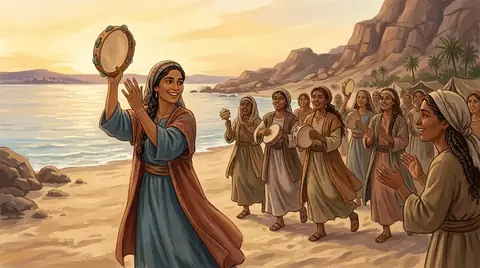 PersonMiriamMoses' older sister, who watched over his basket in the Nile and later led the women of Israel in song at the Red Sea.…
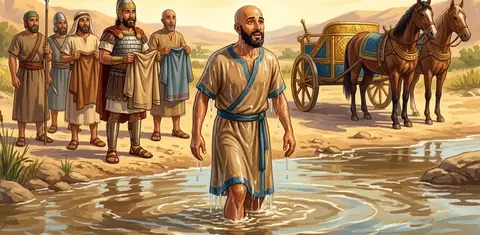 PersonNaamanThe Syrian general who had leprosy and was healed when he humbled himself and washed seven times in the Jordan at…
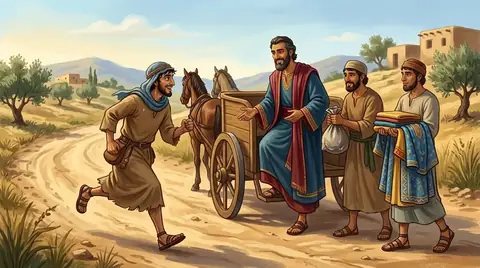 PersonGehaziElisha's servant, who ran after Naaman to get the silver and clothes his master had refused, lied about it, and was…
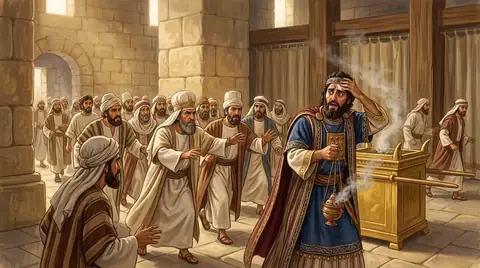 PersonUzziahKing of Judah for fifty-two years, a strong and godly ruler until pride led him into the temple to burn incense. God…Place · RiverJordanThe river of the Bible: Israel crossed it on dry ground into the promised land, Elijah and Elisha parted it, Naaman…PersonElishaElijah's successor, a farmer's son who asked for a double share of his master's spirit and received it. His long…
Written for this app in its own words, from the Bible, with the facts checked against Bible dictionaries and encyclopedias: Easton's, Smith's, Fausset's, ISBE, Holman, the New Bible Dictionary, Vine's and the Thompson Chain topics.
