
Thing · Worship
The cherubim over the ark
CHAIR-u-bim
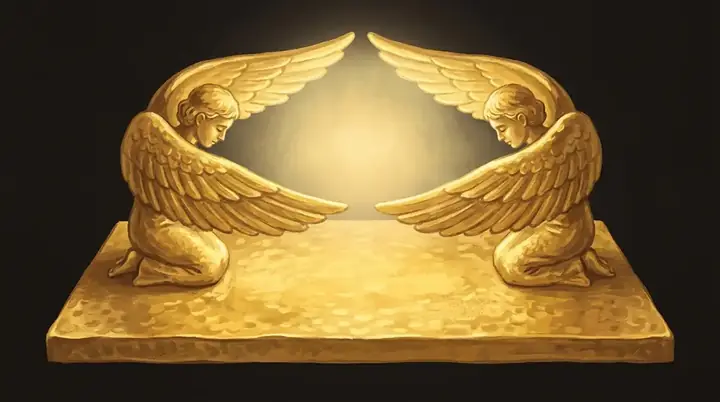
Two golden figures with outspread wings, one at each end of the ark's lid. God promised to meet with Moses between them, and there the blood was sprinkled on the Day of Atonement.
- Where
- On the mercy seat, the gold lid of the ark of the covenant (Exodus 25:18–22)
- Made of
- Hammered gold, of one piece with the lid
- In the temple
- Solomon set two giant olive-wood cherubim, gold-plated and 15 feet (4.5 m) high (1 Kings 6:23–28)
What they were
When God gave Moses the pattern for the tabernacle, he told him to make a lid of pure gold for the ark, the mercy seat, and to hammer out a cherub at each end of it. The two figures looked towards each other and down at the lid, and their wings stretched up and over it, so that the whole thing was one piece of gold (Exodus 25:17–20). Bezaleel made them just so (Exodus 37:7–9). Then God said the words that gave the ark its meaning: he would meet Moses there, and speak with him "from between the two cherubims" (Exodus 25:22; Numbers 7:89).
The lid and its cherubim stood in the Most Holy Place, behind the veil, where no one went but the high priest, once a year. On the Day of Atonement he sprinkled blood on the mercy seat and in front of it, under the wings of the cherubim (Leviticus 16:14–15).
In Solomon's temple
Solomon kept the ark with its small golden cherubim, but he set it in a far larger room, and there he placed two more cherubim, carved from olive wood and overlaid with gold. Each stood 15 feet (4.5 m) high, with a wingspan of 15 feet, so that the four wings together reached from one wall to the other, and the ark was carried in and set beneath them (1 Kings 6:23–28; 1 Kings 8:6–7; 2 Chronicles 3:10–13).
What it meant
The Bible speaks of God as the one who "dwelleth between the cherubims" (Psalms 80:1; 2 Samuel 6:2). The figures marked the place of his throne on earth. Yet Hezekiah prayed before them to the God who made heaven and earth (2 Kings 19:15): the cherubim did not hold him; they only showed where he had promised to be found. Cherubim had guarded the way back to Eden with a sword (Genesis 3:24); here they looked down on the blood that opened the way to God.
Points to Christ
Hebrews names "the cherubims of glory shadowing the mercyseat" and says it cannot go into every detail (Hebrews 9:5), because the whole room was a picture. Jesus is the true mercy seat, the meeting place between God and us, by his own blood (Romans 3:25; Hebrews 9:11–12). At the empty tomb Mary saw two angels sitting where his body had lain, one at the head and one at the feet (John 20:12), a scene many have seen as the mercy seat come true.
Key verses
- Exodus 25:18–22
And thou shalt make two cherubims of gold, of beaten work shalt thou make them, in the two ends of the mercy seat. And make one cherub on the one end, and the other cherub on the other end: even of the mercy seat shall ye make the cherubims on the two ends thereof. And the cherubims shall stretch forth their wings on high, covering the mercy seat with their wings, and their faces shall look one to another; toward the mercy seat shall the faces of the cherubims be. …
- Numbers 7:89
And when Moses was gone into the tabernacle of the congregation to speak with him, then he heard the voice of one speaking unto him from off the mercy seat that was upon the ark of testimony, from between the two cherubims: and he spake unto him.
- 1 Kings 6:23–28
And within the oracle he made two cherubims of olive tree, each ten cubits high. And five cubits was the one wing of the cherub, and five cubits the other wing of the cherub: from the uttermost part of the one wing unto the uttermost part of the other were ten cubits. And the other cherub was ten cubits: both the cherubims were of one measure and one size. …
- Psalms 80:1
To the chief Musician upon Shoshannim–Eduth, A Psalm of Asaph. Give ear, O Shepherd of Israel, thou that leadest Joseph like a flock; thou that dwellest between the cherubims, shine forth.
- Hebrews 9:5
And over it the cherubims of glory shadowing the mercyseat; of which we cannot now speak particularly.
Read next
 Thing · WorshipThe ark of the covenantThe gold-covered chest that held the Ten Commandments and stood in the Most Holy Place. God promised to meet with…
 Person · KingSolomonDavid's son and Israel's third king, who asked God for wisdom and received riches and fame as well. He built the temple…
 PersonMosesThe man God used to bring Israel out of Egypt, give them his Law at Sinai, and lead them for forty years in the…
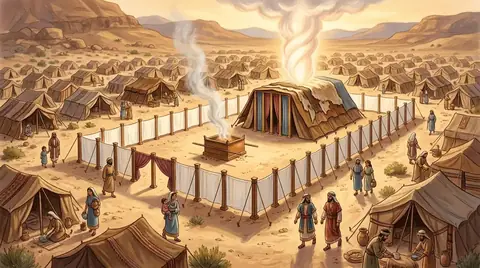 Thing · WorshipThe tabernacleThe holy tent Israel built in the wilderness, by God's own pattern, so that he could dwell in the middle of his people.…
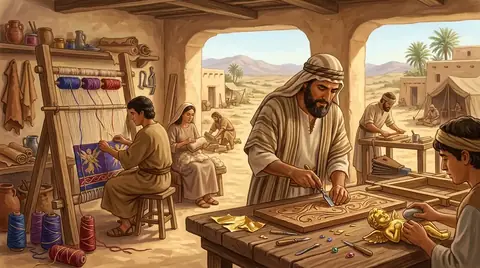 PersonBezalelThe craftsman from Judah whom God filled with his Spirit to make the tabernacle and everything in it, from the ark of…
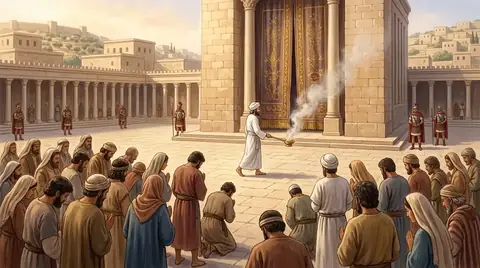 Feast · FastThe Day of AtonementThe one day in the year when the high priest went behind the veil with blood to atone for all Israel's sins, while a…
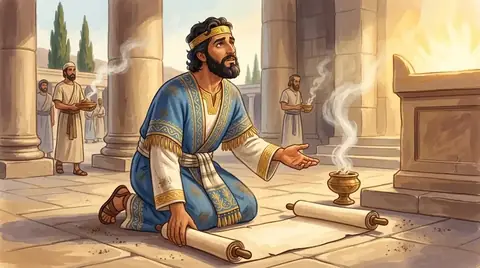 Person · KingHezekiahOne of Judah's best kings. He cleansed the temple, smashed the idols, trusted God when Assyria besieged Jerusalem, and…
Written for this app in its own words, from the Bible, with the facts checked against Bible dictionaries and encyclopedias: Easton's, Smith's, Fausset's, ISBE, Holman, the New Bible Dictionary, Vine's and the Thompson Chain topics.
