
Title · Ruler
Caesar
The Roman emperors, from Julius Caesar
The title of the Roman emperor, taken from Julius Caesar's family name. Four Caesars touch the New Testament: Augustus, Tiberius, Claudius and Nero. Jesus said to give Caesar what is Caesar's, and God what is God's.
- Augustus
- Emperor at Jesus' birth; ordered the census (Luke 2:1)
- Tiberius
- Emperor during Jesus' ministry; the face on the tribute coin (Luke 3:1; Matthew 22:21)
- Claudius
- The famine; expelled the Jews from Rome (Acts 11:28; Acts 18:2)
- Nero
- The Caesar Paul appealed to; later a persecutor (Acts 25:11; Philippians 4:22)
Who they were
Julius Caesar's family name became the title of every Roman emperor after him. In the New Testament "Caesar" nearly always means whoever was emperor at the time, the ruler of the whole known world, to whom Judea paid tribute and whose image was on the coins. Augustus was Caesar at the time of Jesus' birth (Luke 2:1); Tiberius when John the Baptist began to preach (Luke 3:1); Claudius while the church was young (Acts 11:28); and Nero when Paul was tried.
In the Gospels
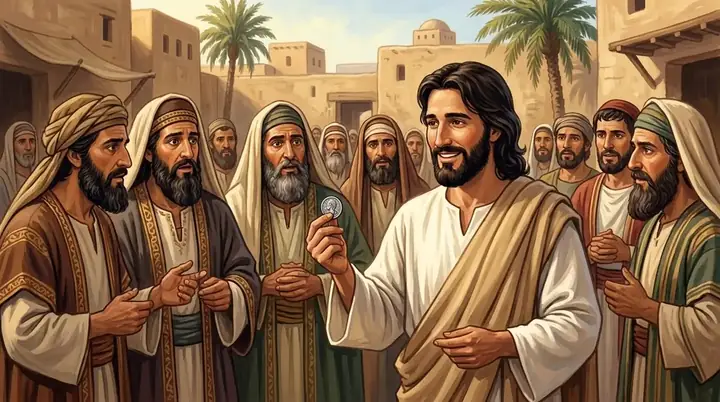
The Pharisees and Herodians tried to trap Jesus: was it lawful to pay tax to Caesar? Yes, and they would be hated as collaborators; no, and they could report him to Rome. He asked for a coin, pointed to Caesar's head on it and said, "Render therefore unto Caesar the things which are Caesar's; and unto God the things that are God's" (Matthew 22:21). At his trial the Jewish leaders told Pilate, "If thou let this man go, thou art not Caesar's friend", and cried, "We have no king but Caesar" (John 19:12–15).
In Acts
Roman citizens could appeal to the emperor, and when Festus wanted to send Paul to Jerusalem for trial, Paul said, "I appeal unto Caesar" (Acts 25:11). That took him to Rome, where he wrote of believers in "Caesar's household" (Philippians 4:22). The gospel had reached the palace of Nero himself.
For us
Christians honour rulers and pay their taxes (Romans 13:1–7), but Caesar is not God. When the two clash, "we ought to obey God rather than men" (Acts 5:29).
Key verses
- Luke 2:1
And it came to pass in those days, that there went out a decree from Cesar Augustus, that all the world should be taxed.
- Matthew 22:21
They say unto him, Cesar’s. Then saith he unto them, Render therefore unto Cesar the things which are Cesar’s; and unto God the things that are God’s.
- John 19:15
But they cried out, Away with him, away with him, crucify him. Pilate saith unto them, Shall I crucify your King? The chief priests answered, We have no king but Cesar.
- Acts 25:11
For if I be an offender, or have committed any thing worthy of death, I refuse not to die: but if there be none of these things whereof these accuse me, no man may deliver me unto them. I appeal unto Cesar.
- Philippians 4:22
All the saints salute you, chiefly they that are of Cesar’s household.
Read next
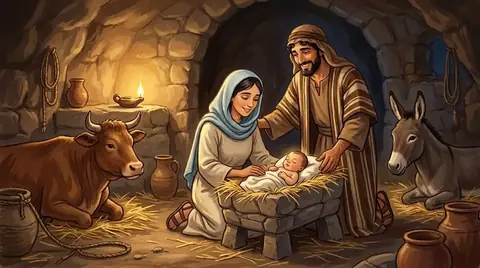 PersonAugustusThe first emperor of Rome, whose order for a census brought Joseph and Mary to Bethlehem in time for Jesus' birth.…
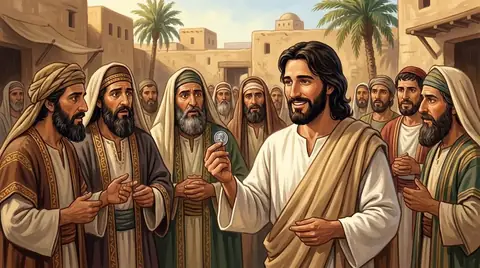 PersonTiberiusThe Roman emperor while John the Baptist preached and Jesus taught, died and rose again. In the Gospels he is simply…
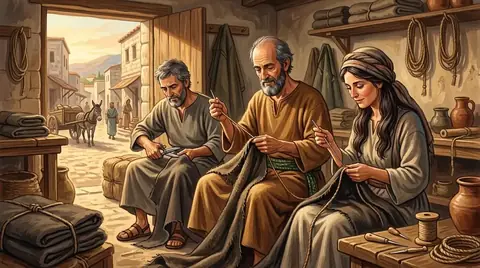 PersonClaudiusThe fourth Roman emperor, who reigned while the gospel spread through the empire. A famine in his reign was foretold by…PersonNeroThe Roman emperor to whom Paul appealed as "Caesar". He blamed the Christians for the great fire of Rome in AD 64 and…
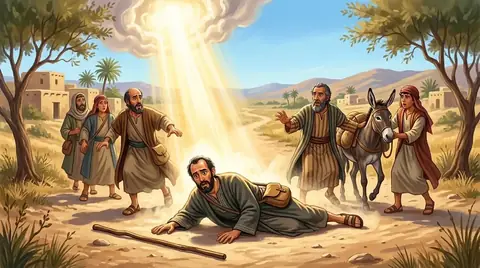 PersonPaulA Pharisee who hated the church until the risen Jesus met him on the road to Damascus. He became the apostle to the…
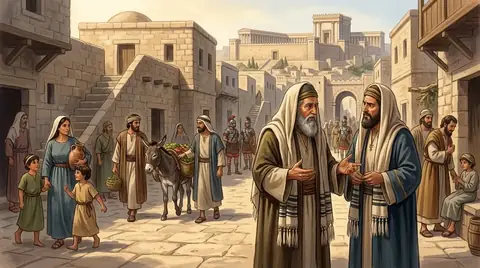 GroupPhariseesThe most exacting of the Jewish religious parties in Jesus' day, devoted to keeping the Law and the traditions added to…GroupHerodiansJews who wanted Herod's family, and therefore Rome, to keep ruling. Normally at odds with the Pharisees, they joined…
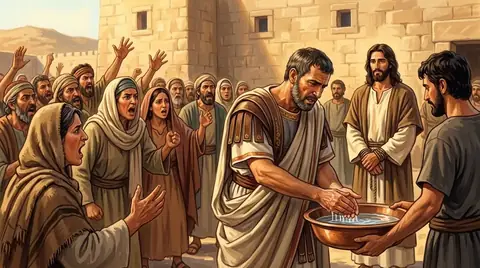 PersonPilateThe Roman governor of Judea who tried Jesus. He said three times that he found no fault in him, yet handed him over to…
Written for this app in its own words, from the Bible, with the facts checked against Bible dictionaries and encyclopedias: Easton's, Smith's, Fausset's, ISBE, Holman, the New Bible Dictionary, Vine's and the Thompson Chain topics.
