
Thing · Worship
The bread of the Presence
KJV "shewbread"; Hebrew "bread of the face"
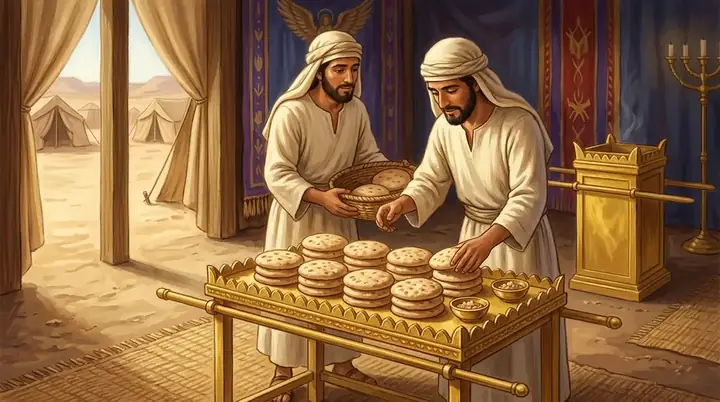
Twelve loaves, one for each tribe of Israel, set out on a golden table inside the Holy Place and renewed every Sabbath. They stood always before the LORD's face, and only the priests might eat them.
- Where
- On the gold table in the Holy Place of the tabernacle and temple (Exodus 25:30)
- How many
- Twelve loaves in two rows of six, with frankincense (Leviticus 24:5–7)
- Eaten by
- The priests, each Sabbath, in a holy place (Leviticus 24:8–9)
What it was
Just inside the tabernacle, on the right, stood a small table overlaid with gold, with its own dishes, spoons and jugs of gold (Exodus 25:23–30). On it lay twelve large flat loaves of fine flour, in two rows, with pure frankincense on each row. Every Sabbath the priests baked fresh loaves and set them out, and ate the old ones in the sanctuary (Leviticus 24:5–9). The Hebrew name means "bread of the face": bread set before God's face, in his presence, week in, week out.
What it meant
The twelve loaves were the twelve tribes, kept always before the LORD. Israel lived on the food God gave, and here they gave it back, a thank-offering that never stopped. God's people were, as it were, guests at his table.
David and Jesus
When David was running from Saul and came hungry to the priest Ahimelech at Nob, there was no ordinary bread, only the loaves just taken off the table. The priest gave them to him (1 Samuel 21:1–6). Centuries later, when the Pharisees blamed Jesus' disciples for plucking grain on the Sabbath, Jesus pointed to that story. God's law was never meant to starve the hungry: "I will have mercy, and not sacrifice" (Matthew 12:3–7).
Key verses
- Exodus 25:30
And thou shalt set upon the table shewbread before me alway.
- Leviticus 24:5–9
And thou shalt take fine flour, and bake twelve cakes thereof: two tenth deals shall be in one cake. And thou shalt set them in two rows, six on a row, upon the pure table before the Lord. And thou shalt put pure frankincense upon each row, that it may be on the bread for a memorial, even an offering made by fire unto the Lord. …
- 1 Samuel 21:6
So the priest gave him hallowed bread: for there was no bread there but the shewbread, that was taken from before the Lord, to put hot bread in the day when it was taken away.
- Matthew 12:3–4
But he said unto them, Have ye not read what David did, when he was an hungred, and they that were with him; How he entered into the house of God, and did eat the shewbread, which was not lawful for him to eat, neither for them which were with him, but only for the priests?
- Hebrews 9:2
For there was a tabernacle made; the first, wherein was the candlestick, and the table, and the shewbread; which is called the sanctuary.
Read next
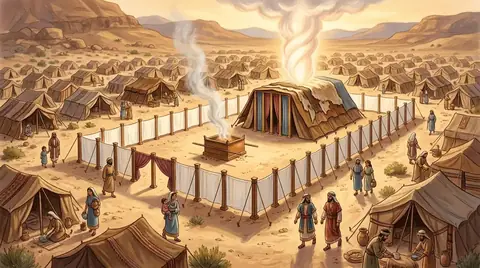 Thing · WorshipThe tabernacleThe holy tent Israel built in the wilderness, by God's own pattern, so that he could dwell in the middle of his people.…
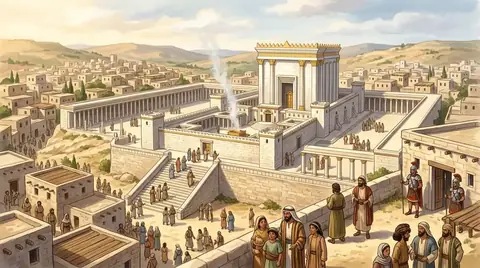 Thing · WorshipThe TempleGod's house in Jerusalem, where he was worshipped and the sacrifices offered. Solomon built it, Babylon burned it, the…
 Person · KingDavidThe shepherd boy who killed Goliath and became Israel's greatest king, "a man after God's own heart". He wrote many…
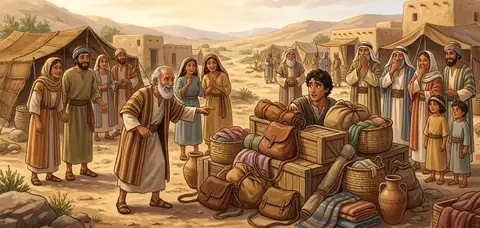 Person · KingSaulIsrael's first king, a tall Benjamite chosen when the people demanded a king like the nations. He began humbly and won…
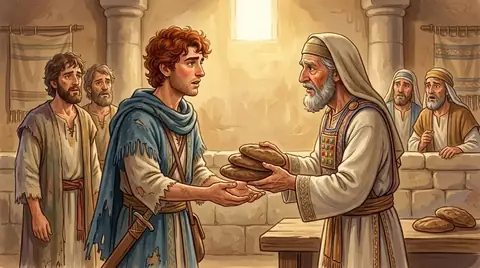 PersonAhimelechThe priest at Nob who gave the fleeing David the holy bread and Goliath's sword. For that kindness King Saul had him…Place · TownNobA priests' town near Jerusalem where the tabernacle stood in Saul's day. Ahimelech gave David the holy bread and…
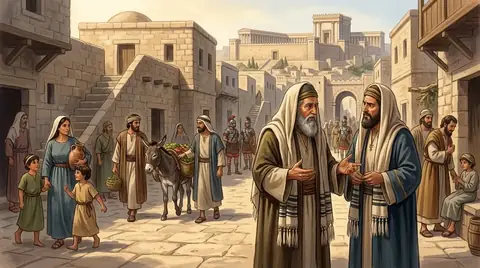 GroupPhariseesThe most exacting of the Jewish religious parties in Jesus' day, devoted to keeping the Law and the traditions added to…
Written for this app in its own words, from the Bible, with the facts checked against Bible dictionaries and encyclopedias: Easton's, Smith's, Fausset's, ISBE, Holman, the New Bible Dictionary, Vine's and the Thompson Chain topics.
