
Topic
Barren
Unable to have children. In Bible times it was a deep grief and a reproach for a woman. Yet many great births came to barren women after long waiting: Isaac, Jacob, Joseph, Samson, Samuel and John the Baptist.
- Who
- Sarah (Genesis 11:30); Rebekah (Genesis 25:21); Rachel (Genesis 29:31); Manoah's wife (Judges 13:2); Hannah (1 Samuel 1:5–6); Elisabeth (Luke 1:7)
- Promise
- Psalms 113:9; Isaiah 54:1
The grief
Children were seen as a gift and heritage from the LORD (Psalms 127:3), so a woman without them felt the shame keenly. "Give me children, or else I die," Rachel cried (Genesis 30:1). Hannah's rival taunted her year after year until she wept and would not eat (1 Samuel 1:6–7). Elisabeth spoke of her "reproach among men" (Luke 1:25).
God's answer
Again and again God chose barren women for his greatest gifts. Sarah, ninety years old, bore Isaac. Isaac prayed for Rebekah and she bore twins. God remembered Rachel and she bore Joseph. An angel promised Manoah's wife a son, Samson. Hannah's prayer was answered with Samuel, and old Elisabeth bore John the Baptist (Genesis 21:1–2; Genesis 25:21; Genesis 30:22–24; Judges 13:3; 1 Samuel 1:20; Luke 1:57). The lesson in each is that the child was God's gift, beyond human power.
For us
God "maketh the barren woman to keep house, and to be a joyful mother of children" (Psalms 113:9). Isaiah used the barren woman as a picture of God's people, desolate now but soon to have more children than they could count (Isaiah 54:1; Galatians 4:27). Those who wait without children are not forgotten by him (Isaiah 56:3–5).
Key verses
- Genesis 25:21
And Isaac intreated the Lord for his wife, because she was barren: and the Lord was intreated of him, and Rebekah his wife conceived.
- 1 Samuel 1:10–11
And she was in bitterness of soul, and prayed unto the Lord, and wept sore. And she vowed a vow, and said, O Lord of hosts, if thou wilt indeed look on the affliction of thine handmaid, and remember me, and not forget thine handmaid, but wilt give unto thine handmaid a man child, then I will give him unto the Lord all the days of his life, and there shall no razor come upon his head.
- Luke 1:7
And they had no child, because that Elisabeth was barren, and they both were now well stricken in years.
- Psalms 113:9
He maketh the barren woman to keep house, and to be a joyful mother of children. Praise ye the Lord.
- Isaiah 54:1
Sing, O barren, thou that didst not bear; break forth into singing, and cry aloud, thou that didst not travail with child: for more are the children of the desolate than the children of the married wife, saith the Lord.
Read next
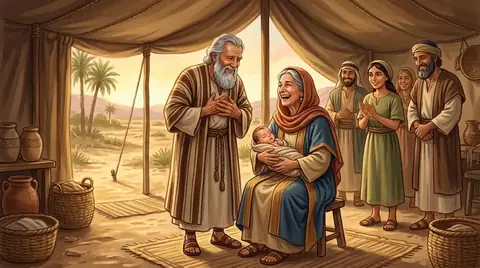 PersonSarahAbraham's wife and the mother of Isaac. She waited past ninety for the son God had promised, laughed when she heard it…
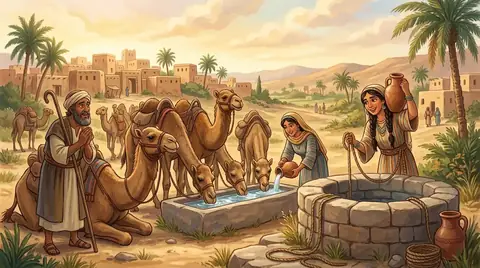 PersonRebekahIsaac's wife, found for him at a well far away in Abraham's homeland. She was told before her twins were born that the…
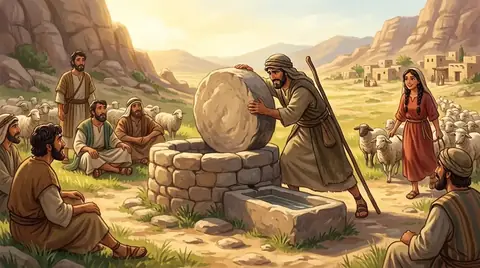 PersonRachelJacob's beloved wife, for whom he worked fourteen years. Long childless, she became the mother of Joseph and died…
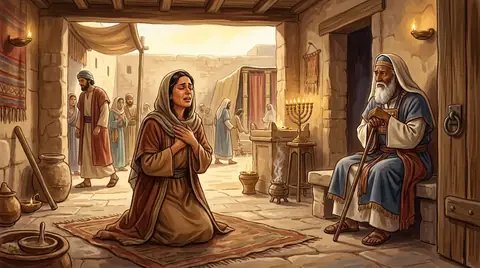 PersonHannahThe childless wife of Elkanah who prayed for a son at Shiloh, promised him to God, and became the mother of the prophet…
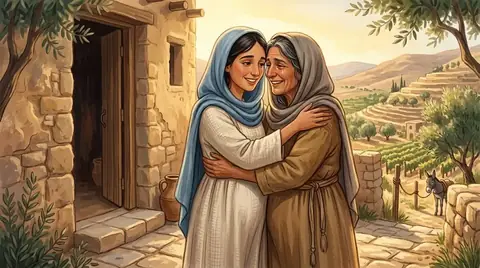 PersonElizabethThe elderly wife of the priest Zechariah and mother of John the Baptist. When Mary visited her, the unborn John leapt…
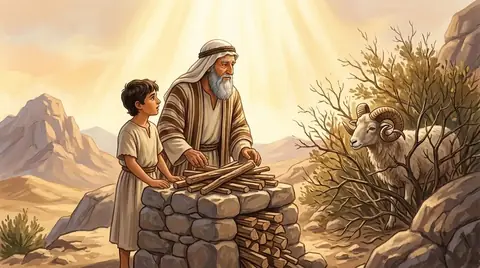 PersonIsaacThe son God promised to Abraham and Sarah when they were far too old for children, offered on Mount Moriah and spared.…
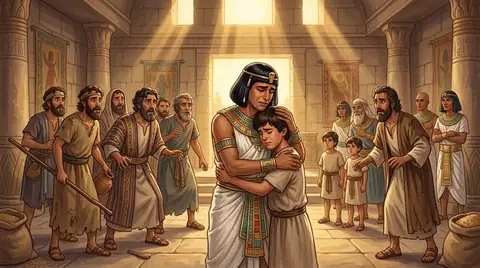 PersonJosephJacob's favourite son, sold by his brothers into Egypt, where he rose from prison to rule the land and saved his family…
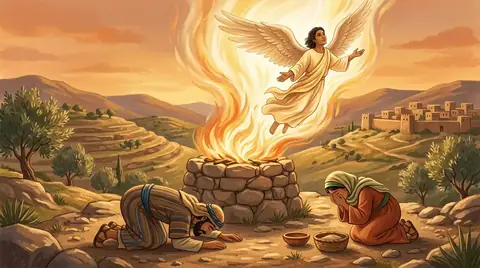 PersonManoahSamson's father, a man of Dan from Zorah, who with his wife received an angel's promise of a son and saw the angel rise…
Written for this app in its own words, from the Bible, with the facts checked against Bible dictionaries and encyclopedias: Easton's, Smith's, Fausset's, ISBE, Holman, the New Bible Dictionary, Vine's and the Thompson Chain topics.
