
Animal
Ass (donkey)
"ass" is the old English word for donkey
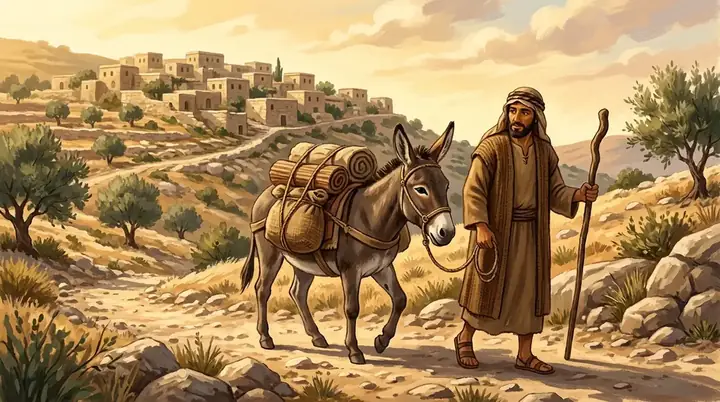
The donkey, the ordinary animal of Bible times for riding, ploughing and carrying loads. Kings rode donkeys in peacetime, so Jesus rode one into Jerusalem as the King of peace.
- Used for
- Riding, carrying loads, ploughing and turning the mill
- Famous ones
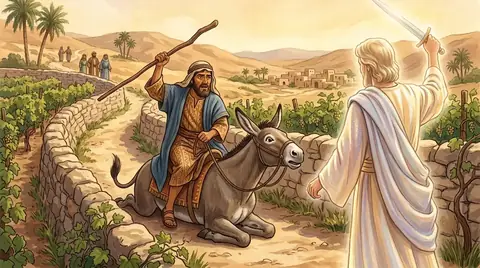
- Balaam's donkey that spoke (Numbers 22); the colt Jesus rode (Matthew 21)
- Wild ass
- A shy, swift animal of the desert, a picture of freedom (Job 39:5–8)
The everyday animal
Nearly every family in Bible times kept a donkey. It carried the sacks of grain home from the field, pulled the plough, bore the traveller and his goods, and turned the millstone. A man's wealth was counted partly in donkeys: Abraham had them (Genesis 12:16), and Job had five hundred (Job 1:3). The law said a donkey must rest on the Sabbath like its owner (Exodus 23:12), and must not be yoked to an ox, which pulled at a different pace (Deuteronomy 22:10). It was an unclean animal, so it was never eaten except in the worst famine (2 Kings 6:25).
Donkeys in the story
Abraham saddled his donkey for the journey to Mount Moriah (Genesis 22:3). Saul was out looking for his father's lost donkeys when he met Samuel and was told he would be king (1 Samuel 9:3). Samson killed a thousand Philistines with a donkey's jawbone (Judges 15:15–16). Abigail loaded donkeys with food to calm David's anger (1 Samuel 25:18). And God opened the mouth of Balaam's donkey, which had seen the angel its master could not see (Numbers 22:21–33).
The King on a donkey
In peacetime kings and judges rode donkeys or mules; horses were for war. Solomon rode to his anointing on David's own mule (1 Kings 1:33). Zechariah foretold a king coming to Jerusalem "lowly, and riding upon an ass, and upon a colt the foal of an ass" (Zechariah 9:9). So when Jesus sent two disciples to fetch a young donkey and rode it down the Mount of Olives to the shouts of the crowd, everyone who knew the prophet understood: here was the promised King, coming in peace (Matthew 21:2–7; John 12:14–15).
The wild ass
The wild ass of the desert was a different creature, swift and shy, impossible to tame. God pointed Job to it as a picture of freedom he did not give (Job 39:5–8), and Jeremiah used it for Israel's stubborn chasing after idols (Jeremiah 2:24).
Key verses
- Numbers 22:28
And the Lord opened the mouth of the ass, and she said unto Balaam, What have I done unto thee, that thou hast smitten me these three times?
- 1 Samuel 9:3
And the asses of Kish Saul’s father were lost. And Kish said to Saul his son, Take now one of the servants with thee, and arise, go seek the asses.
- 1 Kings 1:33
The king also said unto them, Take with you the servants of your lord, and cause Solomon my son to ride upon mine own mule, and bring him down to Gihon:
- Zechariah 9:9
Rejoice greatly, O daughter of Zion; shout, O daughter of Jerusalem: behold, thy King cometh unto thee: he is just, and having salvation; lowly, and riding upon an ass, and upon a colt the foal of an ass.
- Matthew 21:5
Tell ye the daughter of Sion, Behold, thy King cometh unto thee, meek, and sitting upon an ass, and a colt the foal of an ass.
- John 12:14–15
And Jesus, when he had found a young ass, sat thereon; as it is written, Fear not, daughter of Sion: behold, thy King cometh, sitting on an ass’s colt.
Read next
 Person · ProphetBalaamA soothsayer hired by the king of Moab to curse Israel. God let him go but put only blessings in his mouth; his donkey…
 PersonAbrahamThe man God called out of Ur to a land he had never seen, promising him a people and a blessing for the whole world. He…
 PersonJobA rich and godly man who lost his children, his wealth and his health in a single stroke, and would not curse God. His…
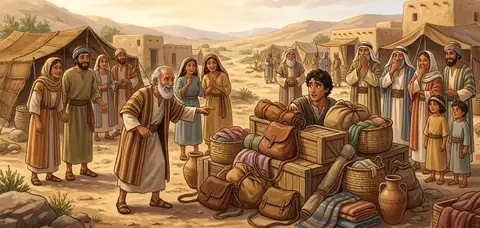 Person · KingSaulIsrael's first king, a tall Benjamite chosen when the people demanded a king like the nations. He began humbly and won…
 Person · Prophet and judgeSamuelThe prophet who led Israel from the time of the judges into the time of the kings. Given to God by his mother Hannah…
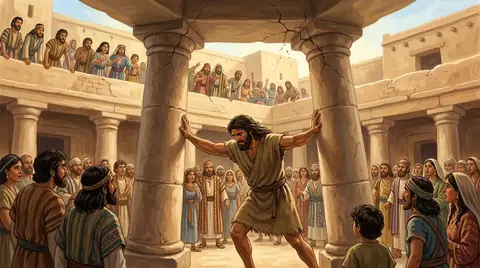 Person · JudgeSamsonThe judge of Israel with superhuman strength from God, a Nazirite from birth. He fought the Philistines single-handed…
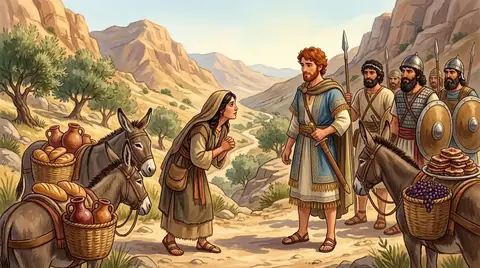 PersonAbigailThe wise and beautiful wife of foolish Nabal. Her quick thinking and humble words stopped David from taking a bloody…
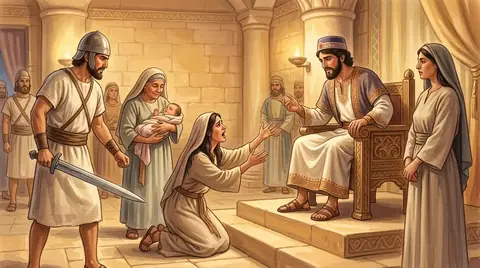 Person · KingSolomonDavid's son and Israel's third king, who asked God for wisdom and received riches and fame as well. He built the temple…
Written for this app in its own words, from the Bible, with the facts checked against Bible dictionaries and encyclopedias: Easton's, Smith's, Fausset's, ISBE, Holman, the New Bible Dictionary, Vine's and the Thompson Chain topics.
