
Custom
Ashes
What was left after a fire, and a sign of grief and sorrow for sin. Mourners sat in ashes or put them on their heads; the ashes of the red heifer were kept to make the unclean clean.
- Sign of
- Grief, shame and repentance
- Used for
- Cleansing: the ashes of the red heifer (Numbers 19)
- Worn by
- Tamar, Mordecai, Job, the king of Nineveh
A sign of sorrow
When a terrible thing happened, people in Bible times showed it with their whole body. They tore their clothes, put on rough sackcloth and threw ashes or dust over their heads. Tamar did this after she was wronged (2 Samuel 13:19), and the Jews of Persia did it when Haman's decree went out (Esther 4:1–3). Job sat down among the ashes in his misery (Job 2:8).
Ashes were also a way to say sorry to God. Job ended his argument with "I abhor myself, and repent in dust and ashes" (Job 42:6). Daniel prayed for his people in sackcloth and ashes (Daniel 9:3), and the king of Nineveh came down from his throne to sit in them when Jonah preached (Jonah 3:6). Jesus said that if Tyre and Sidon had seen his miracles, they would have repented the same way (Matthew 11:21).
Ashes that cleansed
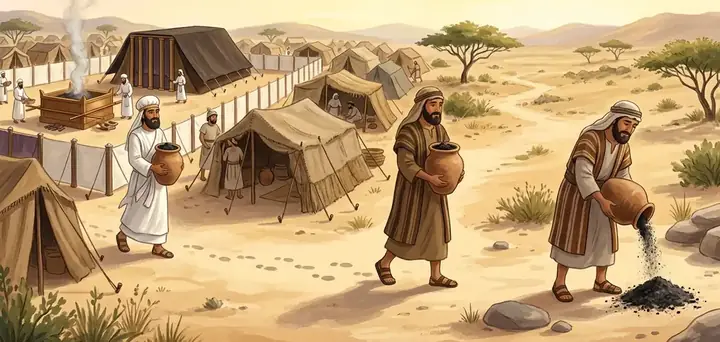
A red cow with no blemish was burned whole outside the camp, and its ashes were kept. Mixed with water, they were sprinkled on anyone who had touched a dead body, to make them clean again (Numbers 19:9–17). Hebrews says that if those ashes could clean the outside, the blood of Christ can clean the conscience (Hebrews 9:13–14).
A picture of emptiness
Isaiah said an idol-worshipper "feedeth on ashes" (Isaiah 44:20): he fills himself with something that gives no nourishment. The priests carried the ashes from the altar out to a clean place each morning (Leviticus 6:10–11), a small daily job that kept the fire ready for the next sacrifice.
Key verses
- Job 42:6
Wherefore I abhor myself, and repent in dust and ashes.
- Numbers 19:9
And a man that is clean shall gather up the ashes of the heifer, and lay them up without the camp in a clean place, and it shall be kept for the congregation of the children of Israel for a water of separation: it is a purification for sin.
- Jonah 3:6
For word came unto the king of Nineveh, and he arose from his throne, and he laid his robe from him, and covered him with sackcloth, and sat in ashes.
- Hebrews 9:13
For if the blood of bulls and of goats, and the ashes of an heifer sprinkling the unclean, sanctifieth to the purifying of the flesh:
- Isaiah 44:20
He feedeth on ashes: a deceived heart hath turned him aside, that he cannot deliver his soul, nor say, Is there not a lie in my right hand?
Read next
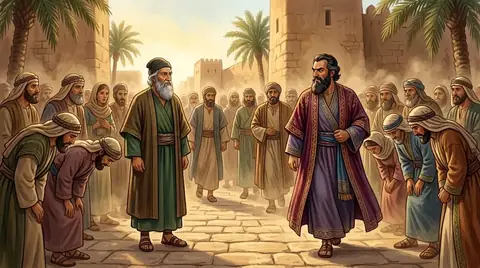 PersonMordecaiThe Jew who raised his cousin Esther, refused to bow to Haman, and with Esther saved the Jews of Persia from being…
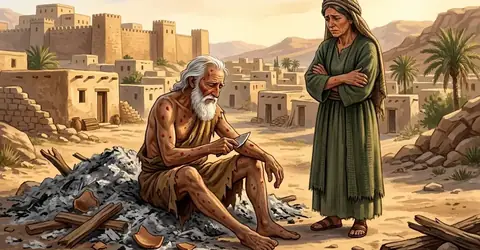 PersonJobA rich and godly man who lost his children, his wealth and his health in a single stroke, and would not curse God. His…
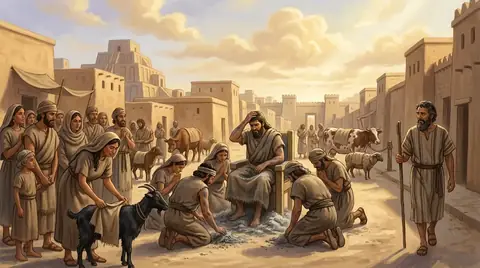 Place · CityNinevehThe last and greatest capital of Assyria, on the Tigris. Jonah preached there and the whole city repented; a century…
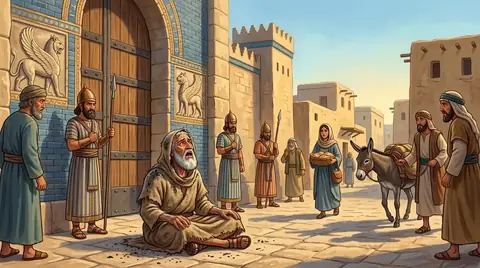 Thing · ClothingSackclothA coarse, dark cloth woven from goats' hair, used for sacks and worn next to the skin by people in mourning or in…
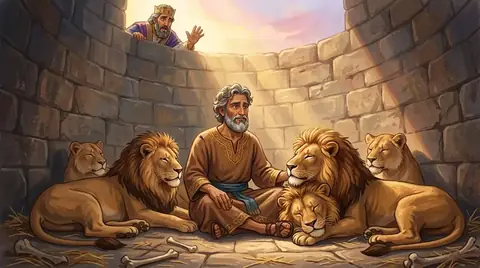 Person · ProphetDanielA young noble of Judah carried off to Babylon, who served four kings with wisdom and never bent his faith. God gave him…
 PersonJonahThe prophet who ran from God's call to preach at Nineveh, was swallowed by a great fish, and then sulked when the city…
Written for this app in its own words, from the Bible, with the facts checked against Bible dictionaries and encyclopedias: Easton's, Smith's, Fausset's, ISBE, Holman, the New Bible Dictionary, Vine's and the Thompson Chain topics.
