
Custom · Worship
Anointing
Pouring or rubbing oil on a person or thing to mark it as God's own. Priests, kings and prophets received it; "Messiah" and "Christ" both mean "the Anointed One".
- Who
- Priests (Exodus 29:7), kings (1 Samuel 10:1), sometimes prophets (1 Kings 19:16)
- What
- The tabernacle, its altar and furniture (Exodus 30:26–28), Jacob's stone pillar (Genesis 28:18)
- Hebrew
- mashach, to smear or pour; hence Mashiach, Messiah
- Greek
- chriō; hence Christos, Christ
What it was
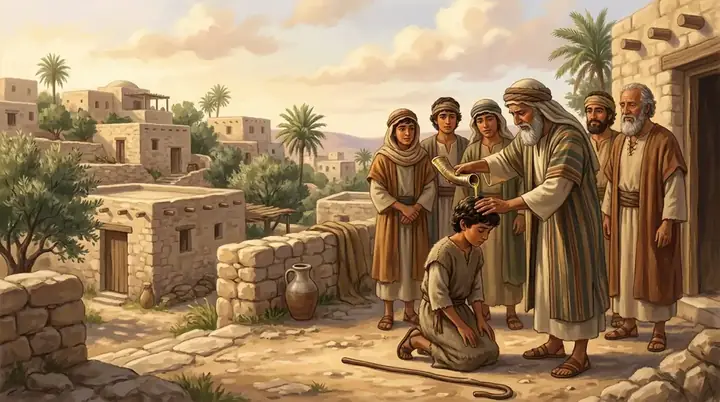
To anoint was to pour oil over someone's head, or to rub it on. In a hot, dry land oil kept the skin soft, so people used it every day, and stopped when they were in mourning (2 Samuel 12:20; Daniel 10:3). A host put oil on a guest's head as a welcome, which is why Jesus noticed that Simon the Pharisee had not done it (Luke 7:46; Psalms 23:5). Oil was also put on wounds and on the sick (Luke 10:34; Mark 6:13; James 5:14), and on a body before burial (Mark 16:1).
Set apart for God
The anointing that mattered most was the one that marked a person or a thing as God's own. Moses made a special perfumed oil from myrrh, cinnamon, cane, cassia and olive oil, and it was not to be copied or used for anything else (Exodus 30:22–33). With it he anointed the tabernacle and everything in it, and then Aaron and his sons as priests (Leviticus 8:10–12).
Kings were anointed too. Samuel poured oil on Saul and later on the shepherd boy David, and "the Spirit of the LORD came upon David from that day forward" (1 Samuel 10:1; 1 Samuel 16:13). The anointed king was God's choice, and David would not lift his hand against Saul for that reason (1 Samuel 24:6). Elijah was told to anoint Elisha to follow him as prophet (1 Kings 19:16).
Points to Christ
The Hebrew word Messiah and the Greek word Christ both mean "the Anointed One". Jesus was not anointed with oil but with the Holy Spirit at his baptism (Acts 10:38), and in the synagogue at Nazareth he read Isaiah's words about himself: "The Spirit of the Lord is upon me, because he hath anointed me to preach the gospel to the poor" (Luke 4:18). He is prophet, priest and king in one. A woman at Bethany poured costly ointment over his head, and he said she had done it for his burial (Mark 14:3–9).
For us
Believers share in his anointing. John says, "ye have an unction from the Holy One", the Spirit who teaches and keeps us (1 John 2:20; 1 John 2:27).
Key verses
- Exodus 30:22–33
Moreover the Lord spake unto Moses, saying, Take thou also unto thee principal spices, of pure myrrh five hundred shekels, and of sweet cinnamon half so much, even two hundred and fifty shekels, and of sweet calamus two hundred and fifty shekels, And of cassia five hundred shekels, after the shekel of the sanctuary, and of oil olive an hin: …
- 1 Samuel 16:13
Then Samuel took the horn of oil, and anointed him in the midst of his brethren: and the Spirit of the Lord came upon David from that day forward. So Samuel rose up, and went to Ramah.
- Psalms 23:5
Thou preparest a table before me in the presence of mine enemies: thou anointest my head with oil; my cup runneth over.
- Luke 4:18
The Spirit of the Lord is upon me, because he hath anointed me to preach the gospel to the poor; he hath sent me to heal the brokenhearted, to preach deliverance to the captives, and recovering of sight to the blind, to set at liberty them that are bruised,
- James 5:14
Is any sick among you? let him call for the elders of the church; and let them pray over him, anointing him with oil in the name of the Lord:
- 1 John 2:20
But ye have an unction from the Holy One, and ye know all things.
Read next
 Thing · WorshipThe tabernacleThe holy tent Israel built in the wilderness, by God's own pattern, so that he could dwell in the middle of his people.…
 PersonAaronMoses' older brother and Israel's first high priest. He spoke for Moses before Pharaoh and served God at the tabernacle…
 Person · Prophet and judgeSamuelThe prophet who led Israel from the time of the judges into the time of the kings. Given to God by his mother Hannah…
 Person · KingSaulIsrael's first king, a tall Benjamite chosen when the people demanded a king like the nations. He began humbly and won…
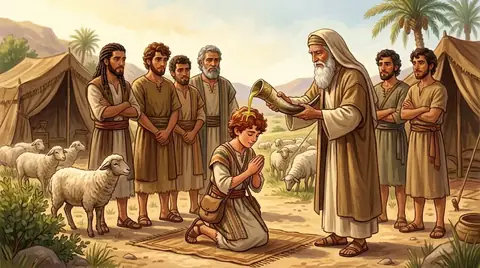 Person · KingDavidThe shepherd boy who killed Goliath and became Israel's greatest king, "a man after God's own heart". He wrote many…
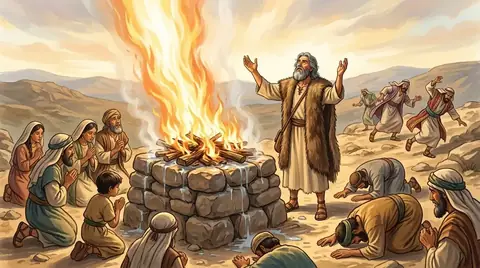 PersonElijahThe fiery prophet who stood alone against King Ahab and the prophets of Baal, called down fire on Mount Carmel, and was…
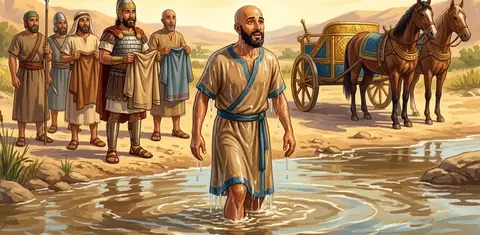 PersonElishaElijah's successor, a farmer's son who asked for a double share of his master's spirit and received it. His long…
Written for this app in its own words, from the Bible, with the facts checked against Bible dictionaries and encyclopedias: Easton's, Smith's, Fausset's, ISBE, Holman, the New Bible Dictionary, Vine's and the Thompson Chain topics.
