
Custom
Amanuensis
a-man-yoo-EN-sisA writer who took down another's words · the old name for a secretary
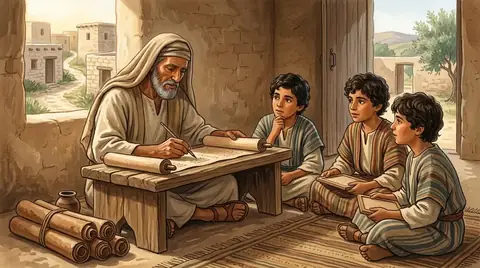
A secretary who wrote down what someone else spoke. Jeremiah dictated his prophecies to Baruch, and Paul often had a helper write his letters, adding a greeting in his own hand.
- Known for
- Baruch for Jeremiah; Tertius for Paul
- Meaning
- From the Latin for "by hand"
What it was
Few people could write well in Bible times, and writing on scrolls was slow work. So prophets, kings and apostles often spoke their words aloud while a trained writer, a scribe, took them down.
In the Bible
Jeremiah called Baruch, who "wrote from the mouth of Jeremiah all the words of the LORD" on a scroll (Jeremiah 36:4; Jeremiah 45:1). When the king burned it, Jeremiah dictated it all again (Jeremiah 36:32).
Paul did the same. In Romans the writer adds his own greeting: "I Tertius, who wrote this epistle, salute you in the Lord" (Romans 16:22). Paul then signed his letters himself, as a token that they were truly his (2 Thessalonians 3:17; Colossians 4:18). Peter wrote his first letter "by Silvanus" (1 Peter 5:12).
What it means
The words were still the prophet's or apostle's own, and God's. The helper's pen did not change the message.
Key verses
- Jeremiah 36:4
Then Jeremiah called Baruch the son of Neriah: and Baruch wrote from the mouth of Jeremiah all the words of the Lord, which he had spoken unto him, upon a roll of a book.
- Romans 16:22
I Tertius, who wrote this epistle, salute you in the Lord.
- 2 Thessalonians 3:17
The salutation of Paul with mine own hand, which is the token in every epistle: so I write.
- 1 Peter 5:12
By Silvanus, a faithful brother unto you, as I suppose, I have written briefly, exhorting, and testifying that this is the true grace of God wherein ye stand.
Read next
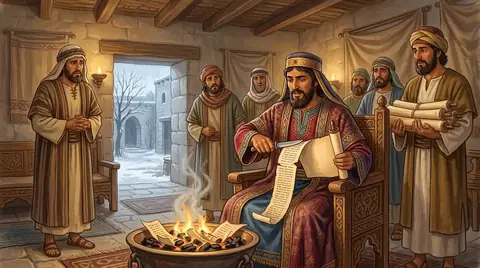 PersonBaruchJeremiah's faithful secretary. He wrote the prophet's words on a scroll, read them in the temple, and wrote them all…
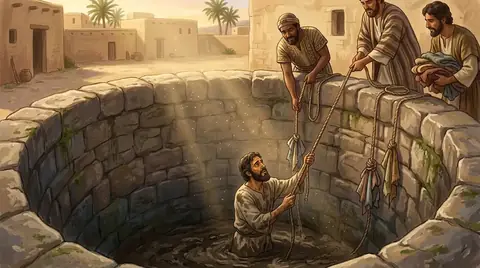 PersonJeremiahThe prophet who warned Judah for forty years that Babylon was coming, and wept as it came. He was beaten, put in the…
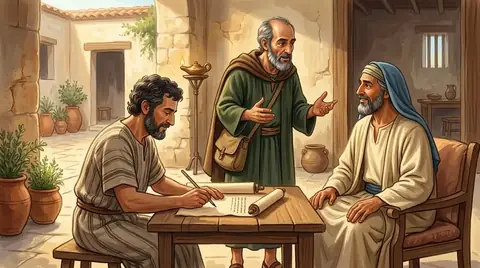 PersonTertiusThe Christian who wrote down Paul's letter to the Romans as Paul spoke it. Near the end he added a greeting of his own…
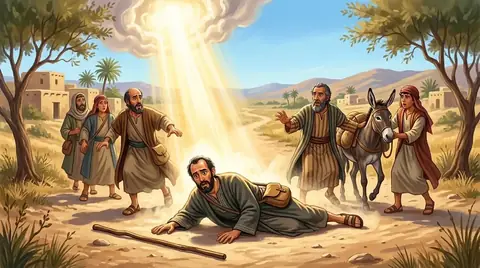 PersonPaulA Pharisee who hated the church until the risen Jesus met him on the road to Damascus. He became the apostle to the…
 GroupScribes (teachers of the law)Men who copied the Law of Moses, studied it and taught how it applied to daily life. In Jesus' day most were Pharisees…
Written for this app in its own words, from the Bible, with the facts checked against Bible dictionaries and encyclopedias: Easton's, Smith's, Fausset's, ISBE, Holman, the New Bible Dictionary, Vine's and the Thompson Chain topics.
