
Custom · Daily life
Wells and cisterns
Wells reached water deep underground; cisterns were rock-hewn pits that stored the rain. Both were vital in a dry land, and an empty cistern made a ready prison.
- Wells
- Dug and owned; places of meeting and of quarrels (Genesis 26:15–22)
- Cisterns
- Plastered pits for rain; Joseph and Jeremiah were thrown into empty ones
- Picture
- God the living fountain against man's broken cisterns (Jeremiah 2:13)
Wells
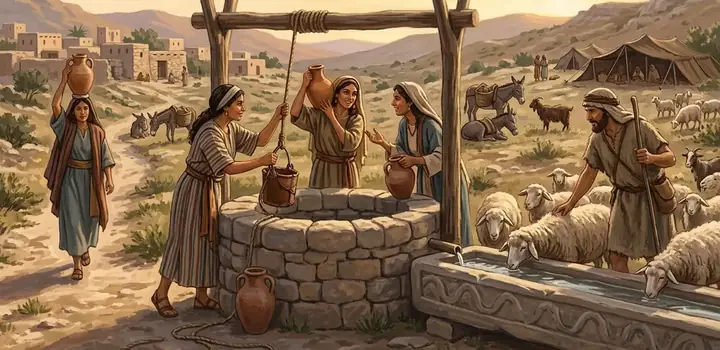
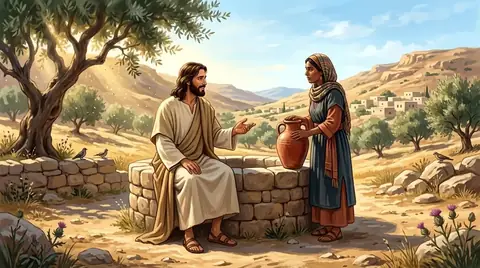
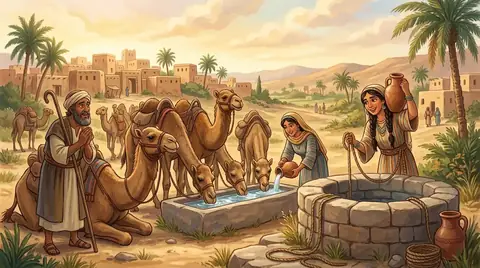
Where there was no spring, people dug. A well went down through soil and rock to the water table, was lined and often covered with a great stone. It was private property and worth fighting for: Abraham and Isaac both had disputes with the Philistines over wells (Genesis 21:25; Genesis 26:15–22). Since women came to draw water at evening, the well was where strangers were met and matches made. Abraham's servant found Rebekah at the well of Nahor (Genesis 24:11–20), Jacob rolled the stone away for Rachel (Genesis 29:2–10), and Moses defended Zipporah and her sisters at a well in Midian (Exodus 2:15–17). Jesus sat by Jacob's well at Sychar at noon and spoke with a Samaritan woman about water that satisfies for ever (John 4:6–15).
Cisterns
Most houses and towns also had a cistern: a bell-shaped pit hewn in the limestone, plastered inside so it would hold the winter rain for the dry summer. Rain ran in from roofs and courtyards. Hezekiah's officer promised the people of Jerusalem that under Assyria each would drink from his own cistern (2 Kings 18:31). But plaster cracks and water leaks away, and an empty cistern, dark and deep, with mud at the bottom, could hold a prisoner. Joseph's brothers threw him into one (Genesis 37:24), and Jeremiah sank in the mud of Malchiah's cistern until an Ethiopian servant pulled him out with ropes and rags (Jeremiah 38:6–13).
The picture
Jeremiah turned the two into a sermon. God's people had committed two evils: they had forsaken the LORD, "the fountain of living waters", and had hewn out "broken cisterns, that can hold no water" (Jeremiah 2:13). Running water from God, or stale rainwater from our own leaking pits: that is the choice. See Water.
Key verses
- Genesis 26:18
And Isaac digged again the wells of water, which they had digged in the days of Abraham his father; for the Philistines had stopped them after the death of Abraham: and he called their names after the names by which his father had called them.
- Genesis 24:11
And he made his camels to kneel down without the city by a well of water at the time of the evening, even the time that women go out to draw water.
- Jeremiah 2:13
For my people have committed two evils; they have forsaken me the fountain of living waters, and hewed them out cisterns, broken cisterns, that can hold no water.
- Jeremiah 38:6
Then took they Jeremiah, and cast him into the dungeon of Malchiah the son of Hammelech, that was in the court of the prison: and they let down Jeremiah with cords. And in the dungeon there was no water, but mire: so Jeremiah sunk in the mire.
- John 4:6–14
Now Jacob’s well was there. Jesus therefore, being wearied with his journey, sat thus on the well: and it was about the sixth hour. There cometh a woman of Samaria to draw water: Jesus saith unto her, Give me to drink. (For his disciples were gone away unto the city to buy meat.) …
Read next
 Thing · Daily lifeWellA shaft dug down to water, often through rock, and lined with stone. In a dry land wells were precious, named, fought…NationThe PhilistinesA warlike people from over the sea, settled in five cities on the coastal plain to the south-west of Israel. With iron…
 PersonRebekahIsaac's wife, found for him at a well far away in Abraham's homeland. She was told before her twins were born that the…
 PersonJacobIsaac's younger twin son, who won his brother's birthright and blessing by cunning, was changed by God, and was renamed…
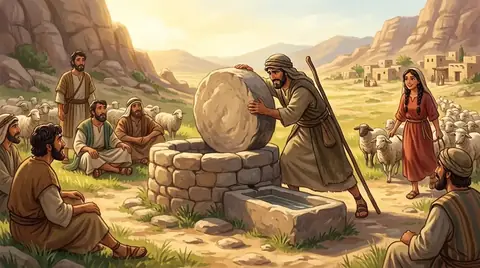 PersonRachelJacob's beloved wife, for whom he worked fourteen years. Long childless, she became the mother of Joseph and died…
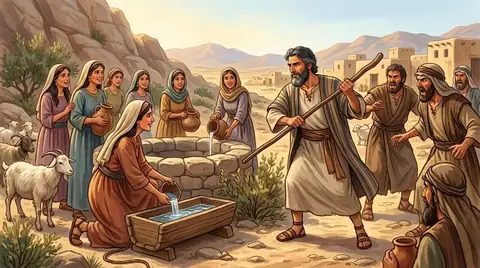 PersonZipporahThe wife of Moses, a daughter of Jethro the priest of Midian. She bore him two sons, Gershom and Eliezer, and once…Place · TownSycharA town of Samaria near Jacob's well. Jesus talked with a Samaritan woman at the well, and many from Sychar came to…
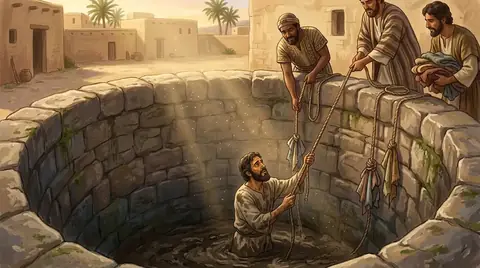 Thing · Everyday lifeCisternA pit cut in rock and plastered to store rainwater, since springs were few in the hill country. Empty cisterns made…
Written for this app in its own words, from the Bible, with the facts checked against Bible dictionaries and encyclopedias: Easton's, Smith's, Fausset's, ISBE, Holman, the New Bible Dictionary, Vine's and the Thompson Chain topics.
