
Teaching
Type
A person, thing or event in the Old Testament that God shaped as a pattern of something greater to come
An Old Testament person, thing or event that God designed as a pattern of something greater, which it points to. The Passover lamb, the manna and the bronze serpent are types; Christ is what they foreshadow.
- Greek
- tupos, the mark of a blow, a mould or pattern; "figure" in Romans 5:14
- Examples
- Adam, Melchizedek, the Passover lamb, the manna, the bronze serpent, Jonah, the tabernacle
- The opposite
- The "antitype", the thing the type points to (1 Peter 3:21, "like figure")
What a type is
The Greek word means a mark made by striking, like the print of the nails in Jesus' hands (John 20:25), and so a mould or pattern that something else is shaped on. Moses was told to make the tabernacle after the "pattern" shown him on the mountain (Hebrews 8:5). A type in the Bible is a real person, event or thing in the Old Testament which God shaped in advance so that it would show the outline of something greater in the New. The type is a shadow; the greater thing is the body that casts it (Colossians 2:17; Hebrews 10:1).
Examples
The New Testament reads the Old this way again and again. Adam was "the figure of him that was to come", one man whose act affected all (Romans 5:14). Melchizedek, priest and king with no recorded beginning or end, is a picture of Christ's priesthood (Hebrews 7). Israel's story in the wilderness, the sea, the manna, the rock, "happened unto them for ensamples", types, Paul says (1 Corinthians 10:6–11). Jesus himself said that as Moses lifted up the serpent in the wilderness, so he would be lifted up (John 3:14), and that Jonah's three days in the fish were a sign of his three days in the grave (Matthew 12:40). "Christ our passover is sacrificed for us" (1 Corinthians 5:7). The tabernacle, its priests and its sacrifices were "the example and shadow of heavenly things" (Hebrews 8:5), and the flood that carried Noah safely through the water prefigures baptism (1 Peter 3:20–21).
Using it well
A type is not an allegory made up by the reader. The people and events were real, and their meaning as types rests on what the New Testament, or the plain pattern of Scripture, says of them. Read this way the Old Testament becomes a book full of Christ: Jesus told the two on the Emmaus road that in Moses and all the prophets there were things "concerning himself" (Luke 24:27).
Key verses
- Romans 5:14
Nevertheless death reigned from Adam to Moses, even over them that had not sinned after the similitude of Adam’s transgression, who is the figure of him that was to come.
- 1 Corinthians 10:11
Now all these things happened unto them for ensamples: and they are written for our admonition, upon whom the ends of the world are come.
- Colossians 2:17
Which are a shadow of things to come; but the body is of Christ.
- Hebrews 8:5
Who serve unto the example and shadow of heavenly things, as Moses was admonished of God when he was about to make the tabernacle: for, See, saith he, that thou make all things according to the pattern shewed to thee in the mount.
- John 3:14
And as Moses lifted up the serpent in the wilderness, even so must the Son of man be lifted up:
Read next
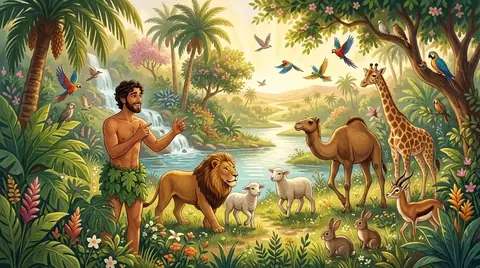 PersonAdamThe first man, made by God from the dust and given life by his breath. His disobedience in Eden brought sin and death…
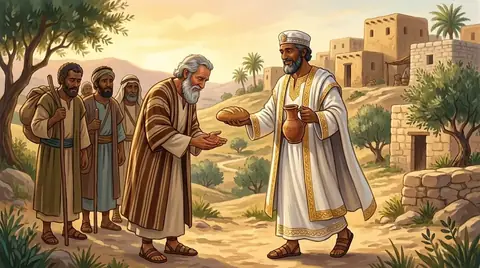 PersonMelchizedekThe mysterious king-priest of Salem who blessed Abraham and received his tithes. Psalm 110 and Hebrews make him a…
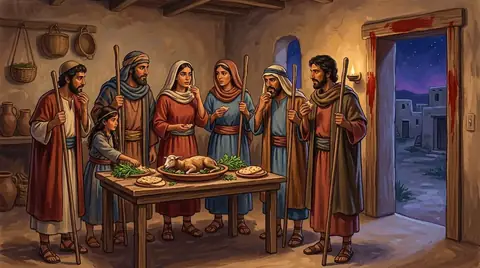 FeastPassoverThe yearly feast remembering the night God rescued Israel from Egypt, when death passed over every house marked with a…
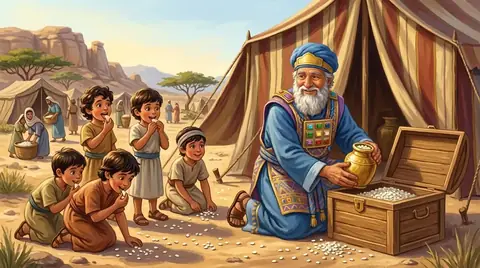 Thing · SymbolMannaThe food God sent every morning to feed Israel in the desert for forty years. Jesus called himself the true bread from…
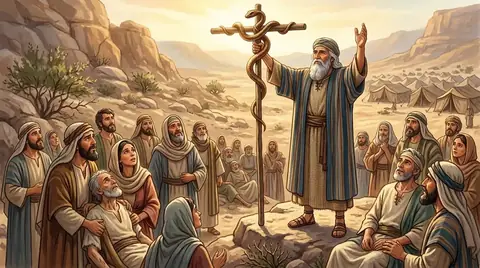 SymbolThe bronze serpentWhen poisonous snakes were killing the Israelites in the desert, God had Moses lift a bronze snake up on a pole: all…
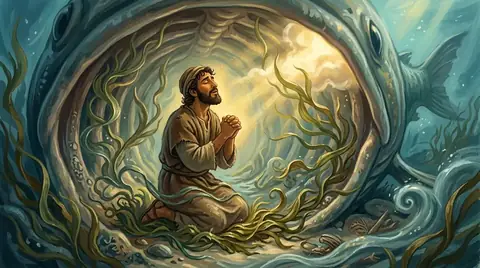 PersonJonahThe prophet who ran from God's call to preach at Nineveh, was swallowed by a great fish, and then sulked when the city…
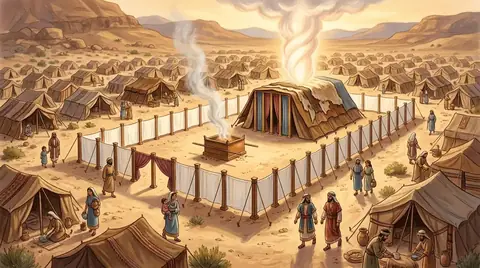 Thing · WorshipThe tabernacleThe holy tent Israel built in the wilderness, by God's own pattern, so that he could dwell in the middle of his people.…
Written for this app in its own words, from the Bible, with the facts checked against Bible dictionaries and encyclopedias: Easton's, Smith's, Fausset's, ISBE, Holman, the New Bible Dictionary, Vine's and the Thompson Chain topics.
