
Custom · Tax
Tribute
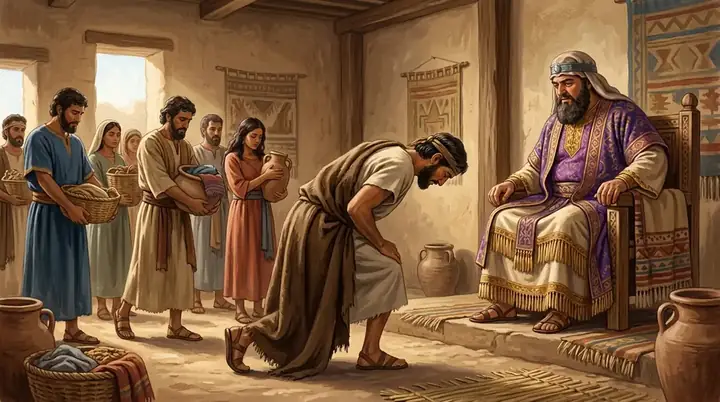
Money, goods or forced labour that a ruler demanded from his people or from a nation he had conquered. Jesus was asked whether it was right to pay tribute to Caesar.
- Kinds
- Payment by a conquered people; forced labour; the temple tax; the Roman poll tax
- Where
- Judges 3:15; 2 Kings 15:19; Matthew 17:24–27; Matthew 22:17–21; Romans 13:6–7
Between nations
In the ancient world a defeated nation paid its conqueror. Israel put the Canaanites it did not drive out "under tribute" (Joshua 16:10; Judges 1:28), which meant forced labour; the officer "over the tribute" in David's and Solomon's reigns was in charge of the work gangs (2 Samuel 20:24; 1 Kings 4:6). When Israel was weak the tribute went the other way. Ehud carried Israel's payment to Eglon king of Moab, and used the visit to kill him (Judges 3:15–23). Mesha of Moab paid Israel in lambs and wool (2 Kings 3:4). King Menahem gave the Assyrian king a thousand talents of silver, squeezed from his rich men, to keep his throne (2 Kings 15:19–20), and Pharaoh Necho taxed Judah for silver and gold (2 Kings 23:33). The Persians collected "toll, tribute, and custom" (Ezra 4:13).
In the time of Jesus
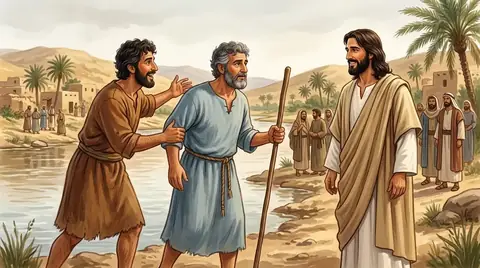
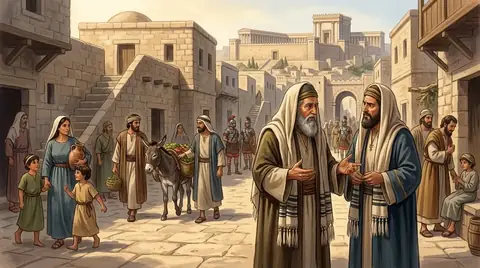
Two different payments are called tribute in the Gospels. One was the half-shekel every Jewish man paid each year for the temple (Exodus 30:13). When the collectors asked whether Jesus paid it, he told Peter to catch a fish, and in its mouth was a coin enough for them both (Matthew 17:24–27). The other was the poll tax paid to Rome, a hated sign of being a conquered people. The Pharisees tried to trap Jesus with it: if he said pay, the people would turn on him; if he said do not pay, the Romans would. He asked for the coin, a penny stamped with the emperor's head, and said, "Render therefore unto Caesar the things which are Caesar's; and unto God the things that are God's" (Matthew 22:17–21).
For us
Paul told the Christians in Rome to pay their taxes, "tribute to whom tribute is due", because rulers are God's servants for keeping order (Romans 13:6–7). A believer gives Caesar his coin, and gives God himself.
Key verses
- Judges 3:15
But when the children of Israel cried unto the Lord, the Lord raised them up a deliverer, Ehud the son of Gera, a Benjamite, a man lefthanded: and by him the children of Israel sent a present unto Eglon the king of Moab.
- 2 Kings 15:19
And Pul the king of Assyria came against the land: and Menahem gave Pul a thousand talents of silver, that his hand might be with him to confirm the kingdom in his hand.
- Matthew 17:24–27
And when they were come to Capernaum, they that received tribute money came to Peter, and said, Doth not your master pay tribute? He saith, Yes. And when he was come into the house, Jesus prevented him, saying, What thinkest thou, Simon? of whom do the kings of the earth take custom or tribute? of their own children, or of strangers? Peter saith unto him, Of strangers. Jesus saith unto him, Then are the children free. …
- Matthew 22:21
They say unto him, Cesar’s. Then saith he unto them, Render therefore unto Cesar the things which are Cesar’s; and unto God the things that are God’s.
- Romans 13:7
Render therefore to all their dues: tribute to whom tribute is due; custom to whom custom; fear to whom fear; honour to whom honour.
Read next
 PersonEhudThe left-handed judge from Benjamin who killed Eglon, the fat king of Moab, with a hidden dagger and then led Israel to…Place · TownEglonA Canaanite town in the lowlands near Lachish whose king joined the attack on Gibeon and was hanged by Joshua. It is…
 Place · NationMoabThe land and people east of the Dead Sea, descended from Lot. Balak of Moab hired Balaam to curse Israel, Moses died on…
 PersonPeterA Galilean fisherman who became the leader of the twelve apostles. Bold and impulsive, he confessed Jesus as the…
 GroupPhariseesThe most exacting of the Jewish religious parties in Jesus' day, devoted to keeping the Law and the traditions added to…
 Measure · MoneyPennyThe KJV's name for the denarius, the silver Roman coin that was a labourer's pay for a day. It bore Caesar's head, and…
Written for this app in its own words, from the Bible, with the facts checked against Bible dictionaries and encyclopedias: Easton's, Smith's, Fausset's, ISBE, Holman, the New Bible Dictionary, Vine's and the Thompson Chain topics.
