
Precious stone
Topaz
TOH-paz
A yellow or golden-green gem, one of the stones in the high priest's breastplate and one of the foundations of the new Jerusalem. Job says the finest came from Ethiopia.
- Hebrew
- pitdah
- Where
- Exodus 28:17; Job 28:19; Ezekiel 28:13; Revelation 21:20
- Today
- Probably not our topaz but the stone now called chrysolite or peridot; it isn't certain
The topaz came second in the top row of the high priest's breastplate, each stone bearing the name of a tribe (Exodus 28:17; Exodus 39:10). It was among the jewels that covered the proud king of Tyre in Ezekiel's lament (Ezekiel 28:13), and in John's vision it is the ninth foundation stone of the new Jerusalem (Revelation 21:20). Job, searching for something as precious as wisdom, says that "the topaz of Ethiopia shall not equal it" (Job 28:19); the best stones came from Cush, far up the Nile, or from an island in the Red Sea.
The gem the ancients called topaz was most likely a clear yellow-green stone, the chrysolite or peridot of today, rather than the harder stone we now give the name to. Whatever it was, the Bible's point is the same each time: a thing of great worth and beauty, set in the service of God or outshone by his wisdom.
Key verses
- Exodus 28:17
And thou shalt set in it settings of stones, even four rows of stones: the first row shall be a sardius, a topaz, and a carbuncle: this shall be the first row.
- Job 28:19
The topaz of Ethiopia shall not equal it, neither shall it be valued with pure gold.
- Revelation 21:20
The fifth, sardonyx; the sixth, sardius; the seventh, chrysolite; the eighth, beryl; the ninth, a topaz; the tenth, a chrysoprasus; the eleventh, a jacinth; the twelfth, an amethyst.
Read next
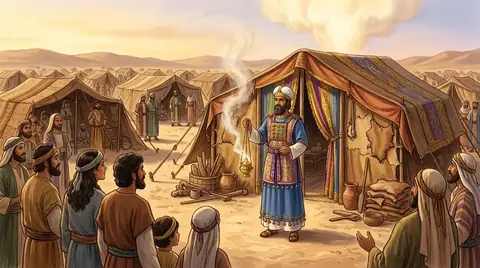 Custom · WorshipThe high priestThe head of Israel's priests, descended from Aaron, who alone went into the Most Holy Place once a year to make…
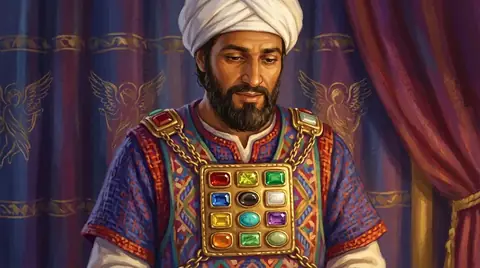 ThingBreastplateArmour that covered a soldier's chest, and the KJV's name for the high priest's jewelled breastpiece. Paul tells…
 Place · CityTyreThe great trading port of Phoenicia, on the coast north of Israel. Its king Hiram helped build Solomon's temple; later…
 PlaceJerusalemThe city David made his capital and where Solomon built the temple. Jesus died and rose there and the church began…
 Place · PersonCushThe land south of Egypt along the upper Nile, called Ethiopia in the KJV, and the son of Ham from whom its people came.…
Written for this app in its own words, from the Bible, with the facts checked against Bible dictionaries and encyclopedias: Easton's, Smith's, Fausset's, ISBE, Holman, the New Bible Dictionary, Vine's and the Thompson Chain topics.
