
Title
Tirshatha
tur-SHAY-thaOld Testament · after the exile · a Persian word for a governor
A Persian title for the governor of Judah after the exile. The King James Version uses it of the governor of the first return, and of Nehemiah.
- Meaning
- A Persian title, perhaps "his excellency"; the exact sense isn't certain
- Used of
- The governor of the first return; Nehemiah
- Also called
- The governor (Nehemiah 5:18; Nehemiah 12:26)
What it was
When Judah came under Persian rule, the land was run by a governor sent or approved by the king. Tirshatha is the Persian name for that office, kept as it stood in the Hebrew text. It was a title of honour, much like "his excellency".
In the Bible
At the first return from Babylon, some priests could not find their family records. The Tirshatha ruled that they must not eat the holy food until a priest arose "with Urim and with Thummim" to settle the question (Ezra 2:63; Nehemiah 7:65). The same governor gave a thousand drams of gold to the work of the house of God (Nehemiah 7:70).
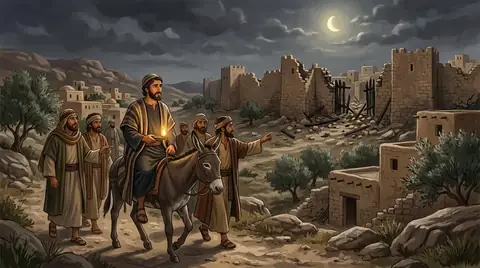
Later the title is given to Nehemiah. When Ezra read the Law and the people wept, "Nehemiah, which is the Tirshatha" told them not to mourn, for "the joy of the LORD is your strength" (Nehemiah 8:9–10). His name heads the list of those who sealed the covenant to keep God's Law (Nehemiah 10:1).
What it shows
The Jews were back in their land, but under a foreign empire. God worked through Persian offices and through godly men who held them.
Key verses
- Ezra 2:63
And the Tirshatha said unto them, that they should not eat of the most holy things, till there stood up a priest with Urim and with Thummim.
- Nehemiah 7:70
And some of the chief of the fathers gave unto the work. The Tirshatha gave to the treasure a thousand drams of gold, fifty basons, five hundred and thirty priests’ garments.
- Nehemiah 8:9–10
And Nehemiah, which is the Tirshatha, and Ezra the priest the scribe, and the Levites that taught the people, said unto all the people, This day is holy unto the Lord your God; mourn not, nor weep. For all the people wept, when they heard the words of the law. Then he said unto them, Go your way, eat the fat, and drink the sweet, and send portions unto them for whom nothing is prepared: for this day is holy unto our Lord: neither be ye sorry; for the joy of the Lord is your strength.
- Nehemiah 10:1
Now those that sealed were, Nehemiah, the Tirshatha, the son of Hachaliah, and Zidkijah,
Read next
Written for this app in its own words, from the Bible, with the facts checked against Bible dictionaries and encyclopedias: Easton's, Smith's, Fausset's, ISBE, Holman, the New Bible Dictionary, Vine's and the Thompson Chain topics.
