
Saying
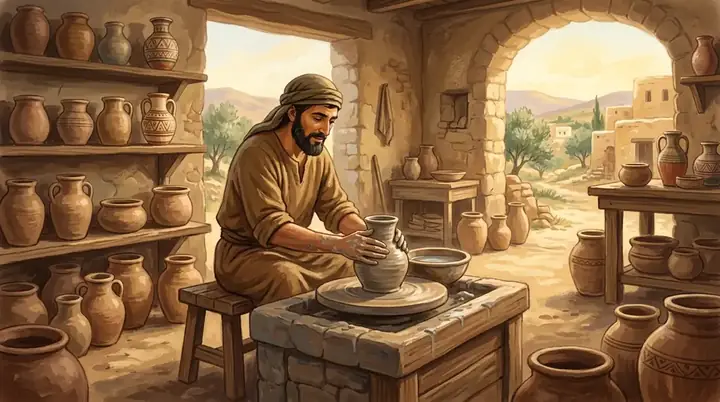
Thick clay
A KJV phrase in Habakkuk for goods taken as pledges. The Babylonian conqueror is pictured as a greedy moneylender who loads himself with other people's pledges, and will one day be paid back.
- Where
- Habakkuk 2:6
- Better rendered
- "Pledges" (taken for debts)
In a taunt song against Babylon, Habakkuk cries woe to the one who heaps up what is not his and "ladeth himself with thick clay" (Habakkuk 2:6). The Hebrew word is generally understood to mean pledges: goods a lender took and kept as security for a loan. Babylon is pictured as a ruthless creditor who has seized the wealth of nation after nation.
The prophet's point is that such gain is a heavy load, not a treasure. Suddenly the debtors will rise up and plunder the plunderer (Habakkuk 2:7–8). Whatever is piled up by injustice will one day weigh its owner down. In the same chapter God gives the answer for his people: "the just shall live by his faith" (Habakkuk 2:4).
Key verses
- Habakkuk 2:4
Behold, his soul which is lifted up is not upright in him: but the just shall live by his faith.
- Habakkuk 2:6–8
Shall not all these take up a parable against him, and a taunting proverb against him, and say, Woe to him that increaseth that which is not his! how long? and to him that ladeth himself with thick clay! Shall they not rise up suddenly that shall bite thee, and awake that shall vex thee, and thou shalt be for booties unto them? Because thou hast spoiled many nations, all the remnant of the people shall spoil thee; because of men’s blood, and for the violence of the land, of the city, and of all that dwell therein.
Read next

Written for this app in its own words, from the Bible, with the facts checked against Bible dictionaries and encyclopedias: Easton's, Smith's, Fausset's, ISBE, Holman, the New Bible Dictionary, Vine's and the Thompson Chain topics.
