
Teaching
Technicalities
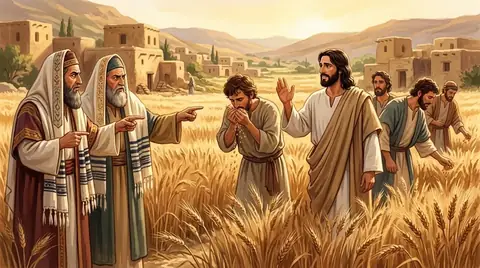
Using the small print of the law to accuse others. The Pharisees charged Jesus' disciples with breaking the sabbath for plucking corn, and watched to see whether he would heal on the sabbath.
- Examples
- Plucking ears of corn (Matthew 12:2); healing the withered hand (Matthew 12:10; Luke 6:7)
The Pharisees built a hedge of rules round the law of Moses and then used them as traps. When Jesus' hungry disciples picked ears of corn on the sabbath and rubbed them in their hands, they said it was unlawful (Matthew 12:1–2; Luke 6:1–2). In the synagogue they watched whether he would heal a man's withered hand, "that they might find an accusation against him" (Luke 6:7; Matthew 12:10).
Jesus answered from Scripture: David ate the holy bread, and God desires "mercy, and not sacrifice" (Matthew 12:3–7). Any of them would lift a sheep out of a pit on the sabbath; how much more is a man worth (Matthew 12:11–12). The law was given for people's good, not as a weapon. "The sabbath was made for man" (Mark 2:27).
Key verses
- Matthew 12:2
But when the Pharisees saw it, they said unto him, Behold, thy disciples do that which is not lawful to do upon the sabbath day.
- Matthew 12:7
But if ye had known what this meaneth, I will have mercy, and not sacrifice, ye would not have condemned the guiltless.
- Matthew 12:10–12
And, behold, there was a man which had his hand withered. And they asked him, saying, Is it lawful to heal on the sabbath days? that they might accuse him. And he said unto them, What man shall there be among you, that shall have one sheep, and if it fall into a pit on the sabbath day, will he not lay hold on it, and lift it out? How much then is a man better than a sheep? Wherefore it is lawful to do well on the sabbath days.
- Mark 2:27
And he said unto them, The sabbath was made for man, and not man for the sabbath:
- Luke 6:7
And the scribes and Pharisees watched him, whether he would heal on the sabbath day; that they might find an accusation against him.
Read next
Written for this app in its own words, from the Bible, with the facts checked against Bible dictionaries and encyclopedias: Easton's, Smith's, Fausset's, ISBE, Holman, the New Bible Dictionary, Vine's and the Thompson Chain topics.
