
Plant · Tree
Sycamore (fig-mulberry)
SIK-a-moreHebrew shikmah, Greek sykomorea · the fig-mulberry, not the European sycamore
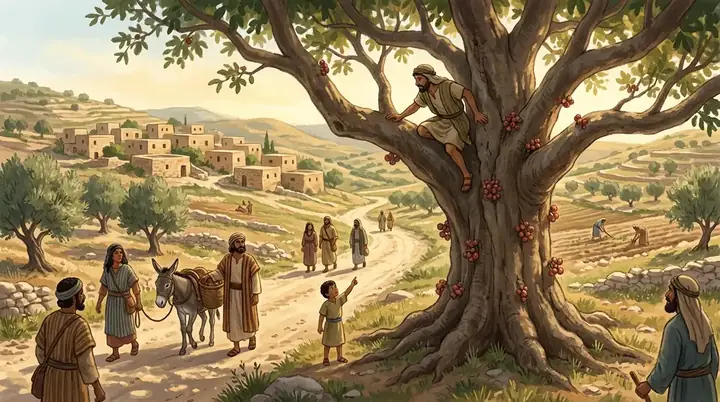
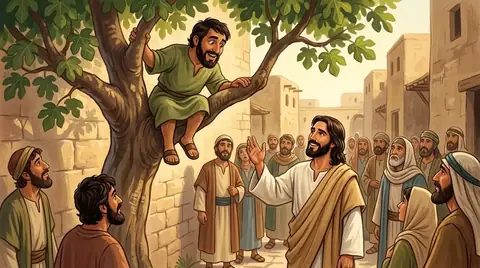
A broad, low tree of the lowlands with leaves like a mulberry and small figs growing straight from the trunk, the poor man's fruit. Amos tended them, and Zacchaeus climbed one to see Jesus.
- Grows
- In the warm lowlands and the Jordan valley; killed by frost (Psalms 78:47)
- Fruit
- Small figs on the trunk and branches, nicked to make them ripen; cheap food
- Wood
- Light and lasting, used for building (Isaiah 9:10)
- Known for
- Amos the fig-gatherer (Amos 7:14); Zacchaeus at Jericho (Luke 19:4)
The tree
The sycamore of the Bible is not the tall maple of Europe but the fig-mulberry, a cousin of the fig tree. It grows wide rather than high, with a stout trunk, low spreading branches and leaves shaped like a mulberry's, and its figs sprout in clusters from the trunk and old branches. The fruit is small and sweetish, and to ripen properly each fig had to be nicked with a knife a few days before picking. It was the food of the poor. The tree cannot stand cold, so it grew in the warm lowlands and the Jordan valley rather than in the hills; one of the plagues on Egypt destroyed their sycamores with frost (Psalms 78:47).
In Solomon's day cedar was as common in Jerusalem as the sycamores of the lowland, which was saying a lot (1 Kings 10:27). David had an officer over his olive and sycamore groves (1 Chronicles 27:28). The proud men of Samaria boasted that if their sycamore beams were cut down they would rebuild with cedar (Isaiah 9:10).
Two men and a tree
Amos told the priest of Bethel that he was no professional prophet but a herdsman and "a gatherer of sycomore fruit", a man who did the humble work of nicking the figs, until God sent him (Amos 7:14). Centuries later, at Jericho, where the trees grow well, a rich little tax collector named Zacchaeus could not see over the crowd, so he ran ahead and climbed a sycamore: easy to climb, with its low branches. Jesus stopped under it, called him by name and went to his house (Luke 19:1–10). The "sycamine" that Jesus said faith could uproot (Luke 17:6) is probably the black mulberry, a different tree.
Key verses
- 1 Kings 10:27
And the king made silver to be in Jerusalem as stones, and cedars made he to be as the sycomore trees that are in the vale, for abundance.
- Amos 7:14
Then answered Amos, and said to Amaziah, I was no prophet, neither was I a prophet’s son; but I was an herdman, and a gatherer of sycomore fruit:
- Luke 19:4
And he ran before, and climbed up into a sycomore tree to see him: for he was to pass that way.
Read next
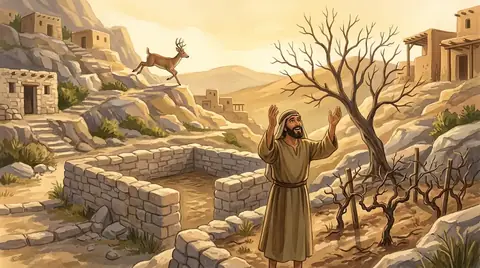 Symbol · PlantThe fig treeIn the prophets and in Jesus' teaching the fig tree stands for Israel, planted by God to bear fruit. Jesus cursed a…
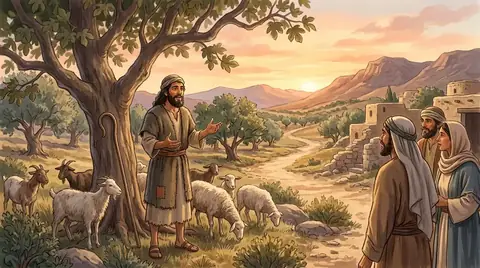 PersonAmosA shepherd and fig-grower from Tekoa in Judah whom God sent to warn the rich northern kingdom of Israel. He called for…
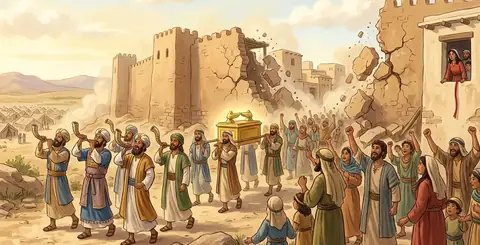 PlaceJerichoThe walled city in the Jordan valley whose walls fell flat when Israel marched round it. Called the city of palm trees…
 PersonZacchaeusA rich chief tax collector of Jericho who climbed a tree to see Jesus. Jesus came to his house, and Zacchaeus turned…
Written for this app in its own words, from the Bible, with the facts checked against Bible dictionaries and encyclopedias: Easton's, Smith's, Fausset's, ISBE, Holman, the New Bible Dictionary, Vine's and the Thompson Chain topics. Also: Tristram, Natural History of the Bible.
