
Material
Slime
Bitumen, or asphalt · also "pitch"
Natural tar that oozed from the ground near the Dead Sea and in Mesopotamia. It was used as mortar for the bricks of Babel and to waterproof Noah's ark and the basket of baby Moses.
- What
- Bitumen, a black sticky tar that hardens as it dries
- Found
- In pits in the valley of Siddim by the Dead Sea (Genesis 14:10), and around Babylon
- Where
- Genesis 6:14; Genesis 11:3; Genesis 14:10; Exodus 2:3; Isaiah 34:9
Slime in the Bible is not mud but bitumen, the natural asphalt that seeps up through the ground in parts of the Middle East. It is sticky when warm, hard and waterproof when set, and it burns. The builders of the tower of Babel had no stone, so they baked bricks and "slime had they for morter" (Genesis 11:3); the walls of ancient Babylon were laid in exactly that way. The valley of Siddim, where Sodom stood, was "full of slimepits", and the fleeing kings fell into them (Genesis 14:10); lumps of bitumen still float up in the Dead Sea. The same material is the "pitch" that sealed Noah's ark inside and out (Genesis 6:14), and Jochebed daubed the little reed basket with "slime and with pitch" so that it would float with her baby Moses inside (Exodus 2:3). Isaiah pictures the judgement of Edom as streams turned to pitch and dust to brimstone, burning for ever (Isaiah 34:9).
Key verses
- Genesis 6:14
Make thee an ark of gopher wood; rooms shalt thou make in the ark, and shalt pitch it within and without with pitch.
- Genesis 11:3
And they said one to another, Go to, let us make brick, and burn them throughly. And they had brick for stone, and slime had they for morter.
- Genesis 14:10
And the vale of Siddim was full of slimepits; and the kings of Sodom and Gomorrah fled, and fell there; and they that remained fled to the mountain.
- Exodus 2:3
And when she could not longer hide him, she took for him an ark of bulrushes, and daubed it with slime and with pitch, and put the child therein; and she laid it in the flags by the river’s brink.
Read next
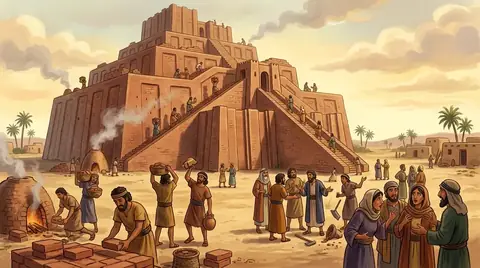 Place · CityBabelThe city in the plain of Shinar where, after the Flood, people built a tower to reach heaven and make a name for…
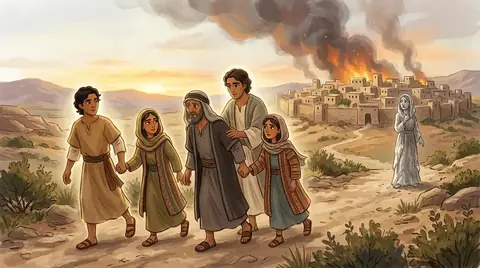 Place · CitySodomThe rich, wicked city by the Dead Sea where Lot settled. Abraham pleaded for it, but ten righteous people were not to…
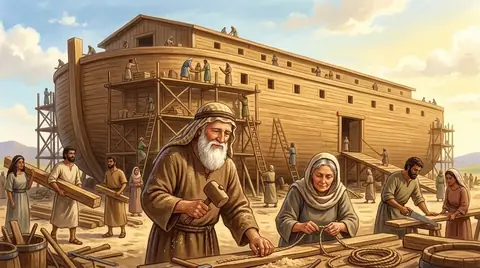 Symbol · SalvationThe ark of NoahThe great wooden vessel in which Noah, his family and the animals were kept safe through the flood. Peter compares it…PersonJochebedA woman of the tribe of Levi, married to Amram. Her children were Miriam, Aaron and Moses. She hid her baby Moses from…
 PersonMosesThe man God used to bring Israel out of Egypt, give them his Law at Sinai, and lead them for forty years in the…
Written for this app in its own words, from the Bible, with the facts checked against Bible dictionaries and encyclopedias: Easton's, Smith's, Fausset's, ISBE, Holman, the New Bible Dictionary, Vine's and the Thompson Chain topics.
