
Teaching · Sin
Self-exaltation
Lifting yourself up, even to the place of God. The Bible shows Pharaoh, Nebuchadnezzar, the prince of Tyre and Herod brought down, and Jesus taught that whoever exalts himself will be humbled.
- Jesus said
- "Whosoever exalteth himself shall be abased" (Luke 14:11)
- Examples
- Pharaoh (Exodus 9:17); Korah (Numbers 16:1–3); Nebuchadnezzar (Daniel 4:30); the prince of Tyre (Ezekiel 28:2); Herod Agrippa I (Acts 12:21–23)
In the Old Testament
Pharaoh set himself up against God's people (Exodus 9:17). Korah and his friends claimed they were as holy as Moses and Aaron (Numbers 16:3). Nebuchadnezzar walked on his roof and boasted of the great Babylon he had built "by the might of my power"; within the hour he was driven out to eat grass like an ox (Daniel 4:30–33). The prince of Tyre said, "I am a God" (Ezekiel 28:2). To Edom God said, "Though thou exalt thyself as the eagle... thence will I bring thee down" (Obadiah 1:4).
In Jesus
Jesus told guests not to grab the best seats at a feast but to take the lowest, for "whosoever exalteth himself shall be abased; and he that humbleth himself shall be exalted" (Luke 14:8–11). He himself took the lowest place, and God has highly exalted him (Philippians 2:9).
For us
King Herod let the crowd call him a god, and was struck down (Acts 12:21–23). "Let him that glorieth, glory in the Lord" (2 Corinthians 10:17).
Key verses
- Daniel 4:30–33
The king spake, and said, Is not this great Babylon, that I have built for the house of the kingdom by the might of my power, and for the honour of my majesty? While the word was in the king’s mouth, there fell a voice from heaven, saying, O king Nebuchadnezzar, to thee it is spoken; The kingdom is departed from thee. And they shall drive thee from men, and thy dwelling shall be with the beasts of the field: they shall make thee to eat grass as oxen, and seven times shall pass over thee, until thou know that the most High ruleth in the kingdom of men, and giveth it to whomsoever he will. …
- Obadiah 1:4
Though thou exalt thyself as the eagle, and though thou set thy nest among the stars, thence will I bring thee down, saith the Lord.
- Luke 14:11
For whosoever exalteth himself shall be abased; and he that humbleth himself shall be exalted.
- Acts 12:21–23
And upon a set day Herod, arrayed in royal apparel, sat upon his throne, and made an oration unto them. And the people gave a shout, saying, It is the voice of a god, and not of a man. And immediately the angel of the Lord smote him, because he gave not God the glory: and he was eaten of worms, and gave up the ghost.
- 2 Corinthians 10:17
But he that glorieth, let him glory in the Lord.
Read next
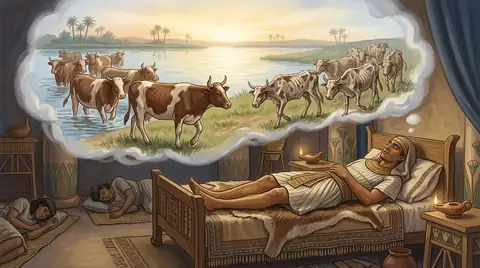 Title · RulerPharaohNot a personal name but the title borne by every king of Egypt, like "Caesar". The Bible names several, the best known…
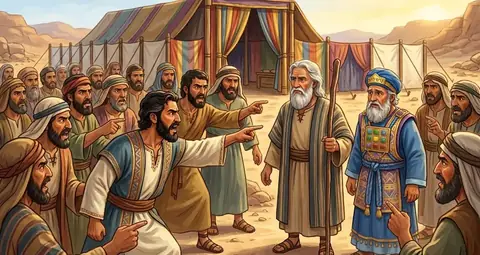 PersonKorahA Levite, Moses' cousin, who led a revolt in the wilderness against Moses and Aaron, demanding the priesthood. The…
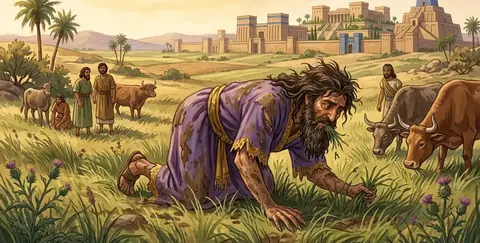 Person · KingNebuchadnezzarThe great king of Babylon who destroyed Jerusalem and its temple and carried Judah into exile. In Daniel he dreams of a…
 Place · CityTyreThe great trading port of Phoenicia, on the coast north of Israel. Its king Hiram helped build Solomon's temple; later…
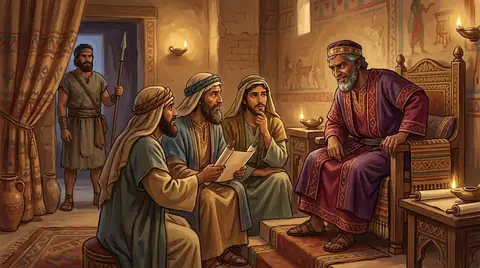 Person · KingHerodThe name of a family of rulers under Rome. Herod the Great tried to kill the infant Jesus; his son Antipas beheaded…
Written for this app in its own words, from the Bible, with the facts checked against Bible dictionaries and encyclopedias: Easton's, Smith's, Fausset's, ISBE, Holman, the New Bible Dictionary, Vine's and the Thompson Chain topics.
