
Place · City
Rabbah
RAB-aOld Testament · also Rabbath of the children of Ammon · today Amman, the capital of Jordan
The capital of the Ammonites, east of the Jordan. David's army besieged and took it, and it was during that siege that David sinned with Bathsheba and had Uriah killed.
- Where
- East of the Jordan, at the head of the river Jabbok; modern Amman
- Meaning
- Great city
- Known for
- Og's iron bed; David's siege; Uriah's death
- Today
- Amman, Jordan
Where
Rabbah stood on a hill above a stream that flows into the Jabbok, about 25 miles (40 km) east of the Jordan. It was the chief city of Ammon, the people descended from Lot. The iron bedstead of Og, the giant king of Bashan, nine cubits long, was kept there in Moses' day (Deuteronomy 3:11).
David's siege
When the Ammonites insulted David's messengers and hired armies against him, David sent Joab and all Israel to besiege Rabbah. "But David tarried still at Jerusalem" (2 Samuel 11:1). While his men were fighting, he took Bathsheba, and then sent orders that her husband Uriah be put where the fighting was hardest by the city wall, where he was killed (2 Samuel 11:14–17).
Joab took the part of the city by the water supply and sent for David, so that the king himself would have the honour of capturing it. David took Rabbah, and the Ammonite king's crown, weighing a talent of gold, was set on his head (2 Samuel 12:26–31).
In the prophets
Ammon later rose again. Amos, Jeremiah and Ezekiel all foretold that God would judge Rabbah for its cruelty and pride: fire would burn its walls, it would become a heap, and camels would graze there (Amos 1:13–14; Jeremiah 49:2–3; Ezekiel 25:5).
Today
The Greeks rebuilt it as Philadelphia. Today it is Amman, the capital of Jordan, and remains of the old citadel still crown its hill.
Others with this name
A small town called Rabbah, in the hill country of Judah near Kirjath-jearim, is named in Joshua's list (Joshua 15:60).
Key verses
- Deuteronomy 3:11
For only Og king of Bashan remained of the remnant of giants; behold, his bedstead was a bedstead of iron; is it not in Rabbath of the children of Ammon? nine cubits was the length thereof, and four cubits the breadth of it, after the cubit of a man.
- 2 Samuel 11:1
And it came to pass, after the year was expired, at the time when kings go forth to battle, that David sent Joab, and his servants with him, and all Israel; and they destroyed the children of Ammon, and besieged Rabbah. But David tarried still at Jerusalem.
- 2 Samuel 12:26–30
And Joab fought against Rabbah of the children of Ammon, and took the royal city. And Joab sent messengers to David, and said, I have fought against Rabbah, and have taken the city of waters. Now therefore gather the rest of the people together, and encamp against the city, and take it: lest I take the city, and it be called after my name. …
- Amos 1:14
But I will kindle a fire in the wall of Rabbah, and it shall devour the palaces thereof, with shouting in the day of battle, with a tempest in the day of the whirlwind:
- Jeremiah 49:2
Therefore, behold, the days come, saith the Lord, that I will cause an alarm of war to be heard in Rabbah of the Ammonites; and it shall be a desolate heap, and her daughters shall be burned with fire: then shall Israel be heir unto them that were his heirs, saith the Lord.
On the map
Read next
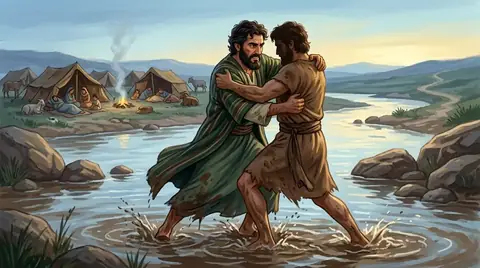 Place · RiverJabbokA river in Gilead that flows west into the Jordan. Jacob wrestled with God on its bank, and it later marked the border…
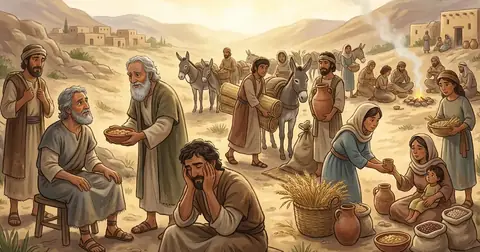 Nation · PlaceAmmonA nation east of the Jordan, descended from Lot, and one of Israel's long-standing enemies. Their capital Rabbah is…
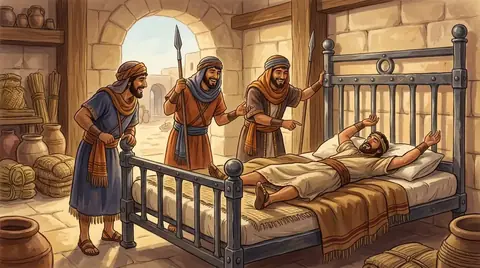 PersonOgThe giant king of Bashan, east of the Jordan, whom Israel defeated and killed at Edrei on the way to the Promised Land.…
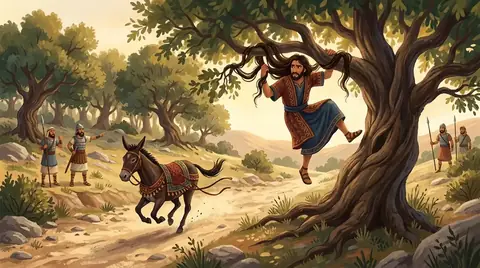 PersonJoabDavid's nephew, who commanded his army for forty years: brave, loyal to the throne, and ruthless. He murdered Abner and…PersonBathshebaThe beautiful wife of Uriah whom David took and then married after having Uriah killed. Their first child died; their…PersonUriahA Hittite soldier in David's army and husband of Bathsheba. David took his wife, then had him killed in battle to hide…
 PersonJudahJacob's fourth son, who became leader among his brothers and the father of Israel's royal tribe. David, the kings of…
Written for this app in its own words, from the Bible, with the facts checked against Bible dictionaries and encyclopedias: Easton's, Smith's, Fausset's, ISBE, Holman, the New Bible Dictionary, Vine's and the Thompson Chain topics.
