
Place
Quarries
Old Testament · about 1330 BC · near Gilgal · the Hebrew word usually means carved idols
The place near Gilgal where Ehud turned back to kill Eglon, king of Moab. The Hebrew word is usually translated "graven images", so they were probably carved stones or idols.
- Where
- By Gilgal, near Jericho (Judges 3:19)
- Hebrew
- Pesilim, usually "graven images"
- Known for
- Ehud's turning point (Judges 3:19; Judges 3:26)
The story
For eighteen years Israel served Eglon, king of Moab. God raised up Ehud, a left-handed man of Benjamin, to set them free. Ehud brought Israel's tribute to the king and set off home, but at the quarries by Gilgal he turned back alone and said, "I have a secret errand unto thee, O king." When the servants had gone out, he killed Eglon with a dagger hidden on his right thigh (Judges 3:14–22). While the servants waited at the locked door, Ehud escaped, "passed beyond the quarries", and called Israel to war (Judges 3:26–27).
What they were
The Hebrew word here is used elsewhere for carved images of false gods (Deuteronomy 7:25), so the "quarries" were most likely stone idols or carved stones set up near Gilgal, perhaps by the Moabites. It was a sign of how far the land had fallen: idols stood at Gilgal, where Israel had first camped in the land and set up twelve stones to remember what God had done (Joshua 4:19–20). Ehud passed them on his way to a great deliverance.
Key verses
- Judges 3:19
But he himself turned again from the quarries that were by Gilgal, and said, I have a secret errand unto thee, O king: who said, Keep silence. And all that stood by him went out from him.
- Judges 3:26
And Ehud escaped while they tarried, and passed beyond the quarries, and escaped unto Seirath.
- Deuteronomy 7:25
The graven images of their gods shall ye burn with fire: thou shalt not desire the silver or gold that is on them, nor take it unto thee, lest thou be snared therein: for it is an abomination to the Lord thy God.
Read next
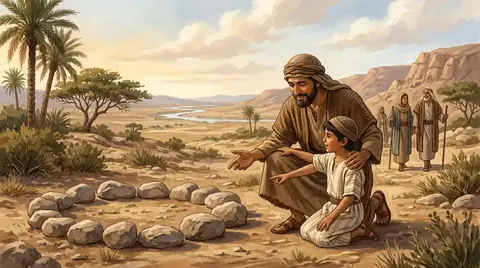 Place · CampGilgalIsrael's first camp in the promised land, where the twelve stones from the Jordan were set up and the reproach of Egypt…
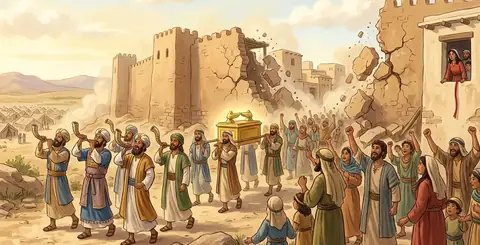 PlaceJerichoThe walled city in the Jordan valley whose walls fell flat when Israel marched round it. Called the city of palm trees…
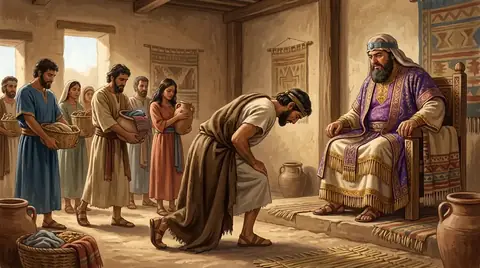 PersonEhudThe left-handed judge from Benjamin who killed Eglon, the fat king of Moab, with a hidden dagger and then led Israel to…Place · TownEglonA Canaanite town in the lowlands near Lachish whose king joined the attack on Gibeon and was hanged by Joshua. It is…
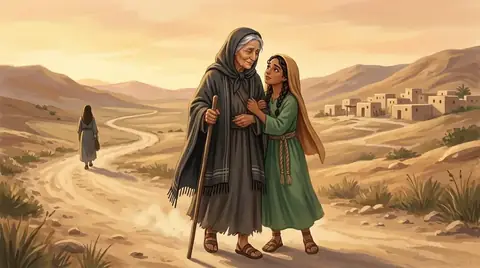 Place · NationMoabThe land and people east of the Dead Sea, descended from Lot. Balak of Moab hired Balaam to curse Israel, Moses died on…
Written for this app in its own words, from the Bible, with the facts checked against Bible dictionaries and encyclopedias: Easton's, Smith's, Fausset's, ISBE, Holman, the New Bible Dictionary, Vine's and the Thompson Chain topics.
