
Custom · Law
Property
What a person owns: land, houses, animals and goods. God's law protected it with commands against stealing, coveting and moving boundary stones, and made the family land in Israel a lasting trust from God.
- Commands
- "Thou shalt not steal" (Exodus 20:15); "Thou shalt not covet" (Exodus 20:17)
- Land
- Could be sold only until the Jubilee (Leviticus 25:23–28)
Land
In Israel the land belonged to God, and families held it as his tenants: "the land shall not be sold for ever: for the land is mine" (Leviticus 25:23). Sold fields went back to their family in the year of Jubilee (Leviticus 25:28), and a relative could buy them back sooner, as Jeremiah bought his cousin's field (Jeremiah 32:7–9). Boundary stones were not to be moved (Deuteronomy 19:14). The daughters of Zelophehad were allowed to inherit so that their father's name would not be lost (Numbers 27:1–11). Abraham bought the cave of Machpelah with care, with witnesses, for its full price (Genesis 23:16–18). Ahab's seizure of Naboth's vineyard was a great crime (1 Kings 21).
Goods
The law spelled out how to repay for animals killed or goods damaged or lost (Exodus 21:33–36; Exodus 22:9–15). A stray ox or sheep had to be taken back to its owner (Deuteronomy 22:1–3).
For us
Owning things is not wrong; stealing and coveting are. The first believers held their goods loosely, sharing with any in need (Acts 4:32), and Jesus warned that a man's life does not consist in the abundance of his possessions (Luke 12:15).
Key verses
- Exodus 20:15–17
Thou shalt not steal. Thou shalt not bear false witness against thy neighbour. Thou shalt not covet thy neighbour’s house, thou shalt not covet thy neighbour’s wife, nor his manservant, nor his maidservant, nor his ox, nor his ass, nor any thing that is thy neighbour’s.
- Leviticus 25:23
The land shall not be sold for ever: for the land is mine; for ye are strangers and sojourners with me.
- Deuteronomy 19:14
Thou shalt not remove thy neighbour’s landmark, which they of old time have set in thine inheritance, which thou shalt inherit in the land that the Lord thy God giveth thee to possess it.
- Luke 12:15
And he said unto them, Take heed, and beware of covetousness: for a man’s life consisteth not in the abundance of the things which he possesseth.
Read next
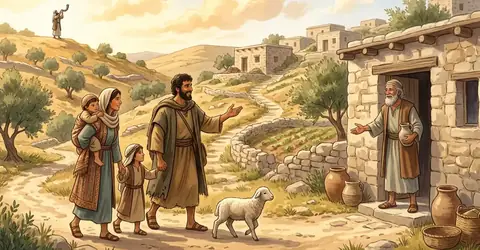 Feast · LawThe JubileeEvery fiftieth year in Israel, announced by a trumpet blast on the Day of Atonement. Sold land went back to its first…
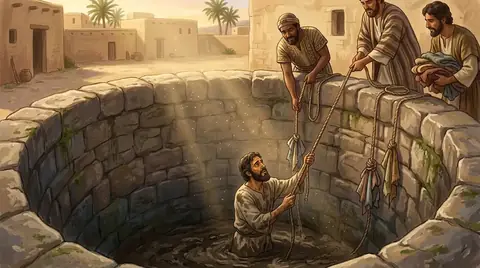 PersonJeremiahThe prophet who warned Judah for forty years that Babylon was coming, and wept as it came. He was beaten, put in the…
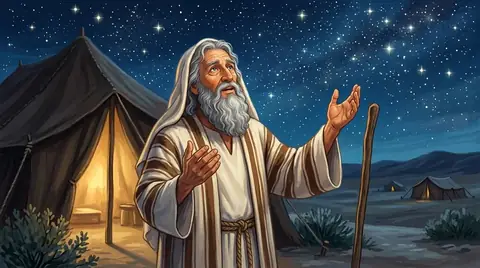 PersonAbrahamThe man God called out of Ur to a land he had never seen, promising him a people and a blessing for the whole world. He…
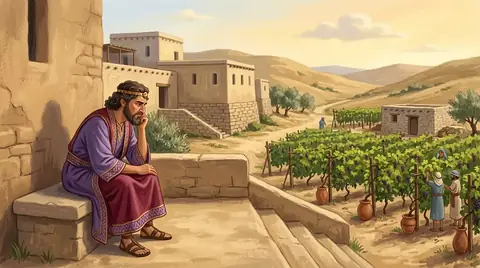 Person · KingAhabThe seventh king of the northern kingdom of Israel, who married Jezebel and led the nation into Baal worship. He…PersonNabothA man of Jezreel whose vineyard lay beside King Ahab's palace. He would not sell his family's land, so Jezebel had him…
Written for this app in its own words, from the Bible, with the facts checked against Bible dictionaries and encyclopedias: Easton's, Smith's, Fausset's, ISBE, Holman, the New Bible Dictionary, Vine's and the Thompson Chain topics.
