
Custom
Proclamation
A ruler's public announcement, cried aloud or sent by letter. Cyrus's proclamation let the Jews go home to rebuild the temple; Hezekiah's called all Israel to the Passover.
- Examples
- Cyrus (Ezra 1:1–4); Hezekiah (2 Chronicles 30:1–10); Ahasuerus (Esther 8:10–14)
What it was
Kings made their will known by heralds who cried it in the streets and by letters carried by runners to every province, each in its own language (Esther 1:22). Nebuchadnezzar's herald ordered all peoples to bow to the golden image when the music sounded (Daniel 3:4–6).
Proclamations of freedom
The best-loved proclamation in the Bible is Cyrus's. In his first year, "the LORD stirred up the spirit of Cyrus", and he announced throughout his kingdom that the God of heaven had charged him to build a house at Jerusalem, and that any of God's people might go up and build it (Ezra 1:1–4; 2 Chronicles 36:22–23). Hezekiah sent runners through all Israel and Judah calling them to return to the LORD and keep the Passover; many laughed, but some humbled themselves and came (2 Chronicles 30:1–11). Ahasuerus's second decree, sent by swift horses, let the Jews defend themselves against Haman's plot (Esther 8:10–14).
For us
Isaiah tells the herald to lift up his voice and say to Judah's cities, "Behold your God!" (Isaiah 40:9). Jesus read in Nazareth the words about proclaiming liberty to the captives, and said they were fulfilled that day (Luke 4:18–21).
Key verses
- Ezra 1:1–3
Now in the first year of Cyrus king of Persia, that the word of the Lord by the mouth of Jeremiah might be fulfilled, the Lord stirred up the spirit of Cyrus king of Persia, that he made a proclamation throughout all his kingdom, and put it also in writing, saying, Thus saith Cyrus king of Persia, The Lord God of heaven hath given me all the kingdoms of the earth; and he hath charged me to build him an house at Jerusalem, which is in Judah. Who is there among you of all his people? his God be with him, and let him go up to Jerusalem, which is in Judah, and build the house of the Lord God of Israel, (he is the God,) which is in Jerusalem.
- 2 Chronicles 30:6–9
So the posts went with the letters from the king and his princes throughout all Israel and Judah, and according to the commandment of the king, saying, Ye children of Israel, turn again unto the Lord God of Abraham, Isaac, and Israel, and he will return to the remnant of you, that are escaped out of the hand of the kings of Assyria. And be not ye like your fathers, and like your brethren, which trespassed against the Lord God of their fathers, who therefore gave them up to desolation, as ye see. Now be ye not stiffnecked, as your fathers were, but yield yourselves unto the Lord, and enter into his sanctuary, which he hath sanctified for ever: and serve the Lord your God, that the fierceness of his wrath may turn away from you. …
- Isaiah 40:9
O Zion, that bringest good tidings, get thee up into the high mountain; O Jerusalem, that bringest good tidings, lift up thy voice with strength; lift it up, be not afraid; say unto the cities of Judah, Behold your God!
- Luke 4:18–21
The Spirit of the Lord is upon me, because he hath anointed me to preach the gospel to the poor; he hath sent me to heal the brokenhearted, to preach deliverance to the captives, and recovering of sight to the blind, to set at liberty them that are bruised, To preach the acceptable year of the Lord. And he closed the book, and he gave it again to the minister, and sat down. And the eyes of all them that were in the synagogue were fastened on him. …
Read next
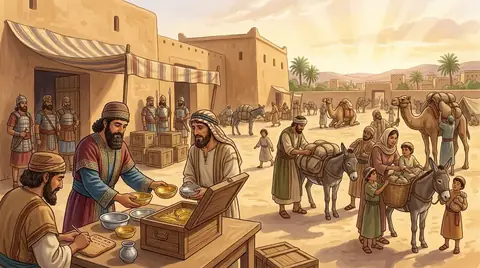 Person · King of PersiaCyrusThe Persian king who conquered Babylon and, in his first year there, let the Jews go home to rebuild the temple. Isaiah…
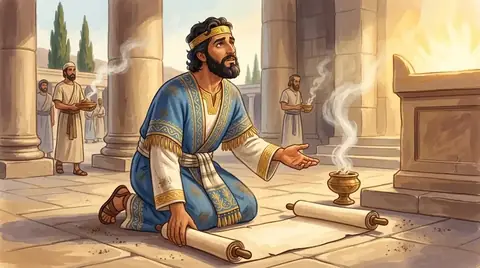 Person · KingHezekiahOne of Judah's best kings. He cleansed the temple, smashed the idols, trusted God when Assyria besieged Jerusalem, and…
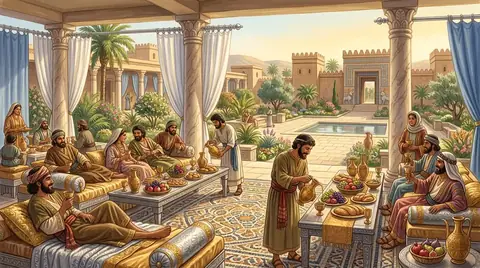 Person · KingAhasuerusThe king of Persia in the book of Esther, who put away Queen Vashti, made Esther his queen, and was tricked by Haman…
Written for this app in its own words, from the Bible, with the facts checked against Bible dictionaries and encyclopedias: Easton's, Smith's, Fausset's, ISBE, Holman, the New Bible Dictionary, Vine's and the Thompson Chain topics.
