
Custom · Law
Prison
A place where prisoners were held, usually a pit, a guardroom or a dungeon under a house, rather than a punishment in its own right. Joseph, Jeremiah, John the Baptist, Peter and Paul all knew the inside of one.
- Famous prisoners
- Joseph (Genesis 39:20), Samson (Judges 16:21), Micaiah (1 Kings 22:27), Jeremiah (Jeremiah 37–38), John the Baptist (Matthew 11:2), Peter (Acts 12), Paul and Silas (Acts 16)
- Kinds
- A pit or cistern (Jeremiah 38:6), the court of the guard (Jeremiah 32:2), the "inner prison" with stocks (Acts 16:24)
What it was
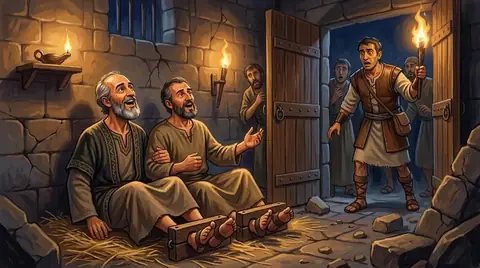
The law of Moses did not punish by imprisonment; its penalties were fines, restitution, beating and death. In the wilderness a man was "put in ward" only until God's verdict was known (Leviticus 24:12; Numbers 15:34). Prisons in the Bible are mostly places of waiting, where a man was held until trial, or where a king shut away those who displeased him. They were grim: a dry cistern where Jeremiah sank into the mud (Jeremiah 38:6), a mill-house where blind Samson ground grain (Judges 16:21), a cell under a house with the prisoners' feet locked in stocks (Acts 16:24). Prisoners depended on friends for food, which is why Jesus counts a visit to them as a visit to himself (Matthew 25:36).
In the Bible
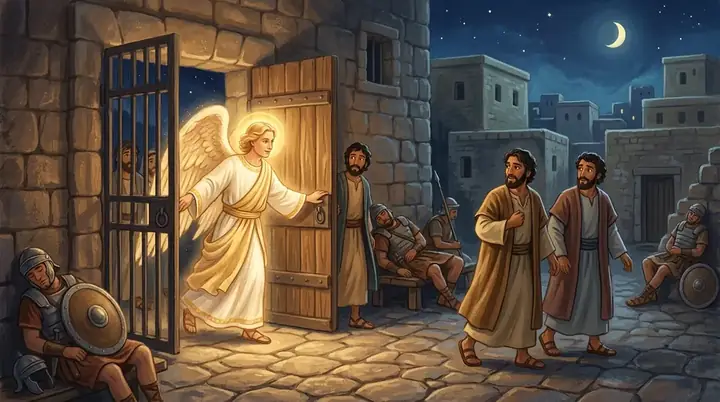
Joseph was thrown into Pharaoh's prison on a false charge, and there met the butler and the baker whose dreams led to his rise (Genesis 39–41). Jehoiachin spent thirty-seven years in a Babylonian prison before a new king set him free (2 Kings 25:27–30). John the Baptist sent his question to Jesus from Herod's fortress and was beheaded there (Matthew 11:2; Matthew 14:10). The apostles were locked in the common prison and found by an angel outside it (Acts 5:18–19); Peter slept between two soldiers until the angel woke him (Acts 12). At Philippi Paul and Silas sang at midnight, an earthquake opened the doors, and the jailer was saved (Acts 16:25–34). Paul wrote several of his letters as "the prisoner of Jesus Christ" (Ephesians 3:1; Philippians 1:13).
What it means
God is not shut out by prison walls; some of the Bible's best moments happened behind them. The Messiah came "to proclaim liberty to the captives, and the opening of the prison to them that are bound" (Isaiah 61:1), and Hebrews asks believers to remember prisoners as if they were in chains with them (Hebrews 13:3).
Key verses
- Genesis 39:20–21
And Joseph’s master took him, and put him into the prison, a place where the king’s prisoners were bound: and he was there in the prison. But the Lord was with Joseph, and shewed him mercy, and gave him favour in the sight of the keeper of the prison.
- Matthew 25:36
Naked, and ye clothed me: I was sick, and ye visited me: I was in prison, and ye came unto me.
- Acts 12:7
And, behold, the angel of the Lord came upon him, and a light shined in the prison: and he smote Peter on the side, and raised him up, saying, Arise up quickly. And his chains fell off from his hands.
- Acts 16:25–26
And at midnight Paul and Silas prayed, and sang praises unto God: and the prisoners heard them. And suddenly there was a great earthquake, so that the foundations of the prison were shaken: and immediately all the doors were opened, and every one’s bands were loosed.
- Hebrews 13:3
Remember them that are in bonds, as bound with them; and them which suffer adversity, as being yourselves also in the body.
Read next
 PersonJosephJacob's favourite son, sold by his brothers into Egypt, where he rose from prison to rule the land and saved his family…
 Person · JudgeSamsonThe judge of Israel with superhuman strength from God, a Nazirite from birth. He fought the Philistines single-handed…
 PersonMicaiahThe one prophet who dared to tell King Ahab the truth when four hundred others promised victory. He foretold Ahab's…
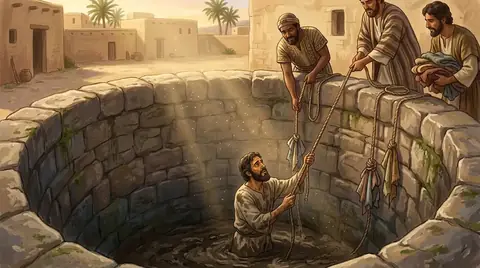 PersonJeremiahThe prophet who warned Judah for forty years that Babylon was coming, and wept as it came. He was beaten, put in the…
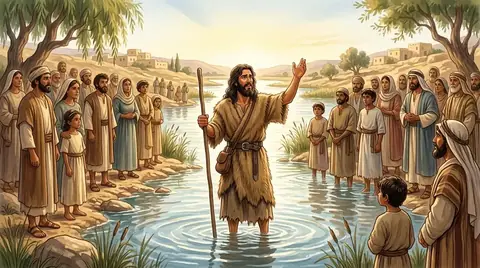 PersonJohn the BaptistThe prophet God sent to prepare the way for Jesus. He called Israel to repent, baptized in the Jordan, pointed to Jesus…
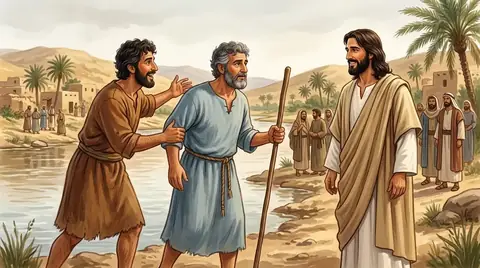 PersonPeterA Galilean fisherman who became the leader of the twelve apostles. Bold and impulsive, he confessed Jesus as the…
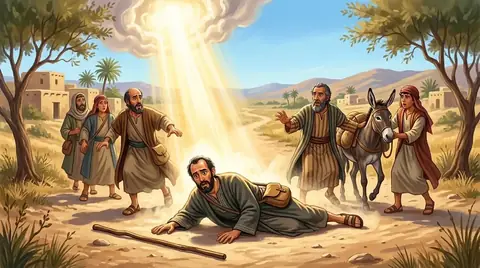 PersonPaulA Pharisee who hated the church until the risen Jesus met him on the road to Damascus. He became the apostle to the…
 PersonSilasA leader of the Jerusalem church who became Paul's companion on his second missionary journey. He was beaten and jailed…
Written for this app in its own words, from the Bible, with the facts checked against Bible dictionaries and encyclopedias: Easton's, Smith's, Fausset's, ISBE, Holman, the New Bible Dictionary, Vine's and the Thompson Chain topics.
