
Place
Pisgah
PIZ-gahOld Testament · a mountain ridge in Moab, east of the Jordan · near Mount Nebo, in Jordan
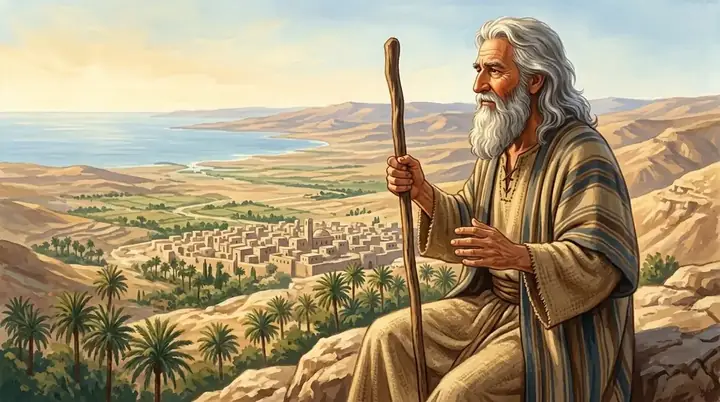
The high ridge in Moab, across the Jordan from Jericho, where Moses climbed to look over the Promised Land before he died. Balak also brought Balaam there to curse Israel.
- Where
- The edge of the plateau above the Dead Sea, east of the Jordan
- Top
- Nebo, "the top of Pisgah" (Deuteronomy 34:1)
- Known for
- Moses' last view of the land
- Today
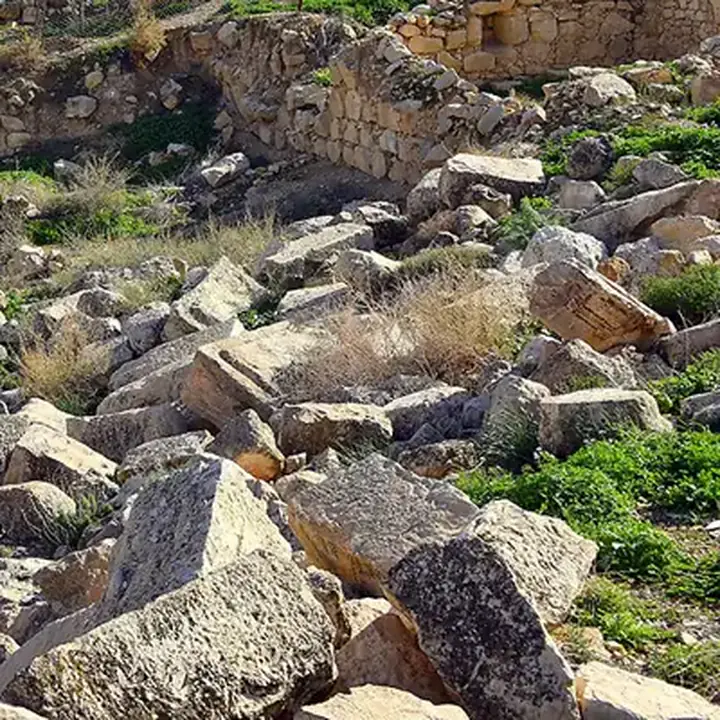
- probably Rujm Siyaghah, in Jordan.
Where
Pisgah is the line of heights where the high tableland of Moab drops steeply down to the Jordan valley and the north end of the Dead Sea. Its slopes marked the edge of the land that Reuben and Gad later received (Deuteronomy 3:17; Joshua 13:20). Mount Nebo was one of its peaks, and from there on a clear day you can see across to Jericho and the hills of Judah.
In the Old Testament
Israel camped near Pisgah at the end of their journey (Numbers 21:20). King Balak took Balaam to its top, to the field of Zophim, and built seven altars, hoping that from there the prophet would curse Israel. Instead God made him bless them again (Numbers 23:14–24).
Moses asked to cross the Jordan, but God told him to climb Pisgah and see the land with his eyes, for he would not go over (Deuteronomy 3:25–27). At the end of his life he went up, and the LORD showed him the whole land, from Gilead to Dan and to the western sea. Then Moses died there, and the LORD himself buried him in a Moabite valley (Deuteronomy 34:1–6).
What it means
Pisgah has become a picture of looking forward in faith, seeing God's promise before it is reached. Moses did finally stand in the land, beside Jesus on the mountain of the transfiguration (Matthew 17:3).
Key verses
- Numbers 23:14
And he brought him into the field of Zophim, to the top of Pisgah, and built seven altars, and offered a bullock and a ram on every altar.
- Deuteronomy 3:27
Get thee up into the top of Pisgah, and lift up thine eyes westward, and northward, and southward, and eastward, and behold it with thine eyes: for thou shalt not go over this Jordan.
- Deuteronomy 34:1–4
And Moses went up from the plains of Moab unto the mountain of Nebo, to the top of Pisgah, that is over against Jericho. And the Lord shewed him all the land of Gilead, unto Dan, And all Naphtali, and the land of Ephraim, and Manasseh, and all the land of Judah, unto the utmost sea, And the south, and the plain of the valley of Jericho, the city of palm trees, unto Zoar. …
- Joshua 12:3
And from the plain to the sea of Chinneroth on the east, and unto the sea of the plain, even the salt sea on the east, the way to Beth–jeshimoth; and from the south, under Ashdoth–pisgah:
On the map
Mentioned in 8 verses
- Numbers 2
- Deuteronomy 4
- Joshua 2
Read next
 Place · MountainMount NeboThe mountain in Moab from which Moses saw the promised land he was not allowed to enter, and where he died. It stands…
 Place · NationMoabThe land and people east of the Dead Sea, descended from Lot. Balak of Moab hired Balaam to curse Israel, Moses died on…
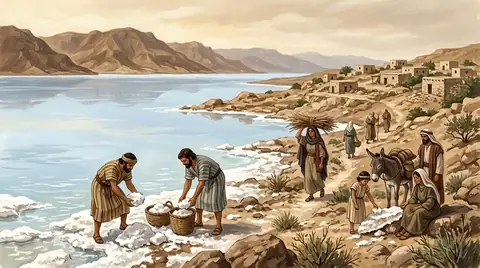 PlaceSalt SeaThe Bible's name for the Dead Sea, the great salt lake at the end of the Jordan River. It is the lowest place on the…
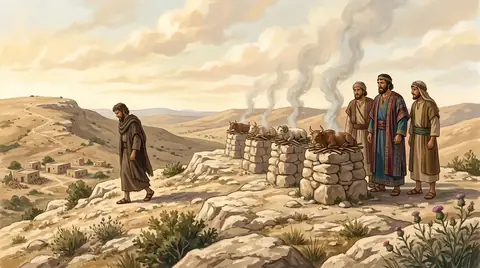 Person · King of MoabBalakMoab's king, who paid Balaam to put a curse on Israel as they camped along his border. Seven altars on three hilltops…
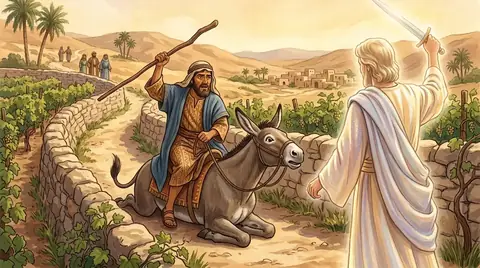 Person · ProphetBalaamA soothsayer hired by the king of Moab to curse Israel. God let him go but put only blessings in his mouth; his donkey…
Written for this app in its own words, from the Bible, with the facts checked against Bible dictionaries and encyclopedias: Easton's, Smith's, Fausset's, ISBE, Holman, the New Bible Dictionary, Vine's and the Thompson Chain topics. People and places: STEPBible.org (TIPNR), CC BY 4.0; where a place is today and its photo: OpenBible.info, CC BY 4.0.
