
Book
Philemon (book)
New Testament · Letters, Paul's prison letters · written by Paul in Rome, about AD 60–62
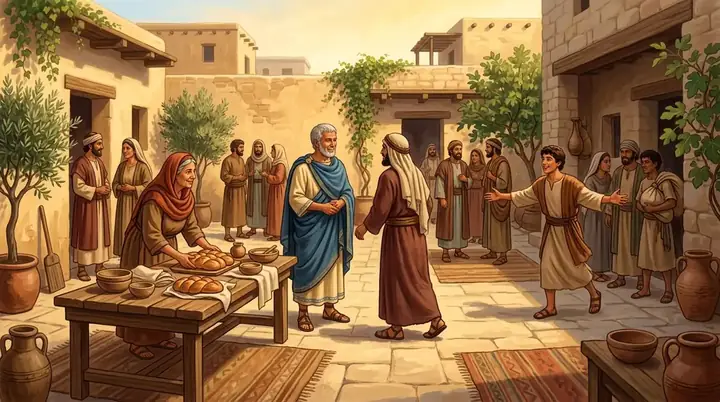
Paul's short personal letter to Philemon, asking him to welcome back his runaway slave Onesimus, who had become a Christian, no longer as a slave but as a dear brother.
- Author
- Paul, with Timothy
- Written
- About AD 60–62, in prison in Rome
- Chapters
- 1 (25 verses)
- Key verse
- "Not now as a servant, but above a servant, a brother beloved" (Philemon 1:16)
What it's about
Philemon was a believer, probably at Colossae, whose home was used by the church (Philemon 1:2). His slave Onesimus had run away, perhaps taking money with him, and somehow had met Paul in prison and been converted. Paul now sent him back, with this letter, alongside the letter to the Colossians (Colossians 4:9).
Paul could have ordered Philemon, but he asks instead, for love's sake. Onesimus, whose name means "useful", had once been useless to Philemon, but now he was useful to them both (Philemon 1:11). Paul hints that Philemon might even send him back to help, and says he is sure Philemon will do more than he asks.
Its message
The gospel changes relationships. In Christ, master and slave become brothers. Forgiveness and welcome are to be offered freely, and the letter shows how gently and tactfully a Christian can ask another to do right.
Points to Christ
Paul writes, "If he hath wronged thee, or oweth thee ought, put that on mine account" (Philemon 1:18). This is a picture of what Christ does for us: he takes our debt on himself and presents us to the Father as welcome.
Key verses
- Philemon 1:6
That the communication of thy faith may become effectual by the acknowledging of every good thing which is in you in Christ Jesus.
- Philemon 1:10–11
I beseech thee for my son Onesimus, whom I have begotten in my bonds: Which in time past was to thee unprofitable, but now profitable to thee and to me:
- Philemon 1:15–16
For perhaps he therefore departed for a season, that thou shouldest receive him for ever; Not now as a servant, but above a servant, a brother beloved, specially to me, but how much more unto thee, both in the flesh, and in the Lord?
- Philemon 1:18
If he hath wronged thee, or oweth thee ought, put that on mine account;
Read next
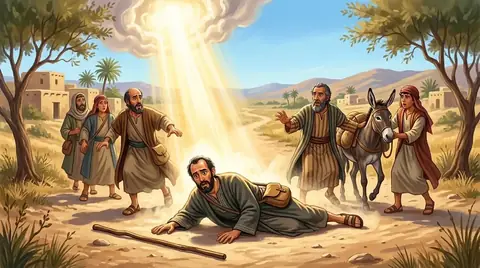 PersonPaulA Pharisee who hated the church until the risen Jesus met him on the road to Damascus. He became the apostle to the…
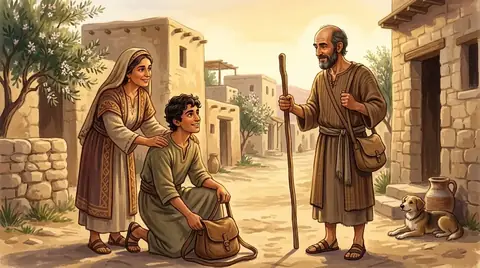 PersonTimothyPaul's young helper and closest co-worker. He came from Lystra, travelled with Paul on his journeys, carried his…
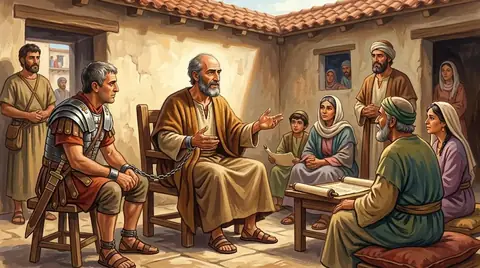 Place · CityRomeThe capital of the empire that ruled the Mediterranean world in New Testament times. Paul longed to preach there…
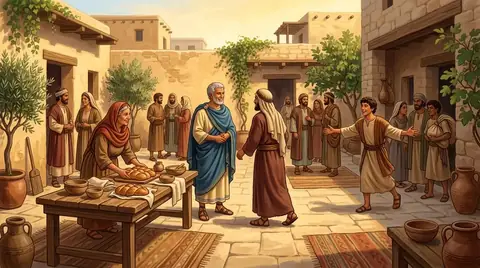 PersonPhilemonA Christian of Colossae, the man to whom Paul wrote his short letter about Onesimus, the slave who ran away and came…Place · CityColossaeA small city in the Lycus valley of Phrygia, in what is now western Turkey. Paul wrote his letter to the Colossians to…
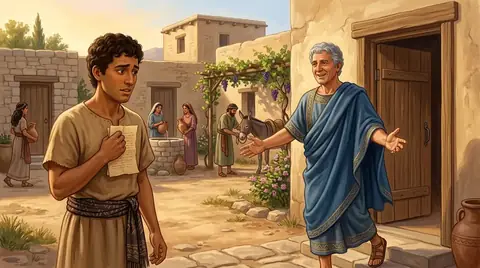 PersonOnesimusA runaway slave from Colossae who met Paul, became a Christian, and was sent back to his master Philemon with Paul's…
Written for this app in its own words, from the Bible, with the facts checked against Bible dictionaries and encyclopedias: Easton's, Smith's, Fausset's, ISBE, Holman, the New Bible Dictionary, Vine's and the Thompson Chain topics.
