
Teaching
Obedience
Doing what God says because he says it. The Bible prizes it above sacrifice, shows it in Noah, Abraham and the faithful, and finds it perfect in Jesus, who obeyed the Father to the cross. For Christians it is the fruit of love and faith, not the price of salvation.
- Samuel said
- "To obey is better than sacrifice" (1 Samuel 15:22)
- Jesus said
- "If ye love me, keep my commandments" (John 14:15)
- Examples
- Noah, Abraham, Caleb, Joshua, Hezekiah, Josiah, Daniel, the apostles
In the Old Testament
Noah built the ark "according to all that God commanded him, so did he" (Genesis 6:22). Abraham left his country not knowing where he was going, and was ready to offer up Isaac, "because thou hast obeyed my voice" (Genesis 22:18; Hebrews 11:8). At Sinai Israel promised, "All that the LORD hath said will we do, and be obedient" (Exodus 24:7), and God set before them blessing for obedience and curse for disobedience (Deuteronomy 28:1–2; Deuteronomy 28:15). When Saul spared what God had told him to destroy, saying it was for sacrifice, Samuel answered, "Behold, to obey is better than sacrifice, and to hearken than the fat of rams" (1 Samuel 15:22). Psalm 119 is one long prayer to know and keep God's word. "Fear God, and keep his commandments: for this is the whole duty of man" (Ecclesiastes 12:13).
In Jesus
Where Adam disobeyed, Christ obeyed: "by the obedience of one shall many be made righteous" (Romans 5:19). He came saying, "Lo, I come... to do thy will, O God" (Hebrews 10:7), and "became obedient unto death, even the death of the cross" (Philippians 2:8). He "learned... obedience by the things which he suffered" and became the source of salvation "unto all them that obey him" (Hebrews 5:8–9).
For us
Obedience does not earn God's love; it answers it. "If ye love me, keep my commandments" (John 14:15). Jesus called the one who hears and does his words a wise man who built on rock (Luke 6:46–48). When men's commands clash with God's, "We ought to obey God rather than men" (Acts 5:29). God works in us both to will and to do (Philippians 2:12–13), and "his commandments are not grievous" (1 John 5:3).
Key verses
- 1 Samuel 15:22
And Samuel said, Hath the Lord as great delight in burnt offerings and sacrifices, as in obeying the voice of the Lord? Behold, to obey is better than sacrifice, and to hearken than the fat of rams.
- Ecclesiastes 12:13
Let us hear the conclusion of the whole matter: Fear God, and keep his commandments: for this is the whole duty of man.
- Philippians 2:8
And being found in fashion as a man, he humbled himself, and became obedient unto death, even the death of the cross.
- John 14:15
If ye love me, keep my commandments.
- Luke 6:46–48
And why call ye me, Lord, Lord, and do not the things which I say? Whosoever cometh to me, and heareth my sayings, and doeth them, I will shew you to whom he is like: He is like a man which built an house, and digged deep, and laid the foundation on a rock: and when the flood arose, the stream beat vehemently upon that house, and could not shake it: for it was founded upon a rock.
- Acts 5:29
Then Peter and the other apostles answered and said, We ought to obey God rather than men.
Read next
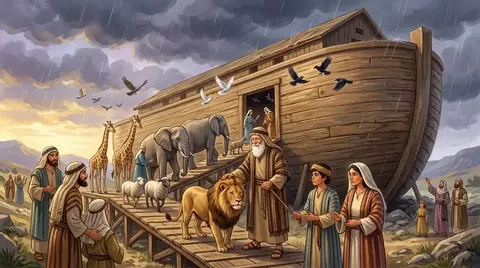 PersonNoahThe one righteous man of his age. God told him to build an ark, and through it saved him, his family and the animals…
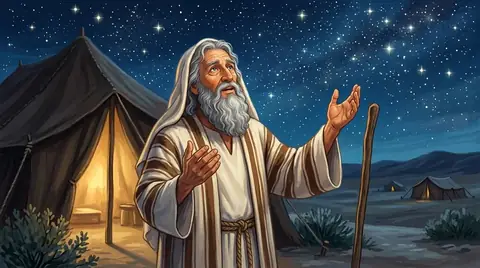 PersonAbrahamThe man God called out of Ur to a land he had never seen, promising him a people and a blessing for the whole world. He…
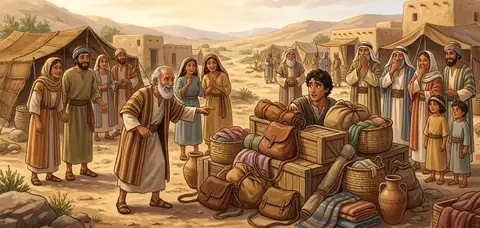 Person · KingSaulIsrael's first king, a tall Benjamite chosen when the people demanded a king like the nations. He began humbly and won…
 Person · Prophet and judgeSamuelThe prophet who led Israel from the time of the judges into the time of the kings. Given to God by his mother Hannah…
Written for this app in its own words, from the Bible, with the facts checked against Bible dictionaries and encyclopedias: Easton's, Smith's, Fausset's, ISBE, Holman, the New Bible Dictionary, Vine's and the Thompson Chain topics.
