
Place
Mount
The hill country of the Promised Land
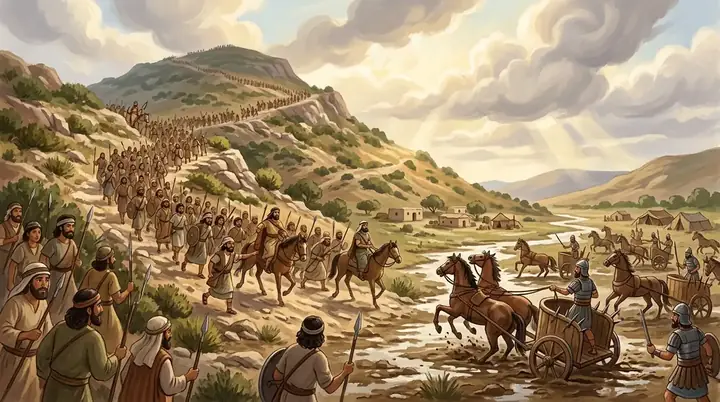
The land of Israel is a land of hills and valleys. Ranges run north to south through Galilee, Samaria and Judah on both sides of the Jordan valley, with peaks such as Carmel, Tabor and Hermon.
- Known for
- "A land of hills and valleys" (Deuteronomy 11:11)
- Peaks
- Mount Hermon, Mount Carmel, Mount Tabor, the Mount of Olives
A hilly land
Moses told Israel that the land they were going to was not flat like Egypt, watered by hand from the river, but "a land of hills and valleys", which "drinketh water of the rain of heaven" (Deuteronomy 11:10–11). He longed to see "that goodly mountain, and Lebanon" (Deuteronomy 3:25).
The shape of the land
West of the Jordan, the hills run south from Lebanon into Galilee and end in the ridge of Mount Carmel by the sea. Mount Tabor stands alone above the plain of Jezreel, and south of that the hills of Samaria and Judah fill most of the country. They slope gently west to the coastal plain and drop steeply east into the deep Jordan valley. East of the river rise the highlands of Gilead and Moab. The hills are mostly limestone, full of caves, where David and many others hid.
Mountains in God's promise
God promised to gather his scattered flock and "feed them upon the mountains of Israel" (Ezekiel 34:13).
Key verses
- Deuteronomy 11:10–11
For the land, whither thou goest in to possess it, is not as the land of Egypt, from whence ye came out, where thou sowedst thy seed, and wateredst it with thy foot, as a garden of herbs: But the land, whither ye go to possess it, is a land of hills and valleys, and drinketh water of the rain of heaven:
- Deuteronomy 3:25
I pray thee, let me go over, and see the good land that is beyond Jordan, that goodly mountain, and Lebanon.
- Ezekiel 34:13
And I will bring them out from the people, and gather them from the countries, and will bring them to their own land, and feed them upon the mountains of Israel by the rivers, and in all the inhabited places of the country.
On the map
Read next
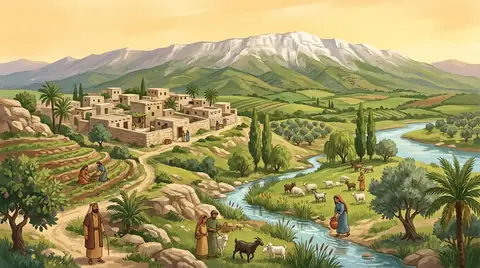 Place · MountainMount HermonThe highest mountain in the region, over 9,000 feet (2,800 m), at the far north of Israel. Its snows feed the Jordan…
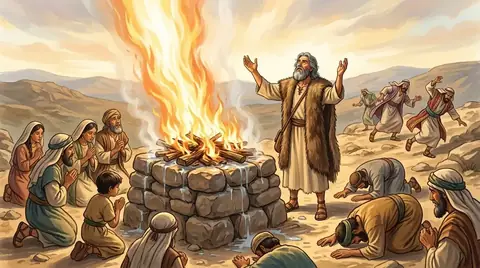 Place · MountainMount CarmelA wooded ridge running inland from the Mediterranean coast of northern Israel, famous as the place where Elijah called…
 PlaceMount TaborA rounded mountain rising alone from the plain of Jezreel in Galilee. Barak gathered his army on it before charging…
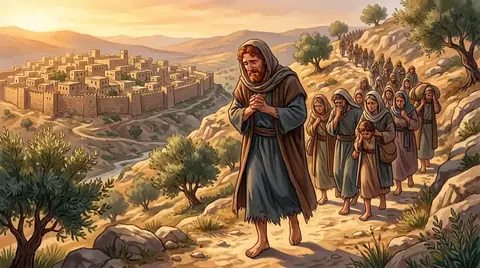 Place · MountainMount of OlivesThe hill east of Jerusalem where Jesus often prayed, wept over the city, taught about the end, was arrested in…Place · RiverJordanThe river of the Bible: Israel crossed it on dry ground into the promised land, Elijah and Elisha parted it, Naaman…
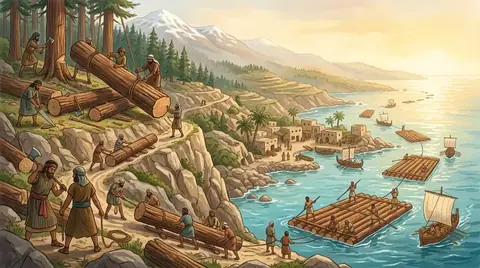 Place · MountainsLebanonThe snow-capped mountain range north of Israel, famous for its cedars. Its timber built the temple, and its forests and…
Written for this app in its own words, from the Bible, with the facts checked against Bible dictionaries and encyclopedias: Easton's, Smith's, Fausset's, ISBE, Holman, the New Bible Dictionary, Vine's and the Thompson Chain topics.
