
Place · Mountain
Mount of Olives
The Mount of Olives · the ridge east of Jerusalem, across the Kidron
The hill east of Jerusalem where Jesus often prayed, wept over the city, taught about the end, was arrested in Gethsemane and went up to heaven. Zechariah says his feet will stand there again.
- Where
- East of Jerusalem, across the Kidron valley, about 2,700 feet (830 m) high and a little higher than the temple mount
- Known for
- Gethsemane; the triumphal entry; the Olivet discourse; the ascension
- Also called
- Olivet (Acts 1:12)
- Today
- the Mount of Olives, in Jerusalem.
Where
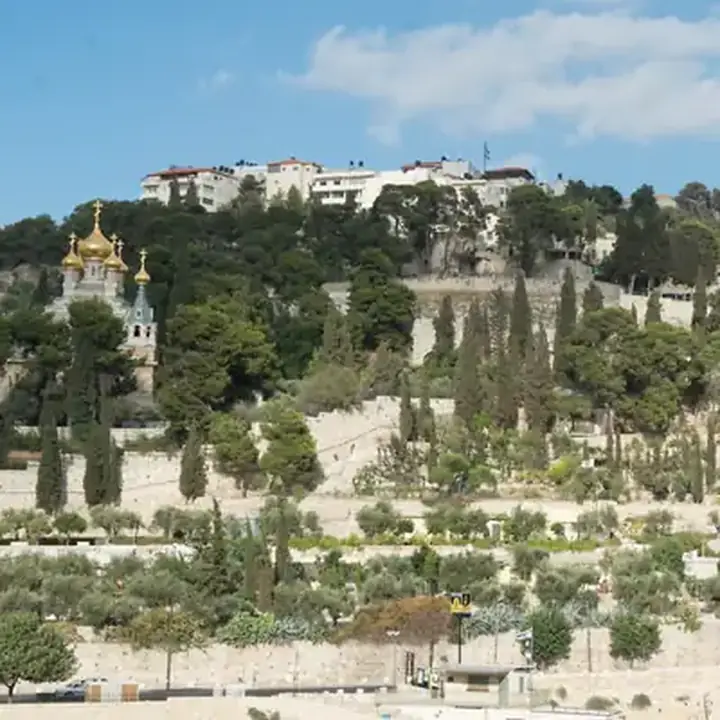
The Mount of Olives is a ridge about two miles long that rises just east of Jerusalem, separated from the temple hill by the deep Kidron valley. Its name comes from the olive groves on its slopes. From its top the whole city lies in view, and the road to Bethany and Jericho runs over its shoulder.
In the Old Testament
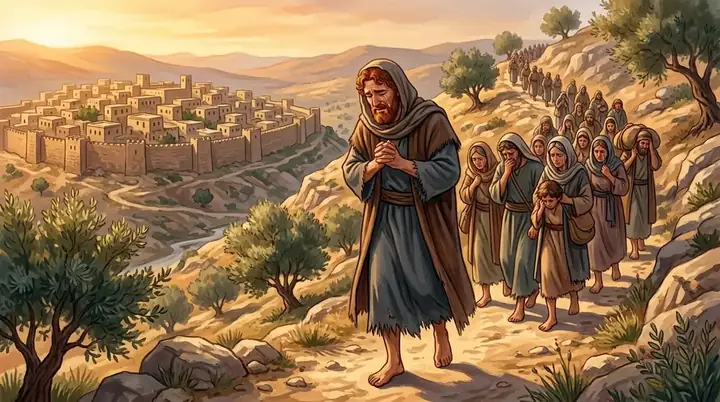
David climbed it weeping and barefoot as he fled from Absalom (2 Samuel 15:30). Solomon built shrines for his foreign wives' gods on it, and Josiah later wrecked them (1 Kings 11:7; 2 Kings 23:13). Ezekiel saw the glory of the LORD leave the temple and rest on "the mountain which is on the east side of the city" (Ezekiel 11:23). Zechariah foretold that the LORD's feet will stand on the Mount of Olives and it will split in two (Zechariah 14:4).
In the life of Jesus
Jesus crossed it from Bethany each day in his last week and spent his nights there (Luke 21:37; John 8:1). From its slope he sent for the donkey and rode down into the city while the crowds shouted "Hosanna" (Matthew 21:1; Luke 19:29–38), and as the city came into view he wept over it (Luke 19:41). Sitting on it opposite the temple, he told the disciples of Jerusalem's destruction and his return (Matthew 24:3; Mark 13:3). After the Last Supper he walked out to Gethsemane on its lower slope, prayed in agony and was arrested (Matthew 26:30; Luke 22:39). Forty days after his resurrection he led the disciples out there and was taken up into heaven, and angels promised he would come back in the same way (Luke 24:50; Acts 1:9–12).
Today
The slopes are covered with ancient graves, and churches mark Gethsemane, the place of Jesus' tears and the ascension.
Key verses
- 2 Samuel 15:30
And David went up by the ascent of mount Olivet, and wept as he went up, and had his head covered, and he went barefoot: and all the people that was with him covered every man his head, and they went up, weeping as they went up.
- Zechariah 14:4
And his feet shall stand in that day upon the mount of Olives, which is before Jerusalem on the east, and the mount of Olives shall cleave in the midst thereof toward the east and toward the west, and there shall be a very great valley; and half of the mountain shall remove toward the north, and half of it toward the south.
- Matthew 24:3
And as he sat upon the mount of Olives, the disciples came unto him privately, saying, Tell us, when shall these things be? and what shall be the sign of thy coming, and of the end of the world?
- Luke 22:39
And he came out, and went, as he was wont, to the mount of Olives; and his disciples also followed him.
- Acts 1:12
Then returned they unto Jerusalem from the mount called Olivet, which is from Jerusalem a sabbath day’s journey.
On the map
Mentioned in 14 verses
- 2 Samuel 1
- Zechariah 1
- Matthew 3
- Mark 3
- Luke 4
- John 1
- Acts 1
Read next
 PlaceJerusalemThe city David made his capital and where Solomon built the temple. Jesus died and rose there and the church began…
 Place · ValleyKidronThe deep valley on the east side of Jerusalem, with a stream that runs only in winter. David crossed it weeping as he…
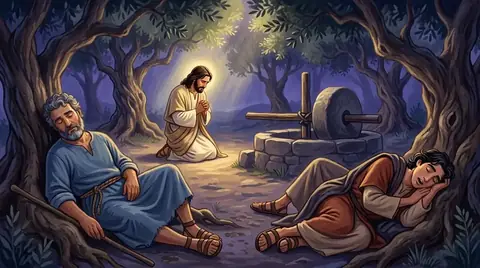 PlaceGethsemaneAn olive garden on the Mount of Olives, across the Kidron valley from Jerusalem. Jesus often went there to pray, and…Teaching · EventAscensionBeing taken up bodily into heaven. Elijah went up in a whirlwind; the two witnesses of Revelation are called up in a…
 Place · VillageBethanyThe village of Mary, Martha and Lazarus, two miles from Jerusalem over the Mount of Olives. Jesus raised Lazarus here…
 PlaceJerichoThe walled city in the Jordan valley whose walls fell flat when Israel marched round it. Called the city of palm trees…
 Person · KingDavidThe shepherd boy who killed Goliath and became Israel's greatest king, "a man after God's own heart". He wrote many…
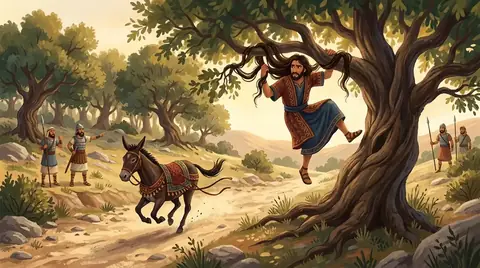 PersonAbsalomDavid's handsome third son, who murdered his brother Amnon, won the hearts of Israel and rose in rebellion against his…
Written for this app in its own words, from the Bible, with the facts checked against Bible dictionaries and encyclopedias: Easton's, Smith's, Fausset's, ISBE, Holman, the New Bible Dictionary, Vine's and the Thompson Chain topics. People and places: STEPBible.org (TIPNR), CC BY 4.0; where a place is today and its photo: OpenBible.info, CC BY 4.0.
