
Place · Mountains
Lebanon
The name means "white" · today the mountains of Lebanon and the border of Syria
The snow-capped mountain range north of Israel, famous for its cedars. Its timber built the temple, and its forests and snows gave the prophets and poets their pictures of strength and beauty.
- Where
- North of Galilee, running along the coast; two ranges with a long valley between
- Height
- Up to 10,000 feet (3,000 m), snow on the peaks all year (Jeremiah 18:14)
- Known for
- Cedars (1 Kings 5:6), wine (Hosea 14:7), cold streams (Song of Songs 4:15), wild animals (2 Kings 14:9)
Where
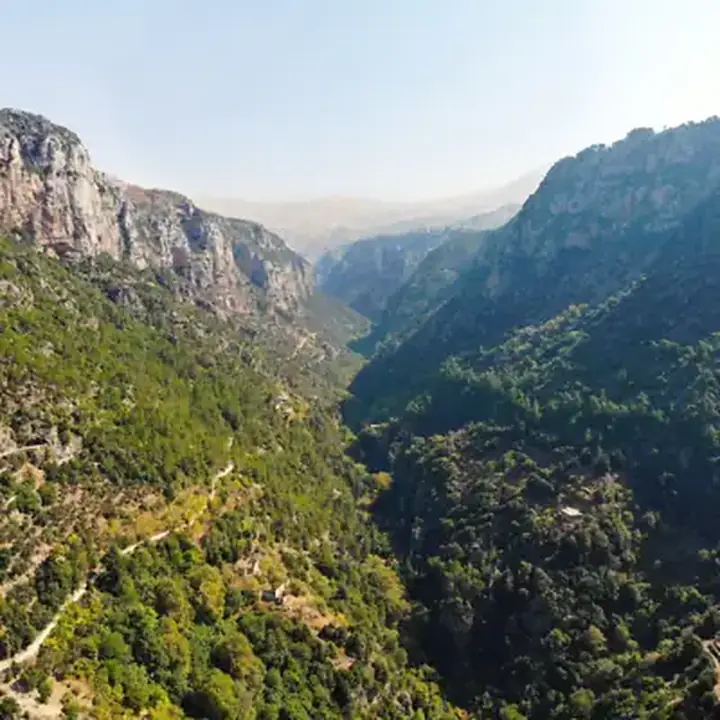
Lebanon is the mountain country that rises north of Israel, two parallel ranges running up the coast for about 100 miles (160 km) with a wide valley between them. The western range is Lebanon proper; the eastern one, the Anti-Lebanon, ends in Mount Hermon. The highest peaks keep snow all year, which is what the name "white" points to. God named Lebanon as the northern edge of the land he was giving Israel (Deuteronomy 1:7; Joshua 1:4), but Israel never fully took it, and its people, the Hivites and the men of Gebal, stayed (Judges 3:3; Joshua 13:5).
Why it mattered
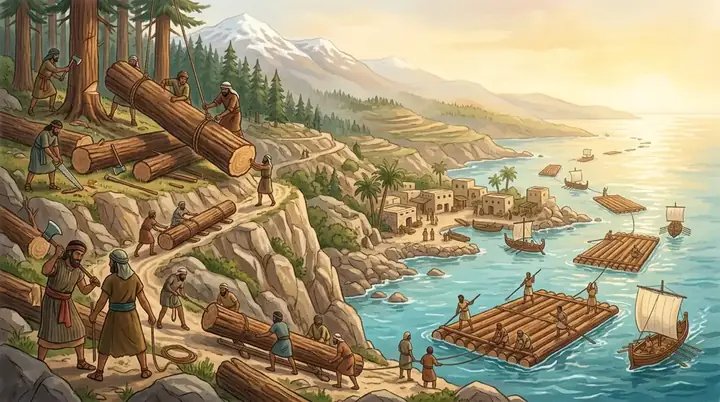
Its slopes were covered with cedar, cypress and pine, the best timber in the ancient world. Solomon made a deal with Hiram of Tyre: Hiram's men felled the trees, floated the logs down the coast in rafts, and Solomon paid in wheat and oil (1 Kings 5:6–11). Cedar from Lebanon panelled the temple, and Solomon's palace was so full of it that it was called "the house of the forest of Lebanon" (1 Kings 7:2). When the exiles rebuilt the temple they sent to Lebanon again (Ezra 3:7). Solomon also built store cities there (1 Kings 9:19).
In the poets and prophets
No place gave the Bible more pictures. The righteous grow "like a cedar in Lebanon" (Psalms 92:12); the voice of the LORD in the storm breaks its cedars (Psalms 29:5); the bride's scent is like Lebanon, and her lover's looks are "excellent as the cedars" (Song of Songs 4:11; Song of Songs 5:15). Its pride is a picture of human pride that God will bring low (Isaiah 2:13; Isaiah 10:34). When God restores his people, the desert will be given "the glory of Lebanon" (Isaiah 35:2), and Hosea promises that Israel will again put out roots like Lebanon and smell like its wine (Hosea 14:5–7).
Today
The cedars are mostly gone, cut over the centuries; a few small groves are protected, and the tree is on the flag of the modern Republic of Lebanon, which takes its name from the mountains.
Key verses
- Deuteronomy 1:7
Turn you, and take your journey, and go to the mount of the Amorites, and unto all the places nigh thereunto, in the plain, in the hills, and in the vale, and in the south, and by the sea side, to the land of the Canaanites, and unto Lebanon, unto the great river, the river Euphrates.
- 1 Kings 5:6
Now therefore command thou that they hew me cedar trees out of Lebanon; and my servants shall be with thy servants: and unto thee will I give hire for thy servants according to all that thou shalt appoint: for thou knowest that there is not among us any that can skill to hew timber like unto the Sidonians.
- Psalms 92:12
The righteous shall flourish like the palm tree: he shall grow like a cedar in Lebanon.
- Song of Songs 4:15
A fountain of gardens, a well of living waters, and streams from Lebanon.
- Isaiah 35:2
It shall blossom abundantly, and rejoice even with joy and singing: the glory of Lebanon shall be given unto it, the excellency of Carmel and Sharon, they shall see the glory of the Lord, and the excellency of our God.
- Hosea 14:5–7
I will be as the dew unto Israel: he shall grow as the lily, and cast forth his roots as Lebanon. His branches shall spread, and his beauty shall be as the olive tree, and his smell as Lebanon. They that dwell under his shadow shall return; they shall revive as the corn, and grow as the vine: the scent thereof shall be as the wine of Lebanon.
On the map
Mentioned in 56 verses
- Deuteronomy 3
- Joshua 4
- Judges 1
- 1 Kings 5
- 2 Kings 2
- 2 Chronicles 4
- Ezra 1
- Psalms 5
- Song of Solomon 6
- Isaiah 9
- Jeremiah 4
- Ezekiel 5
- Hosea 3
- Nahum 1
- Habakkuk 1
- Zechariah 2
Read next
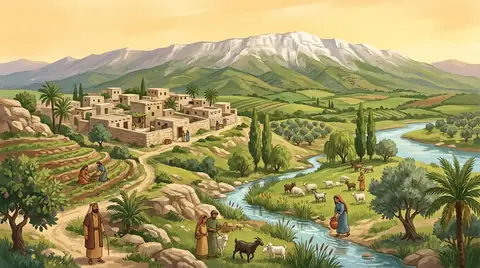 Place · MountainMount HermonThe highest mountain in the region, over 9,000 feet (2,800 m), at the far north of Israel. Its snows feed the Jordan…
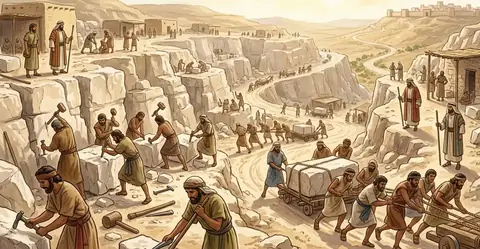 Place · CityGebalAn old Phoenician port north of Sidon, the Greeks' Byblos. Its craftsmen cut stone for Solomon's temple and caulked the…
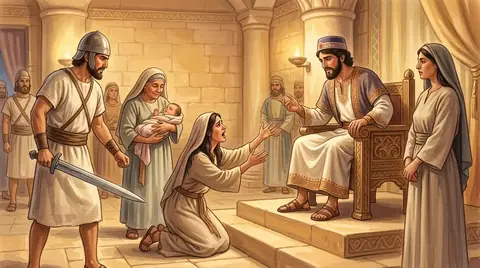 Person · KingSolomonDavid's son and Israel's third king, who asked God for wisdom and received riches and fame as well. He built the temple…
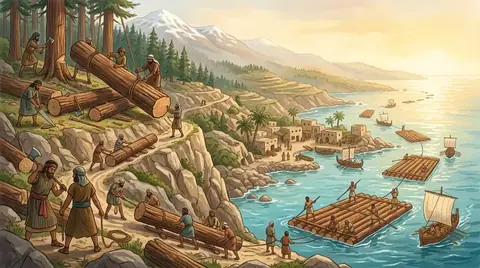 Person · KingHiramThe king of Tyre who was a friend to David and Solomon, sending cedar from Lebanon and skilled workmen for David's…
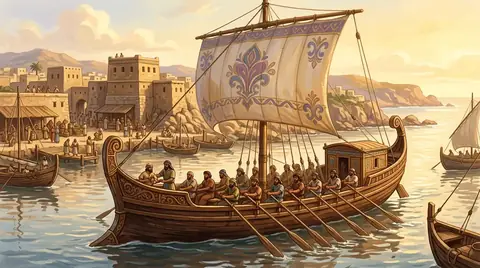 Place · CityTyreThe great trading port of Phoenicia, on the coast north of Israel. Its king Hiram helped build Solomon's temple; later…
 Person · ProphetHoseaThe prophet God sent to Israel, the northern kingdom, in its last years. God told him to marry Gomer, who was…
Written for this app in its own words, from the Bible, with the facts checked against Bible dictionaries and encyclopedias: Easton's, Smith's, Fausset's, ISBE, Holman, the New Bible Dictionary, Vine's and the Thompson Chain topics. People and places: STEPBible.org (TIPNR), CC BY 4.0; where a place is today and its photo: OpenBible.info, CC BY 4.0.
