
Thing · Daily life
Mortar
Two different things in the Bible: the mud, lime or pitch that held bricks together, and the stone bowl in which grain or spices were pounded with a pestle.
- For building
- Mud, clay, lime or pitch ("slime") between bricks (Genesis 11:3; Exodus 1:14)
- For pounding
- A stone bowl and pestle (Numbers 11:8; Proverbs 27:22)
For building
Bricks need something to bind them. At Babel the builders used burnt bricks and "slime," that is bitumen, for mortar (Genesis 11:3). In Egypt the Hebrew slaves' lives were made bitter "in morter, and in brick" (Exodus 1:14). Mud plaster was scraped off a house with leprosy and replaced (Leviticus 14:42–45), and a city under siege was told to tread the clay and mend its brickwork (Nahum 3:14). Ezekiel accuses false prophets of daubing a crumbling wall with "untempered morter," a whitewash that hides the cracks until the storm brings it down (Ezekiel 13:10–15; Ezekiel 22:28). Smooth words over a rotten wall are no protection.
For pounding
A mortar was also a hollowed stone or wooden bowl in which things were crushed with a pestle, where there was no mill. In the wilderness the people ground their manna in mills "or beat it in a mortar" before baking it (Numbers 11:8). Proverbs says that even if you pounded a fool in a mortar among the grain, "yet will not his foolishness depart from him" (Proverbs 27:22). Some lessons cannot be beaten in.
Key verses
- Genesis 11:3
And they said one to another, Go to, let us make brick, and burn them throughly. And they had brick for stone, and slime had they for morter.
- Exodus 1:14
And they made their lives bitter with hard bondage, in morter, and in brick, and in all manner of service in the field: all their service, wherein they made them serve, was with rigour.
- Ezekiel 13:10–11
Because, even because they have seduced my people, saying, Peace; and there was no peace; and one built up a wall, and, lo, others daubed it with untempered morter: Say unto them which daub it with untempered morter, that it shall fall: there shall be an overflowing shower; and ye, O great hailstones, shall fall; and a stormy wind shall rend it.
- Numbers 11:8
And the people went about, and gathered it, and ground it in mills, or beat it in a mortar, and baked it in pans, and made cakes of it: and the taste of it was as the taste of fresh oil.
- Proverbs 27:22
Though thou shouldest bray a fool in a mortar among wheat with a pestle, yet will not his foolishness depart from him.
Read next
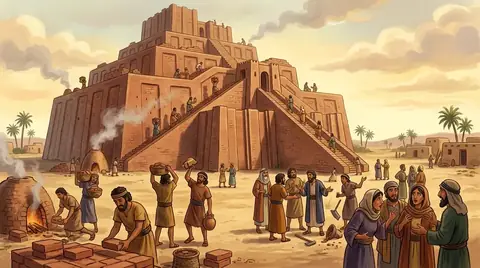 Place · CityBabelThe city in the plain of Shinar where, after the Flood, people built a tower to reach heaven and make a name for…
 Place · NationEgyptThe great kingdom of the Nile, where Israel grew from a family into a nation and was then enslaved. The Exodus from…
 Thing · SymbolMannaThe food God sent every morning to feed Israel in the desert for forty years. Jesus called himself the true bread from…
Written for this app in its own words, from the Bible, with the facts checked against Bible dictionaries and encyclopedias: Easton's, Smith's, Fausset's, ISBE, Holman, the New Bible Dictionary, Vine's and the Thompson Chain topics.
