
Symbol
Milk and honey
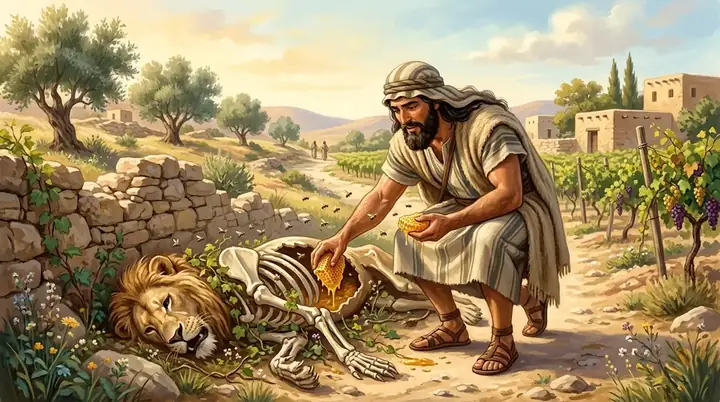
"A land flowing with milk and honey" was God's own description of the land he promised Israel: rich pasture for flocks, and flowers, fruit and bees in plenty.
- First said
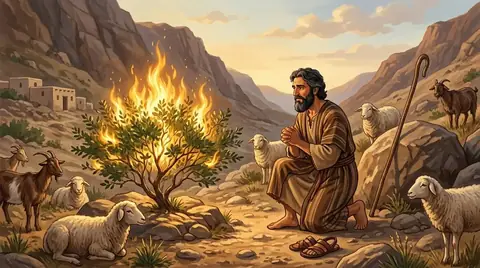
- At the burning bush (Exodus 3:8)
- Said
- About twenty times, from Exodus to Ezekiel
- Milk
- From flocks on good grazing. Honey | From wild bees, and perhaps syrup from dates and grapes
The picture
God told Moses at the burning bush that he would bring Israel out of Egypt "unto a land flowing with milk and honey" (Exodus 3:8). The phrase was repeated all through the wilderness years and became Israel's shorthand for the Promised Land. Milk meant flocks and herds with grass enough to feed them; honey meant a countryside full of flowers, trees and wild bees. Together they said: a land that gives freely, where no one need go hungry.
In the Bible
When the spies came back from Canaan with a cluster of grapes, even the fearful ones agreed, "surely it floweth with milk and honey" (Numbers 13:27). Moses used the phrase to urge the people to obey so that they might keep the land (Deuteronomy 6:3; Deuteronomy 11:9), and warned that once they were full they would forget God (Deuteronomy 31:20). Later prophets used it in reverse: God had given them a land of milk and honey, and they had defiled it (Jeremiah 11:5; Ezekiel 20:6, 15). The rebels Dathan and Abiram even threw the phrase back at Moses, calling Egypt the land of milk and honey (Numbers 16:13).
What it means
The land was God's gift, not Israel's achievement, and its plenty was meant to keep them thankful and faithful. For Christians the promised land has long been a picture of the rest and fulness God gives his people in Christ, and finally of heaven (Hebrews 4:9).
Key verses
- Exodus 3:8
And I am come down to deliver them out of the hand of the Egyptians, and to bring them up out of that land unto a good land and a large, unto a land flowing with milk and honey; unto the place of the Canaanites, and the Hittites, and the Amorites, and the Perizzites, and the Hivites, and the Jebusites.
- Numbers 13:27
And they told him, and said, We came unto the land whither thou sentest us, and surely it floweth with milk and honey; and this is the fruit of it.
- Deuteronomy 6:3
Hear therefore, O Israel, and observe to do it; that it may be well with thee, and that ye may increase mightily, as the Lord God of thy fathers hath promised thee, in the land that floweth with milk and honey.
- Deuteronomy 31:20
For when I shall have brought them into the land which I sware unto their fathers, that floweth with milk and honey; and they shall have eaten and filled themselves, and waxen fat; then will they turn unto other gods, and serve them, and provoke me, and break my covenant.
- Jeremiah 11:5
That I may perform the oath which I have sworn unto your fathers, to give them a land flowing with milk and honey, as it is this day. Then answered I, and said, So be it, O Lord.
On the map
Read next
 PersonMosesThe man God used to bring Israel out of Egypt, give them his Law at Sinai, and lead them for forty years in the…
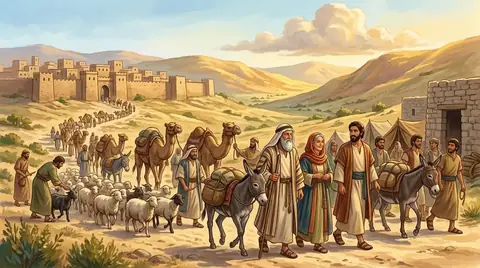 PlaceCanaanThe land between the Jordan and the Mediterranean that God promised to Abraham and gave to Israel under Joshua. It took…
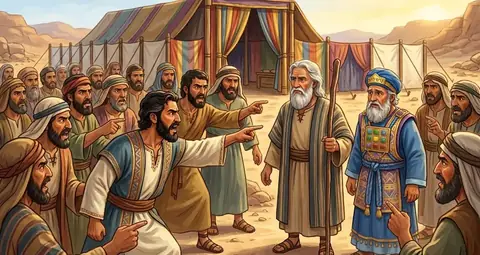 PersonDathanA leader of the tribe of Reuben who, with his brother Abiram, joined Korah's revolt against Moses. The ground opened…
Written for this app in its own words, from the Bible, with the facts checked against Bible dictionaries and encyclopedias: Easton's, Smith's, Fausset's, ISBE, Holman, the New Bible Dictionary, Vine's and the Thompson Chain topics.
