
Custom · Law
Manslayer
Old Testament · the law of Moses
Someone who had killed another person by accident, without hatred or planning. God's law gave him a city of refuge where he could be safe from the dead man's avenging relative.
- Safe in
- The six cities of refuge
- Until
- The death of the high priest (Numbers 35:25)
What the law said
In the law of Moses, God made a clear difference between murder and accidental killing. If a man killed someone "suddenly without enmity", for example by throwing a stone without seeing him, he was a manslayer, not a murderer (Numbers 35:22–23). Six towns were set apart as cities of refuge "for the manslayer, that he may flee thither" (Numbers 35:6).
How it worked
The dead man's nearest relative, the avenger of blood, had the duty of punishing a killer. The manslayer could flee to a city of refuge and be safe there until the people heard his case (Numbers 35:12). If they found the death was an accident, he was protected, but he had to stay in the city until the high priest died. Then he could go home (Numbers 35:24–28).
What it meant
The law protected life on both sides: murder was not excused, and an innocent man was not killed in anger. Christians have long seen in the cities of refuge a picture of Christ, to whom sinners flee for safety (Hebrews 6:18).
Key verses
- Numbers 35:6
And among the cities which ye shall give unto the Levites there shall be six cities for refuge, which ye shall appoint for the manslayer, that he may flee thither: and to them ye shall add forty and two cities.
- Numbers 35:11–12
Then ye shall appoint you cities to be cities of refuge for you; that the slayer may flee thither, which killeth any person at unawares. And they shall be unto you cities for refuge from the avenger; that the manslayer die not, until he stand before the congregation in judgment.
- Numbers 35:22–25
But if he thrust him suddenly without enmity, or have cast upon him any thing without laying of wait, Or with any stone, wherewith a man may die, seeing him not, and cast it upon him, that he die, and was not his enemy, neither sought his harm: Then the congregation shall judge between the slayer and the revenger of blood according to these judgments: …
- Joshua 20:3
That the slayer that killeth any person unawares and unwittingly may flee thither: and they shall be your refuge from the avenger of blood.
Read next
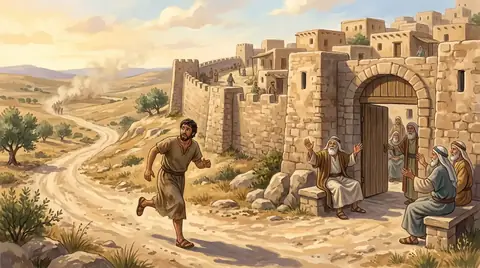 Place · LawCities of RefugeSix towns where a person who had killed someone by accident could flee from the dead man's avenging relative, and be…
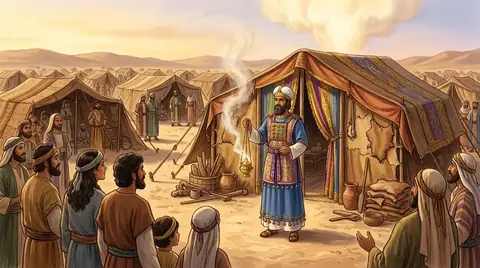 Custom · WorshipThe high priestThe head of Israel's priests, descended from Aaron, who alone went into the Most Holy Place once a year to make…
 PersonMosesThe man God used to bring Israel out of Egypt, give them his Law at Sinai, and lead them for forty years in the…
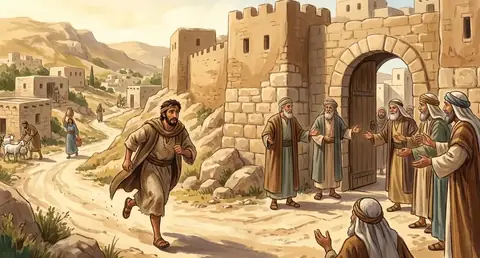 Custom · LawThe avenger of bloodUnder Israel's law the closest relative of someone who was killed had the duty of putting the killer to death. To…
Written for this app in its own words, from the Bible, with the facts checked against Bible dictionaries and encyclopedias: Easton's, Smith's, Fausset's, ISBE, Holman, the New Bible Dictionary, Vine's and the Thompson Chain topics.
