
Custom · Law
The avenger of blood
Hebrew goel, the near kinsman
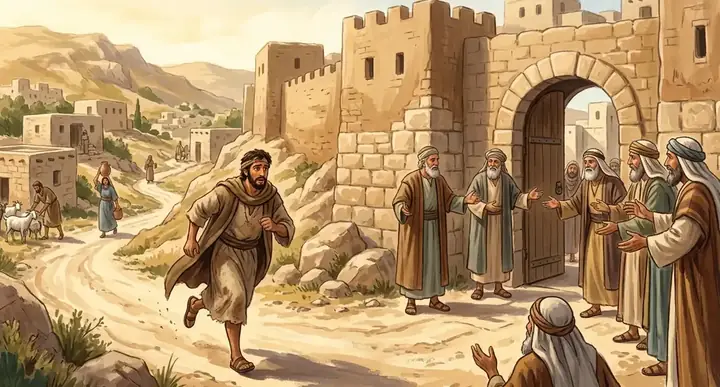
Under Israel's law the closest relative of someone who was killed had the duty of putting the killer to death. To protect those who killed by accident, God set apart six cities of refuge where they could flee and be safe.
- Who
- The closest male relative of the dead person
- Limited by
- Six cities of refuge; a trial; freedom when the high priest died
- Cities
- Kedesh, Shechem, Hebron, Bezer, Ramoth and Golan (Joshua 20:7–8)
What it was
Before Israel had police or prisons, justice for a killing belonged to the family. The dead man's nearest kinsman, his goel, was expected to hunt down the killer and take his life. God had said after the flood that whoever sheds man's blood, by man his blood will be shed (Genesis 9:6), and this was how it was carried out.
How God limited it
The danger was that a man who killed by accident, with an axe-head flying off the handle, say, would die as if he were a murderer (Deuteronomy 19:5). So God had Moses and Joshua set apart six cities of refuge, three on each side of the Jordan, with good roads to them. Anyone who had killed someone could run there, and the avenger could not touch him inside the gate (Numbers 35:9–15).
Then came a trial. If the killing was deliberate, done in hatred or with a weapon lying in wait, the city handed the murderer over to the avenger, and no ransom could buy him off (Numbers 35:16–21,31). If it was an accident, the man stayed in the city, safe as long as he remained inside. When the high priest died he could go home free (Numbers 35:25–28).
In the story
A wise woman from Tekoa told David a tale about her last son being pursued by avengers of blood, to move the king to bring Absalom home (2 Samuel 14:4–11). And when Joab killed Abner, he was really acting as avenger for his brother Asahel, though Abner had killed Asahel in open battle (2 Samuel 3:27).
Points to Christ
The guilty man was safe only while he stayed in the city, and set free by the death of the high priest. Hebrews speaks of believers who "have fled for refuge" to lay hold on the hope set before them (Hebrews 6:18), and it is the death of our great High Priest that sets us free.
Key verses
- Numbers 35:11–12
Then ye shall appoint you cities to be cities of refuge for you; that the slayer may flee thither, which killeth any person at unawares. And they shall be unto you cities for refuge from the avenger; that the manslayer die not, until he stand before the congregation in judgment.
- Numbers 35:25
And the congregation shall deliver the slayer out of the hand of the revenger of blood, and the congregation shall restore him to the city of his refuge, whither he was fled: and he shall abide in it unto the death of the high priest, which was anointed with the holy oil.
- Deuteronomy 19:4–6
And this is the case of the slayer, which shall flee thither, that he may live: Whoso killeth his neighbour ignorantly, whom he hated not in time past; As when a man goeth into the wood with his neighbour to hew wood, and his hand fetcheth a stroke with the axe to cut down the tree, and the head slippeth from the helve, and lighteth upon his neighbour, that he die; he shall flee unto one of those cities, and live: Lest the avenger of the blood pursue the slayer, while his heart is hot, and overtake him, because the way is long, and slay him; whereas he was not worthy of death, inasmuch as he hated him not in time past.
- Joshua 20:2–3
Speak to the children of Israel, saying, Appoint out for you cities of refuge, whereof I spake unto you by the hand of Moses: That the slayer that killeth any person unawares and unwittingly may flee thither: and they shall be your refuge from the avenger of blood.
- Hebrews 6:18
That by two immutable things, in which it was impossible for God to lie, we might have a strong consolation, who have fled for refuge to lay hold upon the hope set before us:
Read next
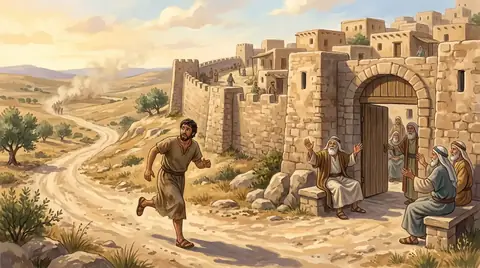 Place · LawCities of RefugeSix towns where a person who had killed someone by accident could flee from the dead man's avenging relative, and be…
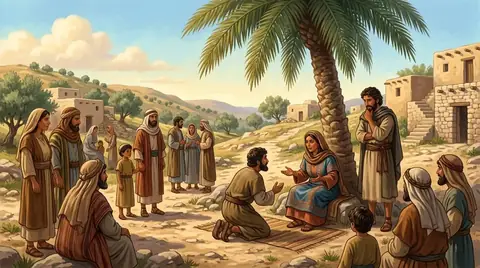 Place · CityKedeshA royal Canaanite city in the far north, conquered by Joshua, that became a Levite town and a city of refuge. Barak…
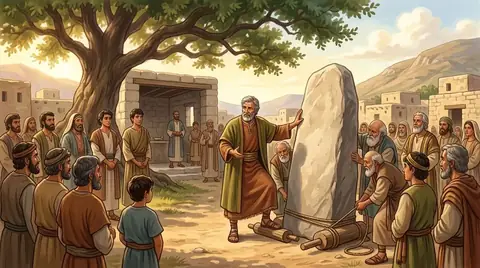 PlaceShechemAn ancient city in the heart of Canaan, between Mount Ebal and Mount Gerizim. Abraham built his first altar there…
 Place · CityHebronAn ancient city in the hills of Judah where Abraham lived and the patriarchs were buried in the cave of Machpelah.…
 PersonMosesThe man God used to bring Israel out of Egypt, give them his Law at Sinai, and lead them for forty years in the…
 PersonJoshuaMoses' helper who took over from him and led Israel across the Jordan into the Promised Land. He fought the wars of…
 Person · KingDavidThe shepherd boy who killed Goliath and became Israel's greatest king, "a man after God's own heart". He wrote many…
 PersonAbsalomDavid's handsome third son, who murdered his brother Amnon, won the hearts of Israel and rose in rebellion against his…
Written for this app in its own words, from the Bible, with the facts checked against Bible dictionaries and encyclopedias: Easton's, Smith's, Fausset's, ISBE, Holman, the New Bible Dictionary, Vine's and the Thompson Chain topics.
