
Custom
Land
Owning, selling and redeeming land in Israel
In Israel the land belonged to God. Each family held its share as a gift and could not sell it for ever; God's law kept it in the family and gave it rest every seventh year.
- Known for
- "The land is mine" (Leviticus 25:23)
- Rest
- Every seventh year, and freed in the year of Jubilee
God's gift
God made the dry land on the third day (Genesis 1:9). He promised Canaan to Abraham and his children (Genesis 13:14–17), and under Joshua it was shared out by lot, tribe by tribe and family by family (Numbers 26:52–56). So each family's fields were an inheritance from God, not just property. "The land is mine," God said; "ye are strangers and sojourners with me" (Leviticus 25:23).
Laws about land
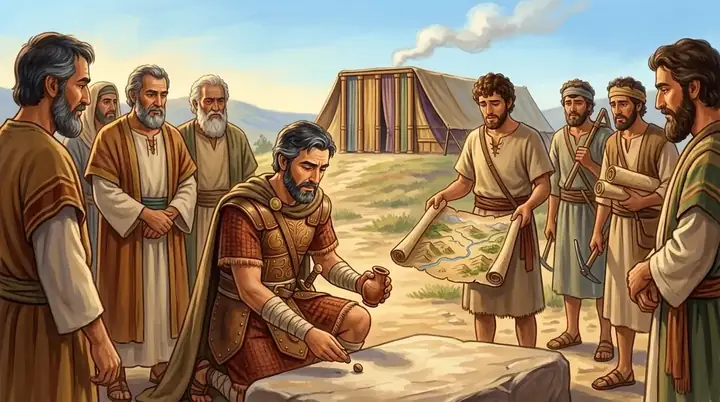
Land could be sold, but only until the year of Jubilee, when it went back to its family. A near relative had the right to buy it back for a poor kinsman (Leviticus 25:23–28), as Boaz did for Naomi's field (Ruth 4:3–10). Sales were made before witnesses and with written, sealed deeds (Genesis 23:16–20; Jeremiah 32:9–12). Every seventh year the fields rested and the poor could gather what grew (Exodus 23:10–11). Daughters could inherit where there was no son (Numbers 27:1–11).
When it went wrong
Naboth would not sell his vineyard to King Ahab: "The LORD forbid it me, that I should give the inheritance of my fathers unto thee" (1 Kings 21:3). The prophets condemned the rich who added field to field and drove the poor from their homes (Isaiah 5:8; Micah 2:2).
What it means
The land taught Israel that all they had was held on trust from God. The New Testament looks further, to a better, heavenly country that God has prepared (Hebrews 11:16).
Key verses
- Leviticus 25:23
The land shall not be sold for ever: for the land is mine; for ye are strangers and sojourners with me.
- Leviticus 25:23–28
The land shall not be sold for ever: for the land is mine; for ye are strangers and sojourners with me. And in all the land of your possession ye shall grant a redemption for the land. If thy brother be waxen poor, and hath sold away some of his possession, and if any of his kin come to redeem it, then shall he redeem that which his brother sold. …
- Ruth 4:3–10
And he said unto the kinsman, Naomi, that is come again out of the country of Moab, selleth a parcel of land, which was our brother Elimelech’s: And I thought to advertise thee, saying, Buy it before the inhabitants, and before the elders of my people. If thou wilt redeem it, redeem it: but if thou wilt not redeem it, then tell me, that I may know: for there is none to redeem it beside thee; and I am after thee. And he said, I will redeem it. Then said Boaz, What day thou buyest the field of the hand of Naomi, thou must buy it also of Ruth the Moabitess, the wife of the dead, to raise up the name of the dead upon his inheritance. …
- Jeremiah 32:9–12
And I bought the field of Hanameel my uncle’s son, that was in Anathoth, and weighed him the money, even seventeen shekels of silver. And I subscribed the evidence, and sealed it, and took witnesses, and weighed him the money in the balances. So I took the evidence of the purchase, both that which was sealed according to the law and custom, and that which was open: …
- 1 Kings 21:3
And Naboth said to Ahab, The Lord forbid it me, that I should give the inheritance of my fathers unto thee.
- Hebrews 11:16
But now they desire a better country, that is, an heavenly: wherefore God is not ashamed to be called their God: for he hath prepared for them a city.
On the map
Read next
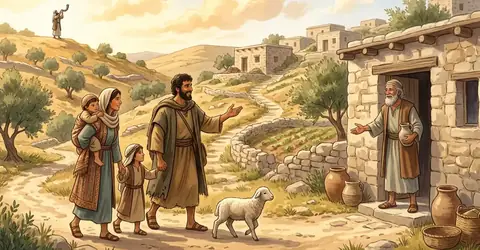 Feast · LawThe JubileeEvery fiftieth year in Israel, announced by a trumpet blast on the Day of Atonement. Sold land went back to its first…
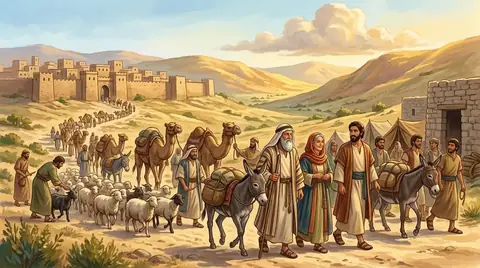 PlaceCanaanThe land between the Jordan and the Mediterranean that God promised to Abraham and gave to Israel under Joshua. It took…
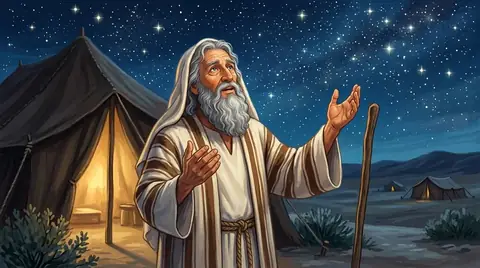 PersonAbrahamThe man God called out of Ur to a land he had never seen, promising him a people and a blessing for the whole world. He…
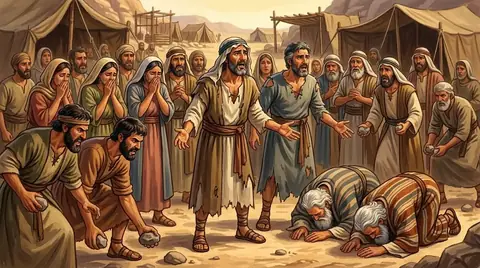 PersonJoshuaMoses' helper who took over from him and led Israel across the Jordan into the Promised Land. He fought the wars of…
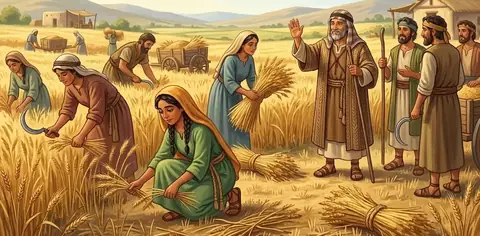 PersonBoazA wealthy farmer of Bethlehem who married Ruth, the Moabite widow, as her kinsman-redeemer. Their great-grandson was…
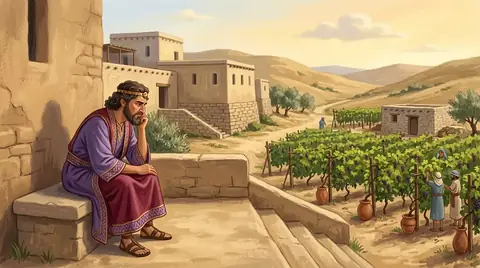 PersonNabothA man of Jezreel whose vineyard lay beside King Ahab's palace. He would not sell his family's land, so Jezebel had him…
Written for this app in its own words, from the Bible, with the facts checked against Bible dictionaries and encyclopedias: Easton's, Smith's, Fausset's, ISBE, Holman, the New Bible Dictionary, Vine's and the Thompson Chain topics.
