
Custom · Daily life
Husbandman
The KJV's word for a farmer, someone who works the land. It was one of the oldest and most honoured kinds of work, and Jesus used it of God himself, who tends his vine.
- First
- Noah "began to be an husbandman" (Genesis 9:20)
- Known for
- The parable of the wicked husbandmen (Matthew 21:33–41)
What it was
A husbandman worked the land: ploughing, sowing, tending vines and bringing in the harvest. After the flood, Noah "began to be an husbandman, and he planted a vineyard" (Genesis 9:20), and Isaac sowed in Gerar and reaped a hundredfold (Genesis 26:12). Apart from those set aside to serve God, most Israelites lived by farming. See Agriculture.
In Jesus' teaching
The work was patient. James says the husbandman waits for the early and the latter rain (James 5:7), and Paul that he should be the first to share the crop (2 Timothy 2:6). Jesus told of tenants, "husbandmen", who were given a vineyard but beat the owner's servants and killed his son. It was a parable against the leaders who would reject him (Matthew 21:33–41).
God the husbandman
"I am the true vine, and my Father is the husbandman," Jesus said (John 15:1). God cares for his people as a farmer for his vine, cutting back so that they bear more fruit. Paul says the church is "God's husbandry", his farm (1 Corinthians 3:9).
Key verses
- Genesis 9:20
And Noah began to be an husbandman, and he planted a vineyard:
- Matthew 21:33–41
Hear another parable: There was a certain householder, which planted a vineyard, and hedged it round about, and digged a winepress in it, and built a tower, and let it out to husbandmen, and went into a far country: And when the time of the fruit drew near, he sent his servants to the husbandmen, that they might receive the fruits of it. And the husbandmen took his servants, and beat one, and killed another, and stoned another. …
- John 15:1
I am the true vine, and my Father is the husbandman.
- 1 Corinthians 3:9
For we are labourers together with God: ye are God’s husbandry, ye are God’s building.
Read next
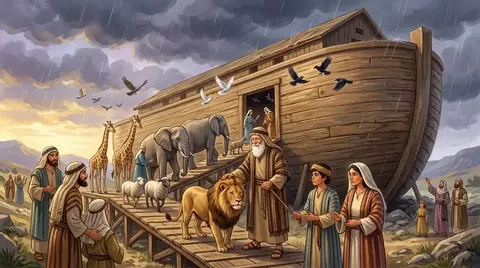 PersonNoahThe one righteous man of his age. God told him to build an ark, and through it saved him, his family and the animals…
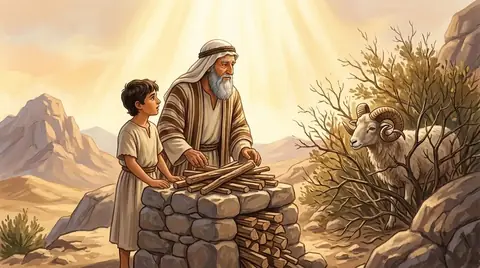 PersonIsaacThe son God promised to Abraham and Sarah when they were far too old for children, offered on Mount Moriah and spared.…
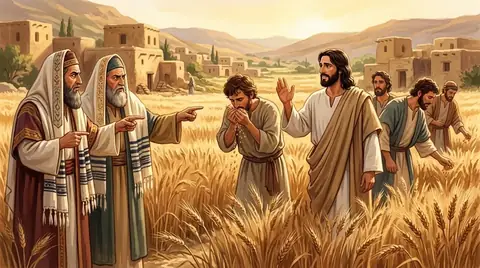 Custom · Daily lifeAgricultureFarming was the main work of Israel: ploughing after the autumn rains, sowing grain, harvesting barley and wheat in…
Written for this app in its own words, from the Bible, with the facts checked against Bible dictionaries and encyclopedias: Easton's, Smith's, Fausset's, ISBE, Holman, the New Bible Dictionary, Vine's and the Thompson Chain topics.
