
Custom · Farming
Horticulture
The care of fruit trees and gardens. The law told Israel not to eat from new trees for three years, to give the fourth year's fruit to God, and not to cut down fruit trees even in war.
- See also
- Garden, Agriculture, Graft
The law
When Israel came into the land and planted fruit trees, the fruit of the first three years was not to be eaten; it was to be treated as "uncircumcised". In the fourth year all the fruit was "holy to praise the LORD withal", and from the fifth year the people could eat it, "that it may yield unto you the increase thereof" (Leviticus 19:23–25). Letting a young tree grow strong was good husbandry, and giving the first real crop to God honoured the giver of growth.
In war, even when besieging a city for a long time, the army was not to cut down its fruit trees for siege works: "thou mayest eat of them, and thou shalt not cut them down... for the tree of the field is man's life" (Deuteronomy 20:19–20). Only trees that bore no food could be used.
What it meant
Man was first put in a garden "to dress it and to keep it" (Genesis 2:15). Caring for growing things is part of the work God gave, and the Bible's many pictures of vines, figs, olives and pruning grow from it (John 15:1–2).
Key verses
- Leviticus 19:23–25
And when ye shall come into the land, and shall have planted all manner of trees for food, then ye shall count the fruit thereof as uncircumcised: three years shall it be as uncircumcised unto you: it shall not be eaten of. But in the fourth year all the fruit thereof shall be holy to praise the Lord withal. And in the fifth year shall ye eat of the fruit thereof, that it may yield unto you the increase thereof: I am the Lord your God.
- Deuteronomy 20:19–20
When thou shalt besiege a city a long time, in making war against it to take it, thou shalt not destroy the trees thereof by forcing an axe against them: for thou mayest eat of them, and thou shalt not cut them down (for the tree of the field is man’s life) to employ them in the siege: Only the trees which thou knowest that they be not trees for meat, thou shalt destroy and cut them down; and thou shalt build bulwarks against the city that maketh war with thee, until it be subdued.
- Genesis 2:15
And the Lord God took the man, and put him into the garden of Eden to dress it and to keep it.
- John 15:1–2
I am the true vine, and my Father is the husbandman. Every branch in me that beareth not fruit he taketh away: and every branch that beareth fruit, he purgeth it, that it may bring forth more fruit.
Read next
 Custom · Daily lifeGardenA walled or hedged plot of fruit trees, vegetables and herbs, watered by a spring or channel, and a place to walk, pray…
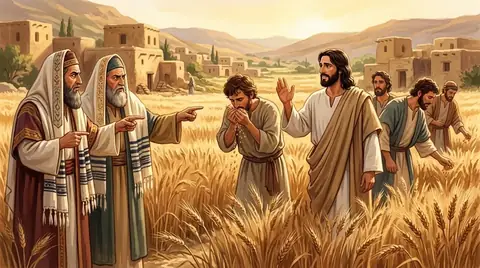 Custom · Daily lifeAgricultureFarming was the main work of Israel: ploughing after the autumn rains, sowing grain, harvesting barley and wheat in…
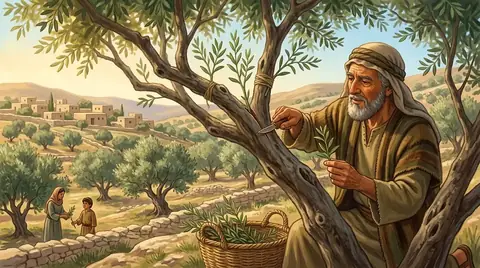 Custom · FarmingGraftJoining a branch from one tree into the trunk of another so that it grows there. Paul uses the grafting of olive…
Written for this app in its own words, from the Bible, with the facts checked against Bible dictionaries and encyclopedias: Easton's, Smith's, Fausset's, ISBE, Holman, the New Bible Dictionary, Vine's and the Thompson Chain topics.
